---
title: "Agent Deep Dives"
description: "Compare real agent implementations, understand their boundaries, and follow the research frontier."
---
> Documentation Index
> Fetch the complete documentation index at: https://latentlit.com/llms.txt
> Use this file to discover all available pages before exploring further.
# Agent Deep Dives
import LandscapeMap from '../../../../components/landscapes/LandscapeMap.astro';
import AgentCards from '../../../../components/agents/AgentCards.astro';
import LandscapeOverview from '../../../../components/landscapes/LandscapeOverview.astro';
import FocusCanvas from '../../../../components/FocusCanvas.astro';
Study an agent by following **one task across its boundaries**: what the model
sees, how actions run, what persists and who verifies the result. The five
initial deep dives expose different design choices inside that common problem.
[Explore the studies](#the-five-studies) · [Compare responsibilities](#compare-the-system-boundaries) · [Follow the frontier](#frontier)
## The five studies
**[Claude Code](/agents/deep-dives/claude-code/)** — Workflow and extensions
How project context, tools, skills and workers become a steerable coding workflow.
**[Codex](/agents/deep-dives/codex/)** — Sessions and execution
How clients, task state, SDK automation and execution boundaries fit together.
**[Pi](/agents/deep-dives/pi/)** — Small core, extensible host
What a reusable loop and session tree provide, and what the host must own.
**[OpenCode](/agents/deep-dives/opencode/)** — Client and server
What an API boundary changes about interfaces, roles, plugins and control.
**[DeepSeek Harness](/agents/deep-dives/deepseek-harness/)** — Composition and lifecycle
What changes when the agent loop, tools and policies are replaceable plugins.
These are architectural studies of selected systems, not a popularity ranking.
Current documentation and the three open-source snapshots were inspected
**October 11, 2026**. Their worked scenarios illustrate mechanisms; they do not
report an executed head-to-head benchmark.[^claude][^codex][^pi][^opencode][^dsh]
DeepSeek Harness remains an explicitly unaudited developer preview.[^preview]
## Put each system on the landscape
A coding product, reusable harness, framework and managed runtime can overlap.
[Figure 1](#figure-1) shows the responsibility emphasized by each category.
A project can occupy several places on this map.
**Different layers, different ownership**
**Coding products**
Package a work loop into a user-facing development workflow.
Examples: Claude Code, Codex, OpenCode.
Question to test: Where does work run, and how does the user inspect and steer it?
**Extensible harnesses**
Assemble reusable context, tool and execution machinery.
Examples: Pi, DeepSeek Harness, Deep Agents.
Question to test: What does the host own, and which components can it replace?
**Frameworks and SDKs**
Provide primitives for constructing an application-owned system.
Examples: LangGraph, Google ADK, agent SDKs.
Question to test: Which persistence, retry and policy responsibilities remain in the application?
**Managed runtimes**
Operate parts of the harness and session infrastructure as a service.
Examples: OpenAI Agents API, Anthropic Managed Agents.
Question to test: Which control, storage and execution boundaries does the service actually own?
Placement shows a studied role, not measured quality, market share or an exclusive category.
**Figure 1.** Latent Light synthesis of product, harness, framework and managed-runtime responsibilities.[^claude][^codex][^pi][^opencode][^dsh][^deepagents][^langgraph][^adk][^managed][^api]
The [broader ecosystem directory](/agents/ecosystem/) retains additional study
candidates, including Microsoft Agent Framework, smolagents and Strands. Its
product details retain the source-check dates stated there. The
[Personal AI Agents landscape](/products-markets/landscapes/personal-agents/)
examines consumer delegation and user needs; this collection examines the
mechanisms and implementation responsibilities.
## Compare the system boundaries
Read across the table to compare responsibilities, then open a study for its
source details and qualifications. Interface names alone cannot establish
execution location or isolation.
| Boundary | Claude Code | Codex | Pi | OpenCode | DeepSeek Harness |
| --- | --- | --- | --- | --- | --- |
| Study focus | Project-aware coding workflow | Controllable session and execution lifecycle | Reusable loop and extensible host | Client/server coding runtime | Replaceable plugin composition |
| Integration unit | Product workflow and extensions | Interactive clients, SDK and App Server | In-process SDK or subprocess RPC | Server API and clients | Profile, bundles and service plugins |
| Context and continuity | Guidance, memory, compaction and saved sessions | Threads, work items and configured context management | Active branch of a persistent session tree | Server-owned sessions and child sessions | Derived history from a durable session log |
| Extension question | Which skill, hook, tool or worker fits? | Which instructions, integration and client contract fit? | Which executable extension or resource belongs in the host? | Which plugin, skill or configured role fits? | Which service or lifecycle seam should change? |
| Control question | Inspect permission and execution settings | Separate approval from filesystem/network containment | Supply external containment; no built-in resource permission system | Inspect allow/ask/deny rules and host access | Inspect the mounted guards and preview limitations |
This table is our comparison lens, informed by the detailed contracts cited in
the individual studies. It does not score reliability or security. “Supports
memory” is particularly weak as a comparison: active context, a recoverable
session record and remembered knowledge solve different problems. LangGraph's
checkpointer/store distinction offers another concrete example of these scopes.[^langgraph]
A meaningful trial would hold the task, model where possible, environment and
total budget fixed, then inspect outcomes, recovery and cost. If models or
scaffolds differ, report that difference instead of attributing the entire
result to the product name. See [Evaluation](/agents/evaluation-reliability/).
## Frontier
Several active directions are changing what a useful harness needs to provide.
The evidence below mixes inspected research with labeled vendor engineering
accounts. Each supplies a bounded lesson.
### Durable sessions beyond one running process
Anthropic's managed architecture separates the session log, harness and sandbox.
The record can survive a failed harness, while the next harness reconstructs
work from events. Its account explicitly distinguishes the full session from
Claude's selected context window.[^managed] OpenAI's Agents API similarly assigns
managed harness and session responsibilities to the service, with environment
choices remaining explicit.[^api]
The practical question is what can be recovered after an interruption.
Persisted text is useful, but an external operation may have committed before
its response was lost. Durable execution must reconcile effects as well as
reconstruct a conversation. These vendor designs do not prove that every
application using them already implements that recovery contract.
### Evolving context with accountable updates
ACE studies context adaptation without changing model weights. It separates
generation, reflection and curation, then merges incremental context updates.
[Figure 2](#figure-2) shows the authors' mechanism. The reported evaluations concern
particular tasks and baselines; they do not establish universal improvement
from accumulating more memory.[^ace]
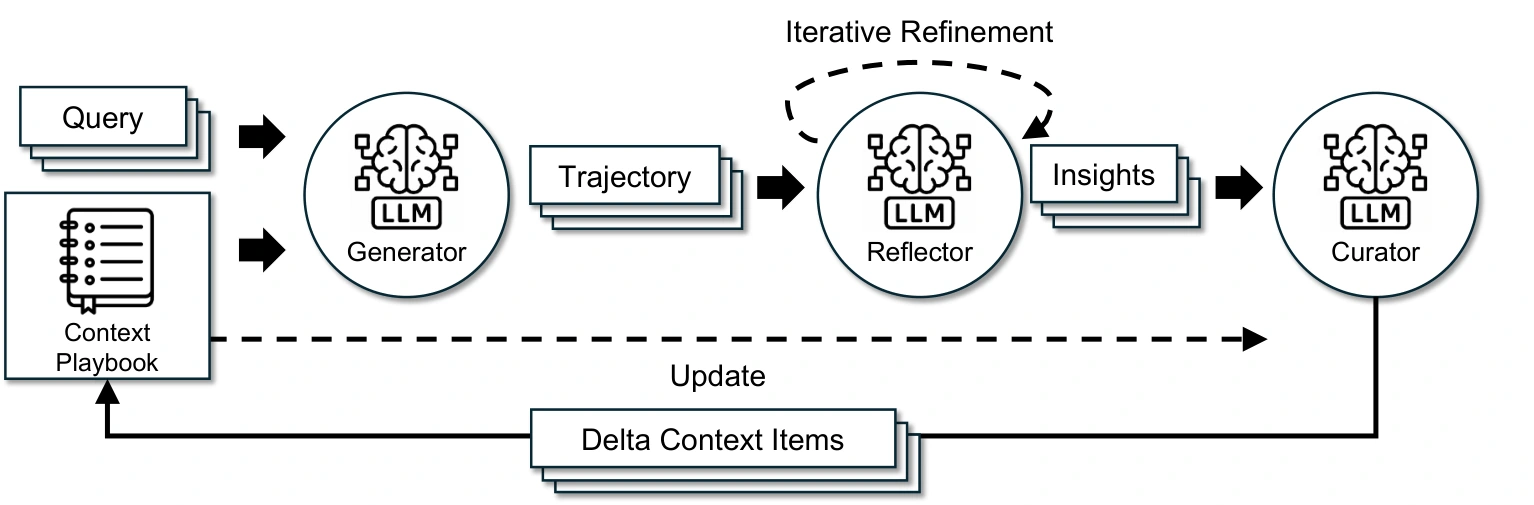
**Figure 2.** ACE context adaptation, reproduced from Zhang et al., version 3, original Figure 4, under CC BY 4.0. Converted to WebP without changing the diagram.[^ace]
The important design question is **who may revise stored guidance, with what
evidence and rollback**. An incremental memory entry can preserve a useful
lesson or preserve an error. The paper's mechanism motivates explicit review
of context changes rather than treating a longer prompt as a guarantee.
### Coordination that fits the task
Kim and colleagues compare agent architectures across multiple benchmark,
model and configuration settings. Their reported results vary with task
structure: decomposable work and sequential planning do not benefit equally
from coordination. The paper identifies overhead and error propagation as
consequential factors.[^scaling]
That supports a conditional design rule: add workers to resolve a particular
failure or independent work split, then measure the whole job. It does not
establish that all multi-agent systems help or fail. The
[coordination chapter](/agents/orchestration/) explains the contracts and costs.
### Feedback that can actually distinguish improvement
Anthropic's application-development account uses an evaluator that interacts
with the running application and is calibrated against explicit criteria.
It also reports much greater cost in one multi-agent comparison and describes
simplifying the harness as the generator model improved.[^harness]
This is a vendor engineering account with selected examples, not a controlled
ranking of these five products. Its useful lesson is that a critic needs
observable evidence and a discriminating rubric. A more capable model can also
change which scaffolding earns its overhead. Repeated self-approval is not
verification.
## Choose the next question
| If you want to understand… | Start with… |
| --- | --- |
| A packaged development workflow | [Claude Code](/agents/deep-dives/claude-code/) |
| An application-controlled coding session | [Codex](/agents/deep-dives/codex/) |
| A host you can adapt through a small core | [Pi](/agents/deep-dives/pi/) |
| Multiple interfaces around a runtime API | [OpenCode](/agents/deep-dives/opencode/) |
| Replaceable services and lifecycle composition | [DeepSeek Harness](/agents/deep-dives/deepseek-harness/) |
These are study routes, not adoption recommendations. For design prerequisites,
return to [How Agents Work](/agents/foundations/); for the practical end-to-end
example, read [A Coding Workflow](/agents/deep-dives/coding-agents/).
[^claude]: Anthropic. [How Claude Code works](https://code.claude.com/docs/en/how-claude-code-works), documented harness and work loop; checked October 11, 2026.
[^codex]: OpenAI. [Codex SDK](https://learn.chatgpt.com/docs/codex-sdk), local automation and App Server distinction; checked October 11, 2026.
[^pi]: Mario Zechner and Earendil Works. [Pi](https://github.com/earendil-works/pi/blob/4270522473e677ddba7b093caa0064a3df51d459/README.md), toolkit and host permission boundary. Snapshot checked October 11, 2026.
[^opencode]: OpenCode contributors. [Server](https://github.com/anomalyco/opencode/blob/707de5832656e89cc0f04436aa1cd5f4f91c5763/packages/web/src/content/docs/server.mdx), client/server API. Snapshot checked October 11, 2026.
[^dsh]: DeepSeek AI. [Architecture](https://github.com/deepseek-ai/deepseek-harness/blob/d743267388641bc76f17c45ce8b4c231aed1d32c/docs/architecture.md), plugin composition, profiles and services. Snapshot checked October 11, 2026.
[^preview]: DeepSeek AI. [Safety](https://github.com/deepseek-ai/deepseek-harness/blob/d743267388641bc76f17c45ce8b4c231aed1d32c/SAFETY.md), experimental status and absence of a security audit. Snapshot checked October 11, 2026.
[^langgraph]: LangChain. [LangGraph persistence](https://docs.langchain.com/oss/python/langgraph/persistence), checkpointers and stores. Checked October 11, 2026.
[^deepagents]: LangChain. [Deep Agents overview](https://docs.langchain.com/oss/python/deepagents/overview), reusable harness; checked October 11, 2026.
[^adk]: Google. [Agent Development Kit](https://adk.dev/), agent-development framework. Checked October 11, 2026.
[^managed]: Anthropic. [Scaling Managed Agents: Decoupling the brain from the hands](https://www.anthropic.com/engineering/managed-agents), April 8, 2026; session, harness and sandbox separation. Checked October 11, 2026.
[^api]: OpenAI. [Agents API overview](https://developers.openai.com/api/docs/guides/agents-api/overview), managed Codex harness and environment choices; checked October 11, 2026.
[^ace]: Qizheng Zhang et al. [Agentic Context Engineering: Evolving Contexts for Self-Improving Language Models](https://arxiv.org/html/2510.04618v3), ICLR 2026; version 3, March 29, 2026, Sections 2–3 and Figure 4. CC BY 4.0.
[^scaling]: Yubin Kim et al. [Towards a Science of Scaling Agent Systems](https://arxiv.org/abs/2512.08296v3), version 3, April 8, 2026; abstract and reported benchmark scope. Preprint.
[^harness]: Prithvi Rajasekaran, Anthropic. [Harness design for long-running application development](https://www.anthropic.com/engineering/harness-design-long-running-apps), March 24, 2026; evaluator calibration, cost and model-dependent simplification. Engineering account, checked October 11, 2026.
Source: https://latentlit.com/agents/deep-dives/index.mdx