---
title: "Document AI"
description: "From pixels and page structure to grounded answers, specialist models and reliable document workflows."
---
> Documentation Index
> Fetch the complete documentation index at: https://latentlit.com/llms.txt
> Use this file to discover all available pages before exploring further.
# Document AI
import DocumentSystem from '../../components/DocumentSystem.astro';
import DocumentModelAtlas from '../../components/DocumentModelAtlas.astro';
import ComparisonTable from '../../components/ComparisonTable.astro';
import ModelFlow from '../../components/architectures/ModelFlow.astro';
import FocusCanvas from '../../components/FocusCanvas.astro';
import SourceFigure from '../../components/architectures/SourceFigure.astro';
**Document AI turns pages into usable, auditable information.** Reading the
text is one step. The larger system must preserve structure, extract or reason
over evidence, and decide which results can enter a downstream workflow.
**At a glance:** preserve structure, allocate visual compute deliberately,
and evaluate the task rather than the fluency of the output.
**Choose a route:** [Understand the field](#the-short-answer) ·
[Compare models](#model-map-at-a-glance) ·
[Evaluate a system](#evaluation-is-now-a-limiting-layer) ·
[Compare products](#product-landscape-compare-boundaries-not-demos) ·
[Choose for a workload](#a-practical-selection-framework).
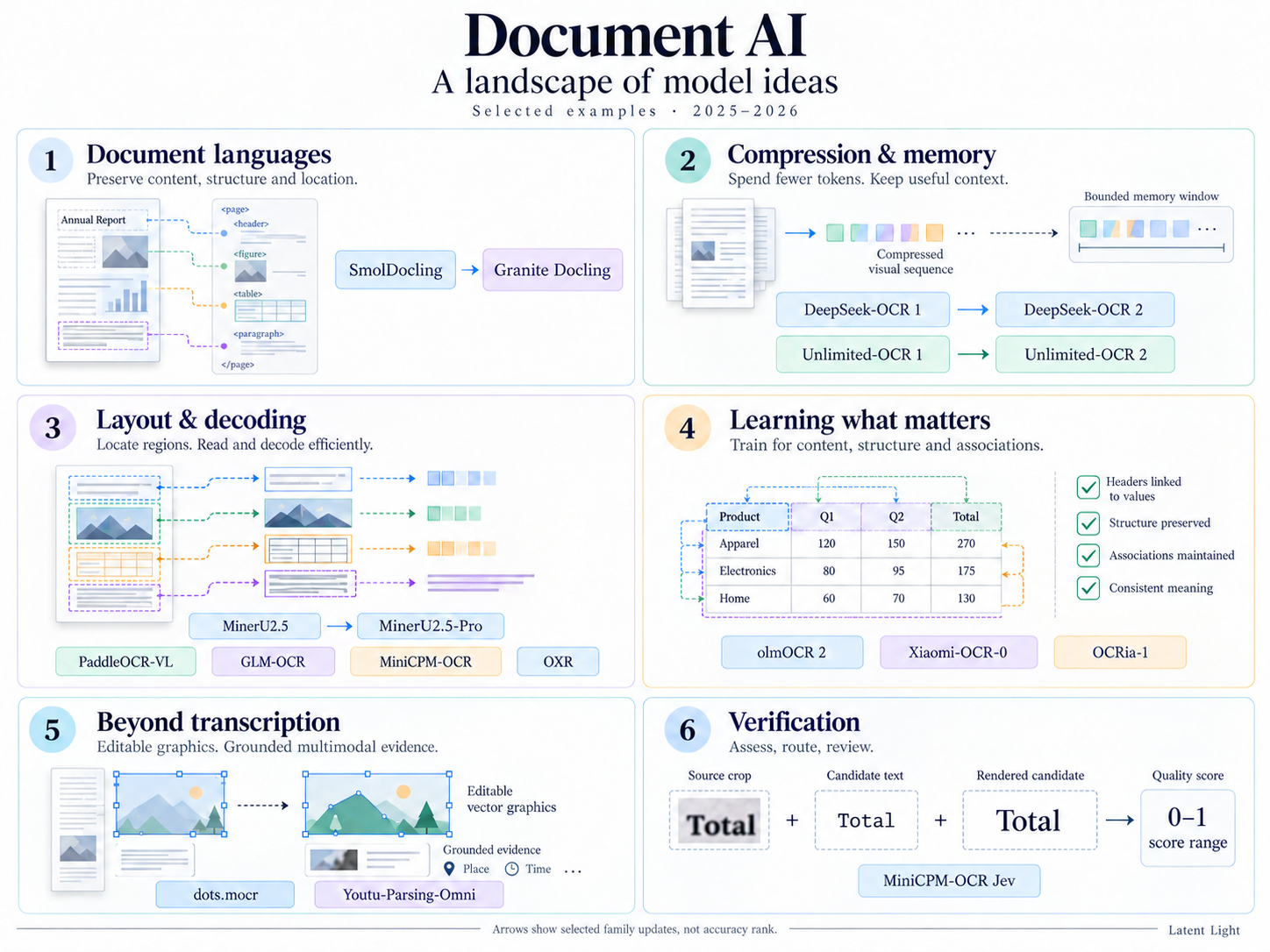
**Figure 1.** A landscape of model ideas. Original AI-generated synthesis of selected models reviewed here. Arrows show family updates; the pages and table are illustrative, and the 0–1 tile is Jev’s score range.[^atlas-milestones][^jev]
**Image description:** An illustrated field guide to six Document AI themes: document languages, compression and memory, layout and decoding, learning objectives, richer outputs and separate OCR verification. Selected family paths and model examples are described in the text equivalent below.
[Figure 1](#figure-1) offers a quick orientation. Explore the
[interactive family atlas](#model-families-and-evolution) for dated milestones,
verified connections and links to each study.
Read the infographic in text
- **Document languages:** SmolDocling → Granite Docling. Typed document
representations preserve content, structure and location.[^smoldocling][^granite]
- **Compression and memory:** DeepSeek-OCR 1 → 2 improves compressed visual
reading; Unlimited-OCR 1 → 2 develops bounded output history, sparse visual
access and page-chunk memory control. These are separate family paths, not
an initialization arrow from DeepSeek-OCR 2 to Unlimited-OCR.[^deepseekocr][^deepseekocr2][^unlimitedocr][^unlimited2]
- **Layout and decoding:** MinerU2.5 → MinerU2.5-Pro retains the architecture
while improving data and training. PaddleOCR-VL, GLM-OCR, MiniCPM-OCR and OXR
are additional examples of locating regions and allocating recognition or
decoding work; they are not shown as one ancestral chain.[^mineru-pro][^paddleocr][^glmocr][^minicpm][^oxr]
- **Learning what matters:** olmOCR 2, Xiaomi-OCR-0 and OCRia-1 illustrate
training for document content, structure and associations through curated
data, task objectives and verifiable rewards.[^olmocr2][^xiaomi][^ocria]
- **Beyond transcription:** dots.mocr represents eligible graphics as editable
SVG; Youtu-Parsing-Omni provides grounded records across images, documents,
audio and video.[^dotsmocr][^youtu]
- **Verification:** MiniCPM-OCR Jev compares a source crop, candidate text and
rendered candidate to return a score in the range 0–1. It assesses existing
OCR; the range is not a measured accuracy or proof of probability
calibration.[^jev]
## The short answer
A complete application can recover reading order and layout, recognize tables
and formulas, split document packets, extract a typed schema, retrieve evidence,
answer questions and summarize. Business rules, uncertainty routing and human
review determine which results can move into a downstream system.
The field has moved from engineered OCR pipelines, through learned perception
and layout-aware pretraining, to OCR-free document models and modern
vision-language models (VLMs). These are overlapping eras rather than a clean
replacement sequence. Modular pipelines remain strong where coordinates,
determinism, latency, or local execution matter. VLMs adapt better to novel
layouts and flexible questions, but can omit, invent, or reorder content.
A useful production starting point is **adaptive and hybrid**: use native text or compact specialists for easy content, spend
high-resolution or general-VLM compute on difficult regions, and add source
grounding, validation, abstention, and risk-based review where errors are
costly. This is a design recommendation, not a universal benchmark finding.[^pure-doc-bench][^real5]
**Review boundary · October 31, 2026.** The recent release studies, selected
retrieval models, benchmark updates and product boundaries below were checked
against primary sources. Historical report results keep their named versions
and dates; retained model mechanisms are not all new inspections. No model or
commercial service benchmark was run for this guide.
## What must be understood beyond the text
Two kinds of structure matter: **geometric structure** identifies regions on a page, while **logical structure** assigns
meaning such as heading, paragraph, table, field, or footnote.[^doclaynet]
Modern Document AI extends the logical layer into retrieval, reasoning, and
workflow action.
**Task layers**
| Layer | Representative tasks | Typical output | Failure that OCR accuracy misses |
| --- | --- | --- | --- |
| Capture | decode, deskew, denoise, orient, dewarp | normalized pages | correct text from a wrongly oriented page |
| Text perception | OCR, handwriting, text spotting | words, lines, boxes, confidence | one wrong digit in an account number |
| Layout and structure | regions, reading order, tables, formulas, charts | blocks, tree/graph, Markdown, HTML, JSON | two columns interleaved into plausible nonsense |
| Organization | classification, splitting, page grouping | type labels and page ranges | one packet sent to the wrong extractor |
| Extraction | fields, entities, line items, clauses, relations | typed schema with evidence | correct value assigned to the wrong field |
| Retrieval and QA | page/region retrieval, single- and multi-document QA | answer with page or box citations | plausible answer unsupported by the document |
| Generation | summary, comparison, report, translation | grounded narrative or synthesis | an exception clause silently omitted |
| Workflow | rules, validation, approval, review, export | accepted result and audit trail | uncertain output enters a system of record |
The evaluation unit changes at every layer. Character error rate does not
measure table structure; bounding-box accuracy does not measure reading order;
exact match does not fully measure semantic answers; and fluency does not
measure summary faithfulness. There is no meaningful “document accuracy” until
the task, corpus, metric, and cost of each error are specified.
Three input regimes also need different routing:
- **Born-digital documents** may contain cheap text and font information, but
PDF object order need not match human reading order.
- **Scans and photographs** add skew, blur, shadows, warping, compression, and
handwriting.
- **Mixed, visually rich documents** combine prose with tables, formulas,
charts, stamps, signatures, and figures whose relationships carry meaning.
**Document AI is a system.**
From a page to a trustworthy result, with its evidence intact.
1. **Input · Documents**: Digital PDFs and Office files; Scans, photos and handwriting; Tables, charts and mixed packets. Output: Pages + source files.
2. **Perception · Read the page**: Recognize text and regions; Recover reading order; Parse tables, formulas and figures. Output: Text + layout.
3. **Representation · Preserve meaning**: Keep hierarchy and typed blocks; Retain coordinates and table structure; Link chunks to source evidence. Output: Structured document.
4. **Understanding · Use the content**: Classify and extract a schema; Retrieve evidence and answer; Summarize or reason across documents. Output: Grounded task result.
5. **Action · Operate safely**: Validate fields and business rules; Accept, abstain or request review; Export with an audit trail. Output: Accepted output.
**Reliability across every layer:** Corpus and slice evaluation; Field, structure and grounding checks; Risk-based human review; Cost, latency and drift monitoring.
Reviewed corrections → regression tests → deliberate updates to prompts, schemas, rules and routing.
Functional layers, not five required model calls. Classification and routing can happen earlier; difficult pages can take a specialist or VLM path. Corrections do not automatically become training data.
**Figure 2.** Five layers, one evidence trail, and a human review loop.
[Figure 2](#figure-2) separates reading the page from preserving its meaning,
using its content and accepting a result. Reliability is a cross-cutting loop,
not a final check. This is a proposed system map, not a fixed execution order.
## How the technical stack evolved
### 1. OCR and engineered pipelines
Classical systems separated preprocessing, page segmentation, OCR,
reading-order heuristics, logical labeling, and export. Forms and invoices were
often handled with templates, anchors, coordinates, regular expressions, and
dictionaries. The pipeline was inspectable, but brittle when layouts,
languages, or capture conditions changed.
### 2. Learned perception and task-specific extraction
CNNs, sequence models, and object detectors improved recognition,
classification, region detection, and key-information extraction. Larger
datasets expanded layout diversity: DocLayNet provides 80,863 manually
annotated pages across 11 layout classes, and its baseline models remained
below inter-annotator agreement in the paper’s baseline experiments.[^doclaynet]
### 3. Layout-aware multimodal pretraining
LayoutLM jointly encoded text, 2-D coordinates, and visual appearance instead
of treating OCR output as a one-dimensional sentence. LayoutLMv3 later unified
text and image masking and added word–patch alignment.[^layoutlm][^layoutlmv3]
This encoder family remains useful for classification and token-level
extraction when OCR and boxes already exist, though it inherits upstream OCR
errors and often needs task-specific fine-tuning.
### 4. OCR-free generation
Donut reframed document understanding as image-to-sequence generation and
argued that an external OCR engine adds cost, rigidity, and error propagation.
Its synthetic document generator also anticipated the present importance of
controllable synthetic supervision.[^donut]
“OCR-free” does not mean that reading disappears—the model learns visual text
recognition internally. It changes the error boundary: instead of inspecting
OCR tokens and boxes, a decoder can omit, hallucinate, or structurally
misgenerate content. Later systems expanded image-to-sequence and instruction
formats across screenshots, documents, tables, charts, and QA.[^pix2struct][^udop]
### 5. Specialists, general VLMs, and hybrids
The current categories are complementary:
**Four complementary approaches**
| Approach | Main advantage | Main weakness | Strong fit |
| --- | --- | --- | --- |
| Modular pipeline | explicit artifacts, control, cheap native-text paths | brittle boundaries and error propagation | stable schemas, coordinates, local or low-latency systems |
| Document specialist | dense text and structure per unit of compute | narrower general reasoning | page conversion, tables, formulas, private serving |
| General VLM | flexible questions and broad language/visual knowledge | cost, hallucination, weaker diagnostics | unusual pages, ad hoc QA, cross-page reasoning |
| Adaptive hybrid | route each page or region to the right path | orchestration and evaluation complexity | heterogeneous production corpora |
**No universal SOTA.** OCR, layout detection, page conversion, information extraction, document QA,
and summarization use different datasets and metrics. Even for parsing,
rankings can change between clean digital pages and degraded scans. “Best”
only has meaning for a pinned task, corpus, model version, prompt, evaluator,
and operating constraint.
## The 2026 technical frontier
### Page parsing is becoming structured generation
Modern parsers increasingly output Markdown, HTML-like tokens, bounding boxes,
or typed document languages rather than plain text. SmolDocling is an especially
useful result: its 256M-parameter VLM emits DocTags encoding content, structure,
and location, showing how domain specialization can compensate for raw model
scale.[^smoldocling]
The recent releases change the system in four connected ways:
- **Allocate compute at inference.** Region parsers spend pixels on selected
crops; Nemotron 3.5 Parse offers additional table/chart refinement passes;
Unlimited-OCR 2 separately controls attended tokens and resident page
memory. These are different accuracy, latency and context tradeoffs.[^mineru][^nemotron35][^unlimited2]
- **Train for usable structure.** olmOCR 2 supplies executable tests,
Xiaomi-OCR-0 connects parsing with understanding tasks, and OCRia-1 rewards
header–value associations and formatting. A better string match alone
does not establish a usable table or field.[^olmocr2][^xiaomi][^ocria]
- **Assess a candidate separately.** Jev adds a released region verifier;
its score still needs workload calibration, and it cannot recover a region
that the parser never detected.[^jev]
- **Preserve more than a transcript.** DocTags, editable graphics and spatial
or temporal records make representation part of the model contract.
Retrieval can also search the page image directly, rather than relying on
one flattened text view.[^smoldocling][^dotsmocr][^youtu][^colpali]
The persistent hard cases are reading order across columns and sidebars,
hierarchical or multi-page tables, chart geometry, small and multi-line
formulas, meaning-bearing formatting, and associations among captions,
footnotes, units, and objects.
In its May 2026 study, PureDocBench evaluated 40 systems on source-traceable clean, digitally
degraded, and physically degraded variants. Its best overall score was only
about 74/100; specialists no larger than 4B parameters could rival or exceed
general VLMs 5–100 times larger, while general VLMs sometimes degraded more
gracefully. No evaluated model exceeded 67% on the formula metric averaged
across the three tracks. These are results for that study’s tested models, not a ceiling on later releases.[^pure-doc-bench]
The maintained PureDocBench repository is a later artifact: its September 26
update covers 58 models, and an October 27 PaddleOCR-VL-1.6 pipeline rescore
uses explicitly recorded ground-truth and evaluator revisions. A current
leaderboard row and the original paper table must not be treated as the same
experiment. Pin the predictions, reference labels, rendering and scorer before
comparing a new result with an older one.[^puredoc-current]
## How to read the current model frontier
There is no useful single ordering of “the best OCR models.” The current
frontier mixes one-shot VLMs, layout-first systems, document converters,
reward-optimized parsers, and models that also answer questions or reconstruct
graphics. The more durable question is: **where does each design allocate
pixels, tokens, decoding time, and supervision?**
**Six ways to spend the document budget**
**01 · Pixels**
1. **Page detail**: Small text versus image cost
2. **Compact visual tokens**: SmolDocling, DeepSeek-OCR and HunyuanOCR
**02 · Reading order**
1. **Two dimensional evidence**: Columns, sidebars and connected regions
2. **Organize before decoding**: Layout-first parsing or DeepSeek causal-flow queries
**03 · Dense regions**
1. **Locate globally**: Low resolution layout
2. **Read locally**: MinerU and PaddleOCR region recognition
**04 · Sequential time**
1. **Long structured outputs**: Each autoregressive step costs time
2. **Predict or verify blocks**: GLM MTP, Hunyuan DFlash, HPD branches or diffusion
**05 · History memory**
1. **Keep the source**: Retain all references, or select a working subset
2. **Bound output history**: Unlimited-OCR R-SWA; version 2 adds SR-SWA and page chunks
**06 · Learning signal**
1. **Define usable information**: Structure, semantic tests or editable graphics
2. **Train for that contract**: DocTags, olmOCR unit tests and dots.mocr SVG
**Figure 3.** A mechanism map synthesized from the model reports discussed below. It is not a ranking.
[Figure 3](#figure-3) organizes the studies by their bottleneck, not their release date or parameter count.
### Architecture primer
As an interface sketch, a document VLM can be written as
$$
y = D\big(C(E_{\text{vision}}(I)),\ p\big),
\tag{1}
$$
where vision encoder $E_{\text{vision}}$ turns page $I$ into visual tokens,
connector $C$ compresses or projects them into the language-model space,
prompt $p$ selects the task, and decoder $D$ generates structured output $y$.
This sketch does not specify attention wiring: visual-prefix decoders and
cross-attending encoder–decoders implement the interface differently.
Models differ along four practical axes:
1. **Visual input:** fixed square, native-resolution page, dynamic tiles, or
layout-selected crops.
2. **Token organization:** raster order, explicit layout order, or a learned
semantic sequence.
3. **Generation:** ordinary autoregression, multiple tokens per step, or a
draft-and-verify path.
4. **Output and supervision:** plain text, document markup, JSON, executable
tests, or renderable graphics code.
Recurring building blocks include:
- **Native-resolution or NaViT encoding:** patch images at their natural aspect
ratios instead of stretching every page into a fixed square.
- **2-D or multimodal RoPE:** encode row, column, and sometimes modality
coordinates rather than only one text position.
- **Pixel shuffle, patch merger, or convolutional compressor:** merge nearby
visual tokens so the decoder sees a shorter sequence.
- **Connector or projector:** map vision features into the decoder's embedding
width, commonly with a small MLP.
- **MTP or speculative decoding:** advance several output tokens per expensive
target-model step.
- **RL with verifiable rewards (RLVR):** optimize outputs using executable
checks or task metrics rather than only next-token likelihood.
### Model families and evolution
[Figure 4](#figure-4) places the models in time and groups their main design
themes. It complements the [budget map](#figure-3): the lanes orient you across
models, while the budget map explains where their mechanisms spend resources.
Select a model for its dated milestone, contribution, scale, access and study.
**Document AI family atlas**
Lanes are overlapping design themes, not ancestry. Solid arrows show family/design updates; dashed arrows show explicit checkpoint initialization. Dates identify the cited report revision, release log, announcement or benchmark snapshot, not necessarily first weight availability. Time columns are unequal periods, not a proportional scale.
**Document languages — Make structure explicit**
- [SmolDocling](#smoldocling-make-the-document-language-compact): 14 Mar 2025 · Report v1. 256M; Official weights. Compact visual tokens and DocTags preserve content, structure and location. [Milestone source](https://arxiv.org/abs/2503.11576v1).
- [Granite Docling](#granite-docling-the-next-compact-document-native-converter): 17 Sept 2025 · Model-card release. 258M; Official weights. Docling design successor with SigLIP2 and a Granite decoder; this is not a claim of inherited weights. [Milestone source](https://huggingface.co/ibm-granite/granite-docling-258M).
**Compression & memory — Read more with fewer tokens**
- [DeepSeek-OCR 1](#deepseek-ocr-1-treat-the-page-as-optical-context-compression): 21 Oct 2025 · Report v1. 3B MoE decoder; Official weights. A local-to-global vision encoder compresses a page into a short visual sequence. [Milestone source](https://arxiv.org/abs/2510.18234v1).
- [DeepSeek-OCR 2](#deepseek-ocr-2-learn-a-causal-flow-over-visual-evidence): 28 Jan 2026 · Report v1. 3B MoE decoder; Official weights. Causal-flow queries organize visual evidence before the decoder reads it. [Milestone source](https://arxiv.org/abs/2601.20552v1).
- [Unlimited-OCR](#unlimited-ocr-keep-the-reference-forget-old-output): 22 Jun 2026 · Report v1. 3B MoE decoder; Official weights. R-SWA keeps the visual reference while bounding generated-output history. [Milestone source](https://arxiv.org/abs/2606.23050v1).
- [Unlimited-OCR 2](#unlimited-ocr-2-bound-attention-and-resident-pages-separately): 27 Oct 2026 · Release log. 3B MoE decoder; Official weights; custom SGLang path. Sparse visual access and overlapping page chunks separately control attention and resident KV. [Milestone source](https://huggingface.co/baidu/Unlimited-OCR-2/tree/c14071b549f4fcab10909f3c4acc6a2edb366947).
**Layout & decoding — Locate, route and parallelize**
- [MinerU2.5](#mineru25-global-layout-then-native-resolution-crops): 26 Sept 2025 · Report v1. 1.2B recognizer; Official weights. Global layout on a thumbnail routes high-resolution regions to recognition. [Milestone source](https://arxiv.org/abs/2509.22186v1).
- [GLM-OCR](#glm-ocr-compact-region-recognition-with-multi-token-heads): 11 Mar 2026 · Report v1. 0.9B; Official weights. Layout-routed recognition or direct KIE, with shared multi-token prediction heads. [Milestone source](https://arxiv.org/abs/2603.10910v1).
- [MinerU-Diffusion](#mineru-diffusion-change-the-target-decoder-not-just-its-draft): 23 Mar 2026 · Report v1. Size not summarized here; Checkpoint unverified. Parallel block diffusion changes target decoding; the MinerU name alone does not establish weight ancestry. [Milestone source](https://arxiv.org/abs/2603.22458v1).
- [MinerU2.5-Pro](#mineru25-pro-improve-the-data-engine-retain-the-architecture): 6 Apr 2026 · Report v1. 1.2B recognizer; Official weights. Retain the 2.5 architecture while expanding curation and progressive training. [Milestone source](https://arxiv.org/abs/2604.04771v1).
- [PaddleOCR-VL 1.6](#the-paddleocr-family-and-its-current-vl-model): 2 Jun 2026 · Report v1. 0.9B recognizer; Official weights. Target under-optimized regions with a data engine and staged post-training. [Milestone source](https://arxiv.org/abs/2606.03264v1).
- [HPD-Parsing](#hpd-parsing-parallelize-the-output-tree): 21 Jul 2026 · Report v1. Main model + P-MTP; Official weights; custom runtime. A layout branch coordinates parallel content branches and progressive multi-token prediction. [Milestone source](https://arxiv.org/abs/2607.18839v1).
- [OXR-1.0](#oxr-10-make-layout-replaceable-retain-recognition-and-order): 20 Oct 2026 · Announcement. Advertised 1.3B; about 1.53B stored BF16 values; Weights with additional license terms. Replaceable layout, recognition/order branches and a targeted post-training data loop. [Milestone source](https://somark.cn/oxr).
- [Surya OCR 2](#surya-ocr-2-share-recognition-tasks-without-merging-every-stage): 23 Oct 2026 · Benchmark snapshot. ≈650M VLM plus line detector; Weights with custom commercial terms. One VLM shares recognition/layout/table tasks, while text-line detection remains separate. Date identifies the comparison. [Milestone source](https://api.datalab.to/blog/open-ocr-models-omniparsebench).
- [MiniCPM-OCR 1.0](#minicpm-ocr-10-distinguish-the-recognizer-from-the-parser): 31 Oct 2026 · Announcement. 1.3B recognizer; Official weights, Apache-2.0. Layout-first parsing or direct field extraction, with optional DSpark draft decoding. [Milestone source](https://www.prnewswire.com/news-releases/modelbest-and-openbmb-open-source-minicpm-ocr-series-delivering-high-performance-document-parsing-and-ai-powered-quality-control-302925594.html).
**Page specialists — Improve reading and understanding**
- [olmOCR 2](#olmocr-2-executable-document-tests-as-rewards): 22 Oct 2025 · Report v1. 7B; Official weights. Executable document unit tests reward selected content, order and structural properties. [Milestone source](https://arxiv.org/abs/2510.19817v1).
- [LightOnOCR-2](#lightonocr-2-optimize-data-and-the-localization-objective): 20 Jan 2026 · Report v1. 1B; Official weights; variant-specific outputs. Distilled data, localization rewards and checkpoint merging target compact page conversion. [Milestone source](https://arxiv.org/abs/2601.14251v1).
- [HunyuanOCR-1.5](#hunyuanocr-15-one-model-long-context-faster-decoding): 6 Jul 2026 · Report v1. 0.5B decoder plus vision; Official weights. Native-resolution reading, a compressed visual interface and DFlash decoding support unified OCR tasks. [Milestone source](https://arxiv.org/abs/2607.04884v1).
- [Nemotron Parse 2.0](#nemotron-parse-20-encoderdecoder-attention-is-still-useful): 3 Aug 2026 · Model-card release. Under 1B; Official weights. C-RADIO vision features feed a cross-attending mBART decoder with typed output and locations. [Milestone source](https://huggingface.co/nvidia/NVIDIA-Nemotron-Parse-2.0).
- [TeleOCR](#teleocr-geometry-remains-a-frontier): 10 Sept 2026 · Report v3. Size not summarized here; Checkpoint unverified. Deformation-aware learning and content/structure decoupling address difficult capture; earlier indexing used NaviDC. [Milestone source](https://arxiv.org/abs/2608.12898v3).
- [WeVisDoc](#wevisdoc-use-residual-errors-to-allocate-training): 17 Sept 2026 · Report v1. 2B / 4B; Official weights. Coverage training is followed by held-out residual diagnosis and targeted data/token allocation. [Milestone source](https://arxiv.org/abs/2609.20423v1).
- [Xiaomi-OCR-0](#xiaomi-ocr-0-connect-reading-to-understanding): 28 Sept 2026 · Report v1. 0.8B base; Official weights, Apache-2.0. Q-Mask, curated data and mixed-task RL connect parsing with KIE/VQA; headline parsing includes a layout detector. [Milestone source](https://arxiv.org/abs/2609.36136v1).
- [LightOnOCR-3](#lightonocr-2-optimize-data-and-the-localization-objective): 8 Oct 2026 · Announcement. 0.8B / 1B / 4B; Official weights. A family update adds grounded regions, image descriptions and chart data; backbones differ by size. [Milestone source](https://huggingface.co/blog/lightonai/lightonocr-3).
- [Nemotron 3.5 Parse](#nemotron-35-parse-inspect-the-attention-path-and-inference-passes): 17 Oct 2026 · Model-card release. ≈0.631B including MTP; Official weights, OpenMDW-1.1. Causal visual-prefix decoding and optional table/chart refinement passes differ from the Parse2.0 contract. [Milestone source](https://huggingface.co/nvidia/Nemotron-3.5-Parse/tree/4035ffb1d8f8bafcdb867dfaf6f7514f101464f9).
- [OCRia-1](#ocria-1-reward-associations-not-just-recovered-strings): 22 Oct 2026 · Announcement. 4B target plus serving components; Hosted in LlamaParse; public weights unverified. Structured rewards target table/header associations, chart values and formatting; no output boxes. [Milestone source](https://www.llamaindex.ai/blog/parse-ocria-1).
- [Chandra OCR 2](#chandra-ocr-2-separate-the-open-model-from-the-service): 23 Oct 2026 · Benchmark snapshot. 4.5B publisher inference count; Weights with custom commercial terms. Layout-aware page conversion; the open OCR2 checkpoint differs from hosted Chandra2.5. Date identifies the comparison, not first release. [Milestone source](https://api.datalab.to/blog/open-ocr-models-omniparsebench).
**Beyond transcription — Graphics and multimodal evidence**
- [dots.mocr](#dotsmocr-treat-graphics-as-programs-not-leftover-pixels): 13 Mar 2026 · Report v1. 3B; Official weights. Eligible graphics become renderable SVG alongside text, tables and formulas. [Milestone source](https://arxiv.org/abs/2603.13032v1).
- [Youtu-Parsing-Omni](#youtu-parsing-omni-one-grounded-interface-across-modalities): 29 Oct 2026 · Report v1. 5B; Weights with custom Youtu terms. A shared perception encoder and schema ground document, image, audio and video content. [Milestone source](https://arxiv.org/abs/2610.39301v1).
**Verification — Assess an existing candidate**
- [MiniCPM-OCR Jev](#minicpm-ocr-jev-score-the-candidate-against-the-crop): 31 Oct 2026 · Announcement. 2B verifier; Official weights, Apache-2.0. Score an original crop, candidate text and rendered candidate. This verifies OCR rather than generating it. [Milestone source](https://www.prnewswire.com/news-releases/modelbest-and-openbmb-open-source-minicpm-ocr-series-delivering-high-performance-document-parsing-and-ai-powered-quality-control-302925594.html).
**Documented connections**
- Nemotron Parse 2.0 → Nemotron 3.5 Parse — Nemotron family update. The Parse2.0 card explicitly links3.5 as its newer version; attention wiring and MTP serving differ. This does not assert direct checkpoint initialization. [Source](https://huggingface.co/nvidia/NVIDIA-Nemotron-Parse-2.0/tree/4e021c03edc92e715d5d788921a927d0cbb4b4d1).
- SmolDocling → Granite Docling — Docling design successor. IBM describes an evolution of SmolDocling with new vision and language backbones; no direct weight-inheritance claim. [Source](https://www.ibm.com/new/announcements/granite-docling-end-to-end-document-conversion).
- DeepSeek-OCR 1 → DeepSeek-OCR 2 — DeepSeek-OCR family update. Second generation changes the visual encoder and reading-flow design. [Source](https://arxiv.org/abs/2601.20552v1).
- DeepSeek-OCR 1 → Unlimited-OCR — Initialized from DeepSeek-OCR. Section4.2 starts from the DeepSeek-OCR checkpoint, freezes DeepEncoder and trains the language model. [Source](https://arxiv.org/html/2606.23050v1#S4.SS2).
- Unlimited-OCR → Unlimited-OCR 2 — Initialized from Unlimited-OCR. Section4.2 initializes from Unlimited-OCR and post-trains with SR-SWA. [Source](https://github.com/baidu/Unlimited-OCR/blob/6c5d1906ba638a7cd87bc00f14452a47fdabf16b/Unlimited-OCR-2.pdf).
- MinerU2.5 → MinerU2.5-Pro — MinerU2.5 architecture retained. The Pro report retains the2.5 architecture and changes the data engine and progressive training. [Source](https://arxiv.org/abs/2604.04771v2).
- LightOnOCR-2 → LightOnOCR-3 — LightOnOCR family update. The1B retains the preceding architecture;0.8B and4B adopt Qwen3.5. Family succession is not uniform weight ancestry. [Source](https://huggingface.co/blog/lightonai/lightonocr-3).
**Figure 4.** A family atlas of the models covered here. Solid arrows mark family or design updates; dashed arrows mark documented checkpoint initialization. Lanes overlap, and dates identify the cited milestones rather than first weight availability.[^atlas-milestones]
### Model map at a glance
This is a selected map of mechanisms, not an exhaustive release inventory.
Compare the same four fields across the models below. Rows follow the detailed
studies; select a model name to jump to its explanation. Search by name, design
or access—for example, `region`, `verifier` or `hosted`.
Sizes describe the named network, not the full serving pipeline. **Weights**
means an official checkpoint was identified in the dated reviews above;
**unverified** means checkpoint availability was not established. Hosted access
and custom license terms are marked separately. These models were not run for
this review, and the table is not an accuracy ranking. Parameter counts retain the source’s
scope: decoder-only, core-model and inference counts are not a normalized
full-pipeline comparison.
**Document models at a glance**
| Model | Scale and access | Design | Output |
| --- | --- | --- | --- |
| [SmolDocling](#smoldocling-make-the-document-language-compact)[^smoldocling] | 256M; weights | Converter: compact visual tokens and a document-native vocabulary | DocTags → Markdown/HTML/JSON |
| [Granite Docling](#granite-docling-the-next-compact-document-native-converter)[^granite] | 258M; weights | Converter: SigLIP2, pixel shuffle and a Granite decoder | DocTags → structured document |
| [DeepSeek-OCR 1](#deepseek-ocr-1-treat-the-page-as-optical-context-compression)[^deepseekocr] | 3B MoE decoder; weights | End-to-end: local→global vision encoding with optical context compression | Text and structured parse |
| [DeepSeek-OCR 2](#deepseek-ocr-2-learn-a-causal-flow-over-visual-evidence)[^deepseekocr2] | 3B MoE decoder; weights | End-to-end: causal-flow queries reorganize compressed visual evidence | Text and structured parse |
| [Unlimited-OCR 1 / 2](#unlimited-ocr-2-bound-attention-and-resident-pages-separately)[^unlimitedocr][^unlimited2] | 3B MoE decoder; weights | Multi-page: R-SWA bounds output history; version 2 adds sparse visual access and page chunks | Layout-tagged text and structured parse |
| [HunyuanOCR-1.5](#hunyuanocr-15-one-model-long-context-faster-decoding)[^hunyuanocr15] | 0.5B decoder + vision; weights | End-to-end: 4K images, 128K context and DFlash decoding | Markdown, HTML, LaTeX, QA and extraction |
| [LightOnOCR-2 / 3](#lightonocr-2-optimize-data-and-the-localization-objective)[^lighton][^lighton3] | v2: 1B; v3: 0.8B/1B/4B; weights | End-to-end: distilled data, localization RL and variant-specific grounding | Transcription; boxes and chart data in supported variants |
| [Nemotron Parse 2.0](#nemotron-parse-20-encoderdecoder-attention-is-still-useful)[^nemotron] | Under 1B; weights | Encoder–decoder: C-RADIO vision features with cross-attending mBART | Text, element classes, reading order and locations |
| [Nemotron 3.5 Parse](#nemotron-35-parse-inspect-the-attention-path-and-inference-passes)[^nemotron35] | ≈0.631B including MTP; weights, OpenMDW-1.1 | Visual-prefix parser: C-RADIOv4, mBART and optional crop-refinement passes | Text, element classes, reading order and normalized boxes |
| [Chandra OCR 2](#chandra-ocr-2-separate-the-open-model-from-the-service)[^chandra2][^datalab-open-bench] | 4.5B in publisher’s inference count; weights with custom terms | End-to-end: Qwen3.5-style released configuration and layout-aware conversion | Markdown, HTML and JSON with layout |
| [MinerU2.5](#mineru25-global-layout-then-native-resolution-crops)[^mineru] | 1.2B; weights | Region parser: thumbnail layout, then native-resolution crop recognition | Boxes and ordered element transcriptions |
| [MinerU2.5-Pro](#mineru25-pro-improve-the-data-engine-retain-the-architecture)[^mineru-pro] | 1.2B; weights | Region parser: retain 2.5 architecture, improve data curation and training | Boxes and ordered element transcriptions |
| [PaddleOCR-VL 1.6](#the-paddleocr-family-and-its-current-vl-model)[^paddleocr] | 0.9B recognizer; weights | Region parser: detector→parallel crops, weak-region refinement and staged training | Markdown/JSON and text spotting |
| [GLM-OCR](#glm-ocr-compact-region-recognition-with-multi-token-heads)[^glmocr] | 0.9B; weights | Region parser or direct KIE: shared multi-token prediction heads | Markdown/JSON or field JSON |
| [MiniCPM-OCR 1.0](#minicpm-ocr-10-distinguish-the-recognizer-from-the-parser)[^minicpm] | 1.3B recognizer; weights | Region parser or direct KIE: optional DSpark draft decoding | Markdown, HTML tables, LaTeX or field JSON |
| [OXR-1.0](#oxr-10-make-layout-replaceable-retain-recognition-and-order)[^oxr][^oxr-license] | Advertised 1.3B; weights with custom terms | Region parser: replaceable layout, learned visual vocabulary, recognition and order branches | Markdown/JSON with coordinates |
| [Surya OCR 2](#surya-ocr-2-share-recognition-tasks-without-merging-every-stage)[^surya2] | ≈650M VLM plus separate line detector; weights with custom terms | Prompt-selected recognition/layout/table tasks with a shared VLM | Text, layout/reading order, HTML and table structure |
| [HPD-Parsing](#hpd-parsing-parallelize-the-output-tree)[^hpd] | Main model + P-MTP weights | Branching parser: layout coordinates parallel content decoding; custom runtime | Structured parse |
| [MinerU-Diffusion](#mineru-diffusion-change-the-target-decoder-not-just-its-draft)[^mineru-diffusion] | Report; weights unverified | Diffusion parser: parallel block decoding, curriculum and inverse-rendered data | Document transcription |
| [olmOCR 2](#olmocr-2-executable-document-tests-as-rewards)[^olmocr2] | 7B; weights | End-to-end: executable document tests as GRPO rewards | Metadata and ordered document text |
| [dots.mocr](#dotsmocr-treat-graphics-as-programs-not-leftover-pixels)[^dotsmocr] | 3B; weights | Task-conditioned multi-pass: reconstruct eligible graphics as renderable programs | Ordered text, markup, LaTeX and SVG |
| [TeleOCR](#teleocr-geometry-remains-a-frontier)[^teleocr] | Report; weights unverified | Parser: deformation-aware learning and content/structure decoupling | Structured parse |
| [Xiaomi-OCR-0](#xiaomi-ocr-0-connect-reading-to-understanding)[^xiaomi][^xiaomi-artifacts] | 0.8B base; weights | Region parsing or direct page/KIE/VQA: Q-Mask, curated data and mixed-task RL | Structured parse, field JSON or answers |
| [WeVisDoc](#wevisdoc-use-residual-errors-to-allocate-training)[^wevisdoc] | 2B/4B; weights | End-to-end: broad coverage, then held-out error diagnosis and targeted training | Ordered Markdown, HTML tables and LaTeX |
| [OCRia-1](#ocria-1-reward-associations-not-just-recovered-strings)[^ocria][^ocria-release] | 4B; hosted in LlamaParse; public weights unverified | Parser: structured rewards for table associations, chart values and formatting | Markdown/HTML and LaTeX; no boxes |
| [Youtu-Parsing-Omni](#youtu-parsing-omni-one-grounded-interface-across-modalities)[^youtu] | 5B; weights with custom Youtu terms | Multimodal parser: shared perception encoder and reference-conditioned distillation | Structured records with spatial/temporal evidence |
| [MiniCPM-OCR Jev](#minicpm-ocr-jev-score-the-candidate-against-the-crop)[^jev] | 2B; weights, Apache-2.0 | Verifier: compare the source crop, candidate text and rendered candidate | Quality score for text/table/formula candidates; no OCR generation |
### A. End-to-end compression and visual reading flow
These models feed the page directly into one VLM. Their central problem is how
to retain small text and two-dimensional structure without flooding the
decoder with thousands of visual tokens.
#### SmolDocling: make the document language compact
SmolDocling uses a 93M SigLIP patch-16/512 visual backbone, aggressive pixel
shuffle and projection, and a 135M SmolLM2 decoder. Each 512×512 image becomes
64 visual tokens—4,096 pixels per token—bringing the total model to 256M
parameters.[^smoldocling]
It emits **DocTags**, an intermediate language with typed elements, nested
relationships, location tokens, and a table vocabulary. Docling later converts
that representation into Markdown, HTML, or JSON. Its design bet is that a
small model can perform conversion well when both its visual sequence and its
output language are carefully compressed. The tradeoff is specialization: it
is a converter, not a broad document-reasoning model.
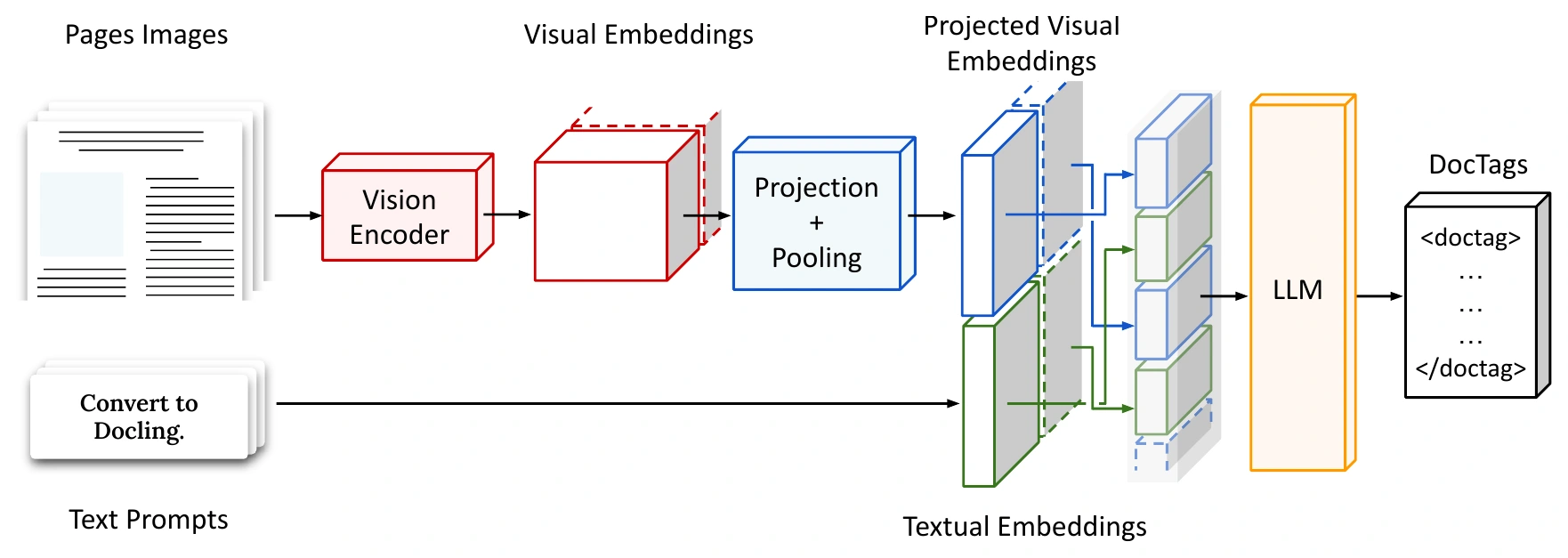
**Figure 5.** Document conversion into DocTags. Nassar et al., SmolDocling, Figure 1, arXiv v1, page 2; figure excerpt, CC BY 4.0.[^smoldocling][^figure-notice]
**Image description:** SmolDocling converts page images and text prompts through visual projection and a language decoder into DocTags
[Figure 5](#figure-5) shows both visual and prompt embeddings entering one document-language decoder.
#### Granite Docling: the next compact document-native converter
Granite Docling combines a SigLIP2 base patch-16/512 encoder, pixel-shuffle
projection and a Granite 165M text decoder for 258M parameters. Its training
first familiarizes the language model with DocTags, then teaches the full VLM
conversion using public and synthetic document data. It supports full-page
conversion, bounding-box-guided regions and structural questions. It is not
intended as a general image-understanding model.[^granite]
[Model and usage](https://huggingface.co/ibm-granite/granite-docling-258M) ·
[Docling integration](https://github.com/docling-project/docling)
The architectural continuity matters more than a size contest: the output
language makes location, type and structure explicit. Experimental language
coverage is not equivalent to validated quality on each language.[^granite]
#### DeepSeek-OCR 1: treat the page as optical context compression
DeepSeek-OCR asks how many visual tokens are needed to reconstruct much longer
text. Its 380M **DeepEncoder** first applies an 80M SAM-based window-attention
stage to many local patches, reduces their count 16× with two convolutional
layers, then applies a 300M CLIP-based global-attention stage. A 3B DeepSeek MoE
decoder activates roughly 570M parameters per token.[^deepseekocr]
Resolution modes trade fidelity for tokens: 512² and 640² inputs emit 64 and
100 tokens, while larger native or tiled modes emit hundreds to more than one
thousand. This is not lossless compression; the paper's own results degrade as
the text-to-vision-token ratio becomes extreme. Its contribution is a concrete
local-attention → compression → global-attention recipe for controlling visual
activation memory.
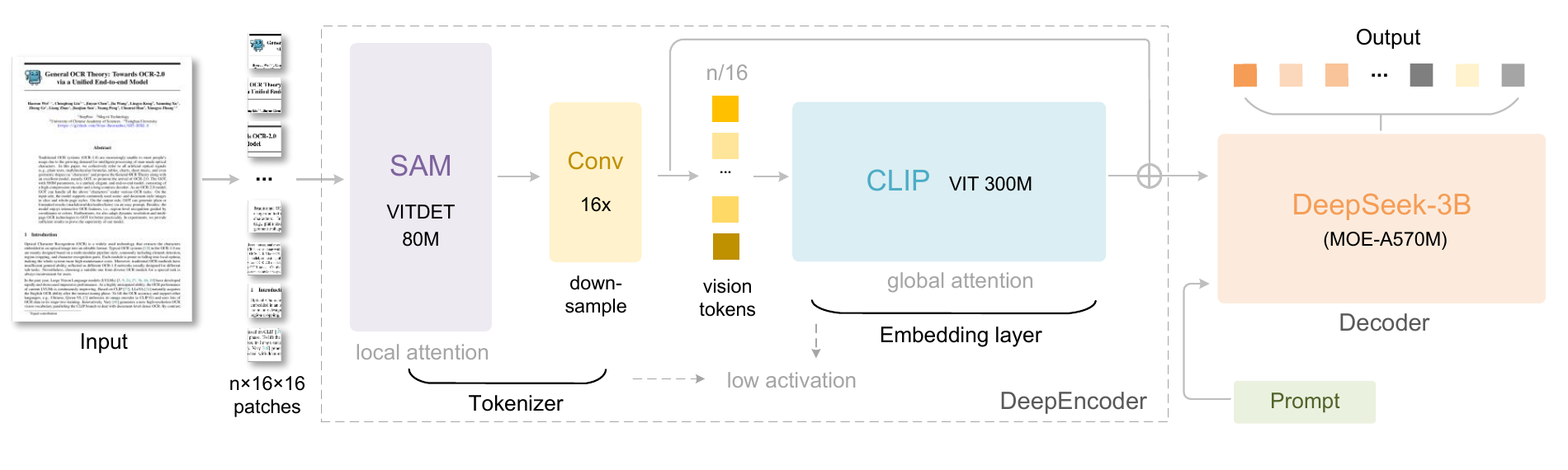
**Figure 6.** DeepSeek-OCR, Figure 3, arXiv v1, page 5; figure excerpt, CC BY 4.0.[^deepseekocr][^figure-notice]
**Image description:** DeepSeek-OCR architecture: a SAM window-attention tokenizer feeds a 16-times convolutional compressor, CLIP global-attention encoder, and DeepSeek 3B mixture-of-experts decoder.
[Figure 6](#figure-6) places compression before global vision attention, controlling the expensive visual sequence.
#### DeepSeek-OCR 2: learn a causal flow over visual evidence
**Motivation:** learn a useful sequence of visual representations before the
language decoder generates text. A document is two-dimensional; flattening
patches row by row need not match its logical reading order.[^deepseekocr2]
For example, imagine a two-column page. A raster sequence moves across both
columns, whereas a reader might finish the left column first. This is an
illustration of the ordering problem—not a claim that ordinary vision encoders
cannot understand columns or model global relationships.
Version 2 preserves the 80M tokenizer, 16× compression, and 3B MoE decoder, but
replaces CLIP with a Qwen2-0.5B **LM-style vision encoder**. Compressed visual
tokens attend bidirectionally. An equally large set of learned causal-flow
queries sees every visual token and only earlier queries; only those query
outputs are passed to the decoder.[^deepseekocr2]
Think of the queries as **learned reading slots**: each gathers page evidence
while incorporating earlier slots' representations. This is intuition, not a
guarantee that an individual slot corresponds to a particular document region.
The mechanism is not an explicit sorting algorithm or a discrete permutation
of patches. Query positions are processed in parallel through masked
transformer layers, rather than generated one at a time.[^deepseekocr2]
The intended effect is semantic ordering before language generation. With a
global view and zero to six local crops, the encoder sends 256–1,120 query
tokens to the decoder. “Reordering” is the authors' interpretation of the
learned query sequence—not a directly observed human reading path—but the
attention mask is precise:
$$
M=
\begin{bmatrix}
\mathbf{1}_{m\times m} & \mathbf{0}_{m\times n}\\
\mathbf{1}_{n\times m} & \operatorname{LowerTri}(n)
\end{bmatrix},
\qquad n=m.
\tag{2}
$$
The top-left block gives visual tokens full mutual visibility; the lower-right
block makes the flow queries causal. The decoder then performs a second causal
stage over the resulting sequence.
Equation (2) is a **visibility mask**: one means allowed and zero means
blocked. It is not the additive mask used directly in attention logits;
the additive equivalent uses zero for allowed entries and negative infinity
for blocked entries. The diagonal of the query block is allowed, so a query
can attend to itself as well as earlier queries.
**Takeaway:** the encoder organizes visual evidence into learned sequential
representations; the decoder turns those representations into text.
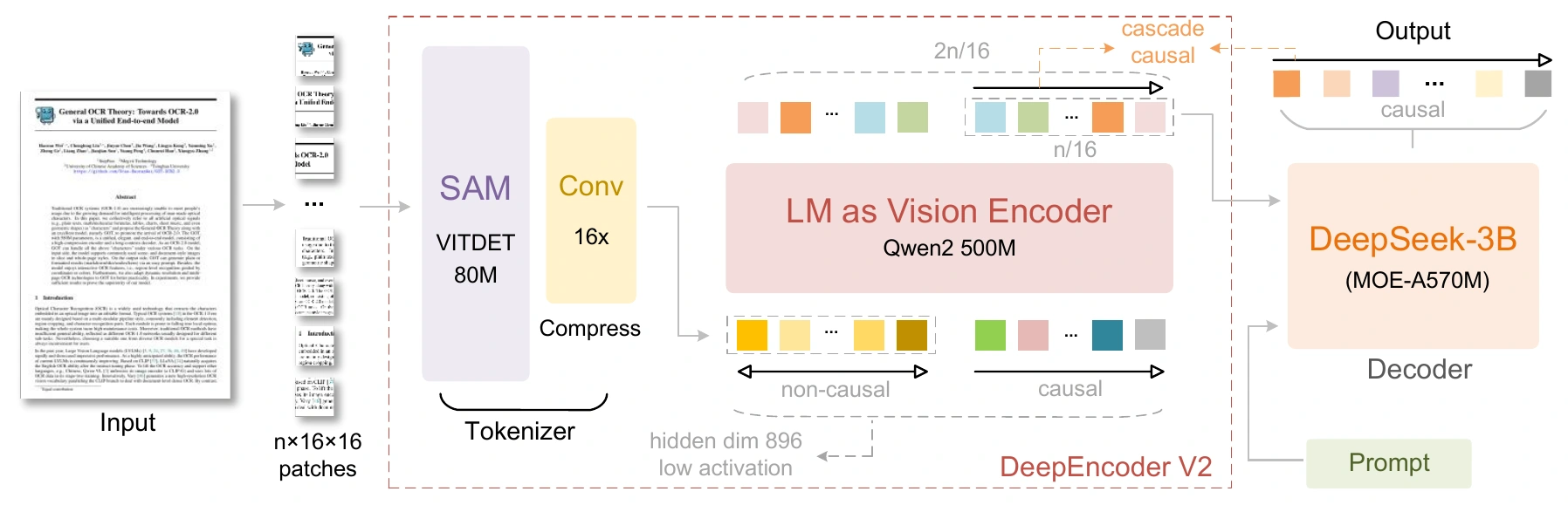
**Figure 7.** DeepSeek-OCR 2, Figure 3, arXiv v1, page 5; blank margins removed, CC BY 4.0.[^deepseekocr2][^figure-notice]
**Image description:** DeepSeek-OCR 2 architecture: the same SAM and convolutional tokenizer feeds an LM-style visual encoder whose bidirectional visual stream and causal query stream precede the MoE decoder.
[Figure 7](#figure-7) replaces CLIP with an LM-style encoder; the learned query stream is different from a discrete sort of page regions.
#### Unlimited-OCR: keep the reference, forget old output
Unlimited-OCR starts from DeepSeek-OCR's compressed **DeepEncoder** and 3B MoE
decoder, with about 500M parameters active during decoding. Its change is in
every decoder attention layer: standard full attention becomes **Reference
Sliding Window Attention (R-SWA)**.[^unlimitedocr]
**R-SWA: one step, two kinds of memory**
**Before generating yₜ · example window n = 4**
1. **Permanent reference**: Prompt and all compressed page tokens
2. **Recent output**: yₜ₋₄, yₜ₋₃, yₜ₋₂, yₜ₋₁
3. **Generate yₜ**: Attend to both caches
**After the step**
1. **Reference unchanged**: Source evidence is not evicted
2. **Evict oldest output**: Remove yₜ₋₄ from the output cache
3. **Append new output**: Keep yₜ₋₃, yₜ₋₂, yₜ₋₁, yₜ
The paper defaults to a 128-token output window; four is only a readable illustration.
**Figure 8.** A cache-step illustration based on R-SWA. The reference stays; old output leaves.[^unlimitedocr]
[Figure 8](#figure-8) separates generation from cache maintenance. Eviction removes output history, not source evidence.
Read the example in two phases. While generating $y_t$, the query reads the
entire permanent reference cache and the four recent output tokens. After $y_t$ is
generated, the oldest output token is evicted and $y_t$ is appended. The reference
cache does not move.
For a generated token at step $t$, R-SWA exposes two kinds of memory:
$$
\mathcal{N}(t)=\mathcal{P}\cup\mathcal{D}_n(t),
\qquad
C_{\text{R-SWA}}(T)=L_m+\min(n,T)\le L_m+n.
\tag{3}
$$
$\mathcal{P}$ is the complete fixed prefix—the prompt and compressed visual
tokens—and remains visible throughout generation. $\mathcal{D}_n(t)$ contains
only the most recent $n$ output tokens. Therefore the **decode-side** KV cache
stops growing after $n$ tokens, while visual evidence is never evicted. Equation (3)
counts cached positions per attention layer, not memory bytes or model
weights. It is different from ordinary sliding-window attention, which could also push the
source image out of view.
This mechanism targets a different latency problem from GLM-OCR's MTP or
HunyuanOCR's DFlash: those methods try to emit several tokens per target-model
step, while R-SWA bounds how much past output each step must store and attend
to. The released model supports a 32K context and single- or multi-page
parsing through Transformers, vLLM, and SGLang.[^unlimitedocrrepo]
**“Unlimited” is the design direction, not a literal bound.** For a fixed visual prefix, R-SWA bounds cache growth with generated length.
But total cache is still $L_m+n$, and $L_m$ grows as more page images are
added. The report's 40+ page results use a small in-house benchmark, while
the released model remains constrained by its 32K context. Treat the title
as an aspiration toward long-horizon parsing, not proof of arbitrary-length
PDF support.[^unlimitedocr]
**How to read the authors' figure below:** each row is a query position and
each column is a key/value position it could read. Blue cells are the permanent
reference prefix. Pink cells are generated-output history. In full attention,
the pink area grows into a triangle; in R-SWA, it becomes a fixed-width
diagonal band. In the R-SWA panel, white cells between the blue block and that
pink band are old output that has left the cache—not missing document evidence.
White cells to the right are future output positions excluded by causal
decoding.
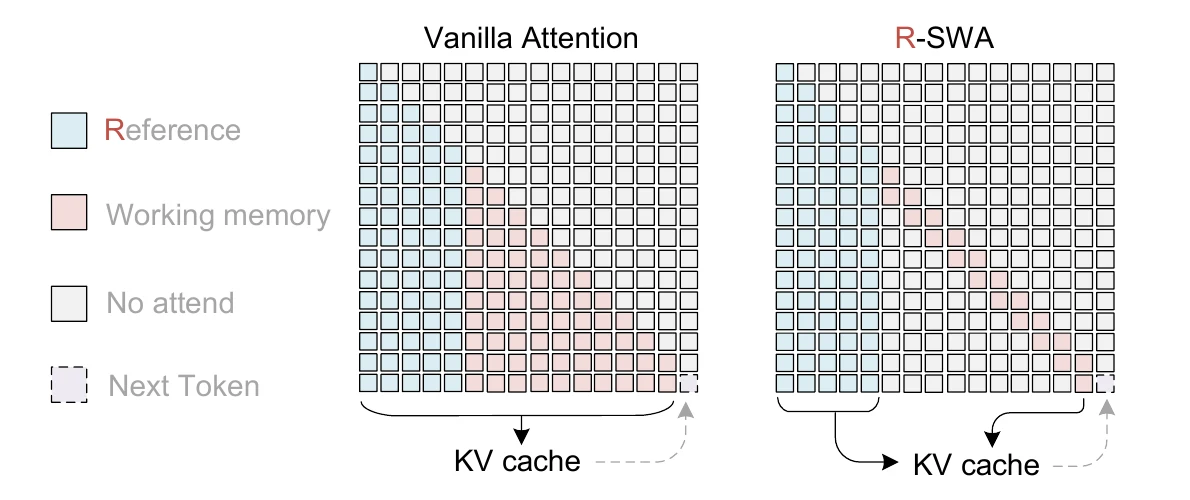
**Figure 9.** Unlimited OCR Works, Figure 1, arXiv v1, page 1; figure excerpt, CC BY 4.0.[^unlimitedocr][^figure-notice]
**Image description:** Reference Sliding Window Attention compared with full attention: all blue reference tokens remain visible, while only a bounded diagonal window of recent pink output tokens is retained in the KV cache.
[Figure 9](#figure-9) shows the same distinction as an attention matrix: a permanent reference block plus a moving output band.
#### Unlimited-OCR 2: bound attention and resident pages separately
The October 27 release addresses the cost left open by R-SWA: even after old
output is evicted, every new token still reads all page references. Version 2
retains the DeepEncoder/MoE backbone and adds **Sparse Reference Sliding Window
Attention (SR-SWA)**. Its Page Gate restricts eligible visual blocks by page;
Token Sieve scores block summaries and selects a fixed top-k set. Attention
combines those selected blocks with a local token window. Selection is trained
through a routing bias in the attention logits, rather than a separate
dense-attention distillation objective.[^unlimited2]
**Long-document parsing has two separate memory controls**
**R-SWA · output history**
1. **All page references**: The visual prefix grows with input pages
2. **Recent output window**: Old generated tokens leave the cache
**SR-SWA · attention working set**
1. **Page Gate**: Restrict eligible visual blocks by page
2. **Token Sieve**: Choose a fixed number of scored blocks
3. **Attend locally and remotely**: Selected visual blocks plus recent tokens
A bounded attended set does not by itself bound all stored page KV.
**Chunked serving · resident page memory**
1. **Process active chunk**: Only a bounded set of pages is resident
2. **Reuse boundary context**: One shared page and a retained text tail
3. **Release inactive page KV**: Continue into the next overlapping chunk
Cross-chunk continuity is retained context, not unrestricted access to the whole book.
**Figure 10.** Independent synthesis of the two controls in Unlimited OCR Works 2: sparse access and page-chunk residency.[^unlimited2]
[Figure 10](#figure-10) separates **how much a query attends to** from **how much
source KV remains in memory**. The report’s second mechanism processes
overlapping page chunks, reuses the shared boundary page and a text tail, and
releases inactive page caches. This is what bounds resident visual memory;
sparse attention alone does not. Total processing still grows with document
length.[^unlimited2]
The authors report a peak KV reduction from 47.00 GB to 1.77 GB in their
single-sequence chunking comparison. Their separate 7× per-step speedup versus
full attention is measured at the hundred-page scale in Gundam mode, batch 3,
with 1,024 generated tokens per page. These are different experiments, not an
end-to-end speed-and-memory guarantee for any PDF.[^unlimited2]
Official weights and a customized SGLang path are available. The deployment
notes still identify prefill memory growth and a page-window tradeoff: smaller
windows can weaken cross-page merging. The report itself says sparse access
does not preserve all global document information, including heading
hierarchies. Long transcription and whole-document understanding remain
different requirements.[^unlimited2][^unlimited2-deploy]
#### HunyuanOCR-1.5: one model, long context, faster decoding
HunyuanOCR-1.5 retains the family's end-to-end path: native-resolution
Hunyuan-ViT → adaptive MLP connector → Hunyuan-0.5B decoder. Version 1.5 raises
the maximum image resolution from 2K to 4K and the context window to 128K so
the same model can handle document parsing, text spotting, extraction, QA,
translation, and multiple images.[^hunyuanocr15]
**What “native resolution” means.** The original HunyuanOCR report gives the
concrete lineage: Hunyuan-ViT is an approximately 0.4B visual encoder built on
SigLIP-v2-400M. Its adaptive patching preserves the input aspect ratio, and all
resulting patches pass through global ViT attention.[^hunyuanocr]
This differs from a conventional ViT pipeline that resizes every image to one
fixed square and therefore produces the same patch grid regardless of source
shape. Hunyuan-ViT accepts a variable-height, variable-width grid instead: a
long receipt remains tall and narrow, while a square page remains square.
Conceptually, for patch size $P$:
Fixed-square ViT:
$$
\begin{aligned}
H\times W &\rightarrow R\times R,\\
N_{\text{patch}} &= (R/P)^2.
\end{aligned}
\tag{4}
$$
Native-resolution ViT:
$$
\begin{aligned}
H\times W &\rightarrow H'\times W',\\
H'/W' &\approx H/W,\\
N_{\text{patch}} &= (H'/P)(W'/P).
\end{aligned}
\tag{5}
$$
Preserving the page geometry helps retain small-character density, column
relationships, and table or chart structure. The resulting number of visual
tokens varies with the image; only **after** global vision attention does the
adaptive MLP connector pool and project those features into a shorter sequence
for the language model. The connector therefore reduces decoder-side visual
tokens, but it does not remove the vision encoder's cost of processing the
high-resolution patch grid.[^hunyuanocr]
This resembles NaViT's broader variable-resolution, aspect-ratio-preserving
principle, which HunyuanOCR-1.5 cites. But the original report does not describe
Hunyuan-ViT as simply NaViT: it specifically describes a SigLIP-v2-based
encoder with Hunyuan's adaptive patching and training recipe.[^navit][^hunyuanocr]
“Native” does **not** mean that every source pixel passes through unchanged or
that resolution is unlimited. Images may still be rescaled to a supported
pixel budget and rounded to patch-compatible dimensions. HunyuanOCR-1.5 raises
that supported envelope to 4K; the inspected image-processor configuration uses 16-pixel
patches and a 2× spatial merge. Treat processor pixel limits, vision config
fields and the paper’s supported envelope as separate contracts. The downstream Hunyuan-0.5B uses XD-RoPE to
assign text, height, width, and time coordinates to the resulting multimodal
sequence.[^hunyuanocr15][^hunyuanocr-config]
Its decoding addition is **DFlash**. A separate 90.7M, five-layer
block-diffusion draft model proposes up to a block of candidate tokens in one
parallel pass; the frozen target model verifies the block and accepts the
longest valid prefix. This preserves the target distribution while spending
otherwise idle compute to reduce sequential steps. The authors report 6.37×
Transformer and 2.14× vLLM speedups in their setup; gains depend strongly on
output length, regularity, batching, and serving conditions.[^hunyuanocr15]
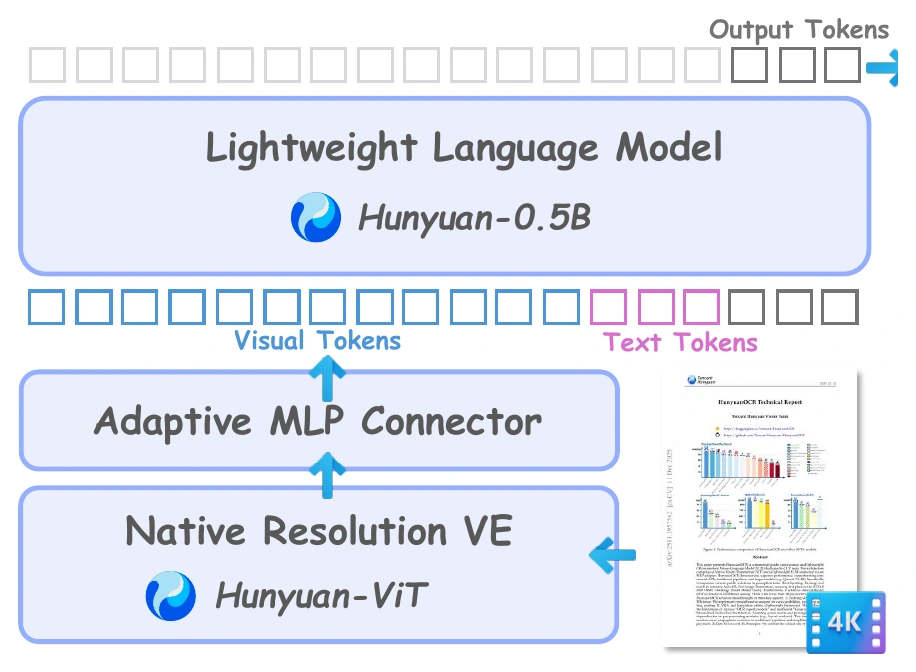
**Figure 11.** HunyuanOCR-1.5, architecture panel from Figure 1, arXiv v2, page 4; cropped to omit task examples, CC BY-SA 4.0.[^hunyuanocr15][^figure-notice]
**Image description:** HunyuanOCR-1.5 architecture panel: native-resolution vision encoder, adaptive MLP connector and Hunyuan 0.5B language decoder
[Figure 11](#figure-11) keeps native visual encoding and decoder-token compression separate. The connector cannot erase upstream vision cost.
#### LightOnOCR-2: optimize data and the localization objective
LightOnOCR-2 is a 1B end-to-end specialist built around distilled document
training data. The revised report expands scans, scientific pages and French
content; introduces image bounding boxes; and uses reinforcement learning
with an intersection-over-union reward for localization. Checkpoint averaging
and task arithmetic produce distinct quality, speed and bounding-box variants.
Do not treat one variant’s localization behavior as a property of every
checkpoint.[^lighton]
**Current release check.** The official catalog also lists LightOnOCR-3 in
0.8B, 1B and 4B variants. The 1B retains the previous architecture; 0.8B and 4B
use Qwen3.5. Its grounding mode adds typed boxes, image descriptions and
chart-to-table data; transcription mode remains distinct. The card limits
usage to the empty prompt or `grounding`, rather than arbitrary instructions.
This is documented capability, not an independently measured accuracy claim.[^lighton3]
[Current model family](https://huggingface.co/lightonai/LightOnOCR-3-4B) ·
[Version 2 report](https://arxiv.org/abs/2601.14251v2) ·
[Model family](https://huggingface.co/lightonai/LightOnOCR-2-1B)
#### Nemotron Parse 2.0: encoder–decoder attention is still useful
NVIDIA’s sub-billion-parameter parser combines a C-RADIO vision encoder,
convolutional compression and a ten-block mBART decoder that cross-attends to
visual features. The model emits text, element classes, reading order and
locations. Its expanded vocabulary and data target multilingual content,
handwriting and chart-to-table conversion.[^nemotron]
This is a useful counterexample to treating every document VLM as a
decoder-only model with visual prefix tokens. Its separately archived auxiliary
prediction head is not loaded by the standard checkpoint or inference examples.
Do not infer an MTP serving speedup from the existence of that training head.[^nemotron]
[Model and inference contract](https://huggingface.co/nvidia/NVIDIA-Nemotron-Parse-2.0)
#### Nemotron 3.5 Parse: inspect the attention path and inference passes
The October 17 release changes the version-specific lesson. Its approximately
0.631B model combines C-RADIOv4-SO400M, sequence compression and a ten-layer
mBART **causal visual-prefix decoder**. This is distinct from the
cross-attending Parse 2.0 described above. Its trained one-step MTP head is
included in the checkpoint; ordinary Transformers generation and the vLLM
plugin’s one-token speculative path are different serving contracts.[^nemotron35]
One pass parses the page. Two passes refine table/chart crops selected by that
parse; three add a separate detection request and refine the union of regions.
More work can improve the authors’ ParseBench result while reducing throughput.
Their merge retains differing page/crop alternatives, and the reported scores
include those alternatives. Test a resolved downstream representation as well
as that benchmark output. The model card, pipeline and runtime must be pinned
together; its results do not establish one latency for every serving path.[^nemotron35]
#### Chandra OCR 2: separate the open model from the service
Datalab’s released Chandra OCR 2 converts pages into Markdown, HTML or JSON
with layout information. Its configuration uses a Qwen3.5-style architecture;
the published open-model comparison counts 4.5B inference parameters under its
own counting convention. Configuration type alone does not establish a
particular base-checkpoint initialization.[^chandra2][^datalab-open-bench]
The open checkpoint and the hosted product have different boundaries.
Datalab’s current Convert service names **Chandra 2.5**, with fast, balanced and
accurate modes and optional word boxes. Its service results cannot be assigned
to the public Chandra OCR 2 weights. The latter’s code is Apache-2.0, while
its weights have modified OpenRAIL-M commercial conditions. Inspect the
chosen artifact’s terms and the complete serving path.[^chandra2][^datalab-convert]
### B. Layout-first and region-routed parsers
These systems use explicit page decomposition. The first stage simplifies the
recognizer's job and enables parallel crops, but it also creates an error
boundary: content missed, merged, or misordered upstream may be unrecoverable.
#### MinerU2.5: global layout, then native-resolution crops
MinerU2.5 is a 1.2B Qwen2-VL-style model with a 675M NaViT visual encoder, a
2×2 pixel-unshuffle patch merger, and a 0.5B Qwen2-Instruct decoder. It first
resizes the whole page to 1036×1036 and predicts layout boxes, then returns to
the original image and recognizes selected crops at native resolution.[^mineru]
The design separates two different visual needs: layout depends on global
geometry, while transcription depends on local pixels. It saves high-resolution
compute on blank margins, but a missed first-pass region cannot be repaired by
the second pass.
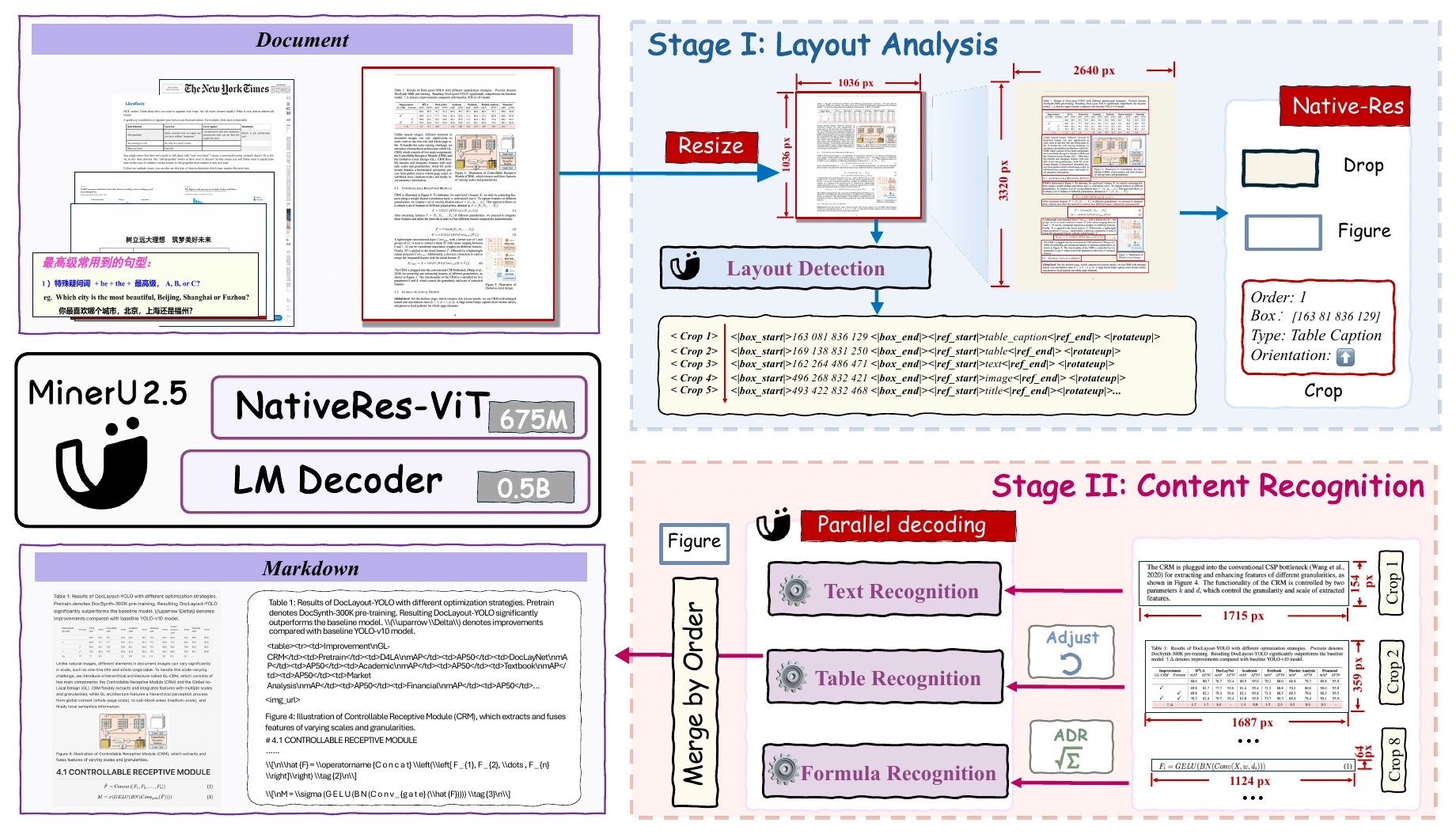
**Figure 12.** Global layout, local detail. Niu et al., MinerU2.5, Figure 2, arXiv v2, page 7; figure excerpt reproduced for technical review, not MIT licensed.[^mineru][^figure-notice]
**Image description:** MinerU2.5 finds layout on a small page image, then recognizes native-resolution crops in parallel and merges them in order
[Figure 12](#figure-12) shows why layout recall matters: a crop never selected cannot be transcribed in the second stage.
#### MinerU2.5-Pro: improve the data engine, retain the architecture
The Pro report retains the 1.2B architecture but scales its corpus to 65.5M
samples. Diversity and difficulty sampling, heterogeneous expert consensus,
and rendering-based verification refine the supervision. Training proceeds
through pretraining, hard-sample SFT and GRPO. The important contrast is with
uniform data scaling: target the errors the current model still makes.[^mineru-pro]
[Report](https://arxiv.org/abs/2604.04771v2) ·
[Checkpoint](https://huggingface.co/opendatalab/MinerU2.5-Pro-2604-1.2B)
The MinerU application has its own version history and now documents a 4.0
software workflow. That is not evidence of a new “MinerU4” neural architecture.
Its repository license adds conditions to an Apache-based license; inspect
software and checkpoint terms separately before adoption.[^mineru-repo]
#### The PaddleOCR family and its current VL model
**Version check · October 11, 2026.** PaddleOCR-VL 1.6 is the flagship VL version shown in the inspected official
PaddleOCR repository. It belongs to a broader family that also includes
modular PP-OCR text detection/recognition, PP-Structure document structure,
PP-ChatOCR document understanding, preprocessing, table, formula, seal, and
deployment pipelines.[^paddleocrrepo]
PaddleOCR-VL 1.6 is a two-model parsing system. PP-DocLayoutV3 performs layout
analysis and multi-point localization, then PaddleOCR-VL-1.6-0.9B recognizes
text, tables, formulas, charts, and seals using a native-resolution visual
encoder, adaptive MLP connector, and ERNIE-4.5-0.3B decoder. Post-processing
assembles Markdown or JSON and supports cross-page table and heading
refinement.[^paddleocr]
The important version detail is that **1.6 retains the 1.5 architecture**. It
mines three kinds of residual weak regions—checkpoint/perturbation-fragile,
coverage-sparse, and unreliable-supervision—then retrieves or relabels nearby
data with expert consensus and judge-and-refine. Training proceeds through
CPT → hard-sample SFT → selected-data GRPO. In the authors' OmniDocBench v1.6
ablation, most of the gain comes before RL: 94.93 at the 1.5 checkpoint, 95.62
after CPT, 96.25 after SFT, and 96.33 after RL.[^paddleocr]
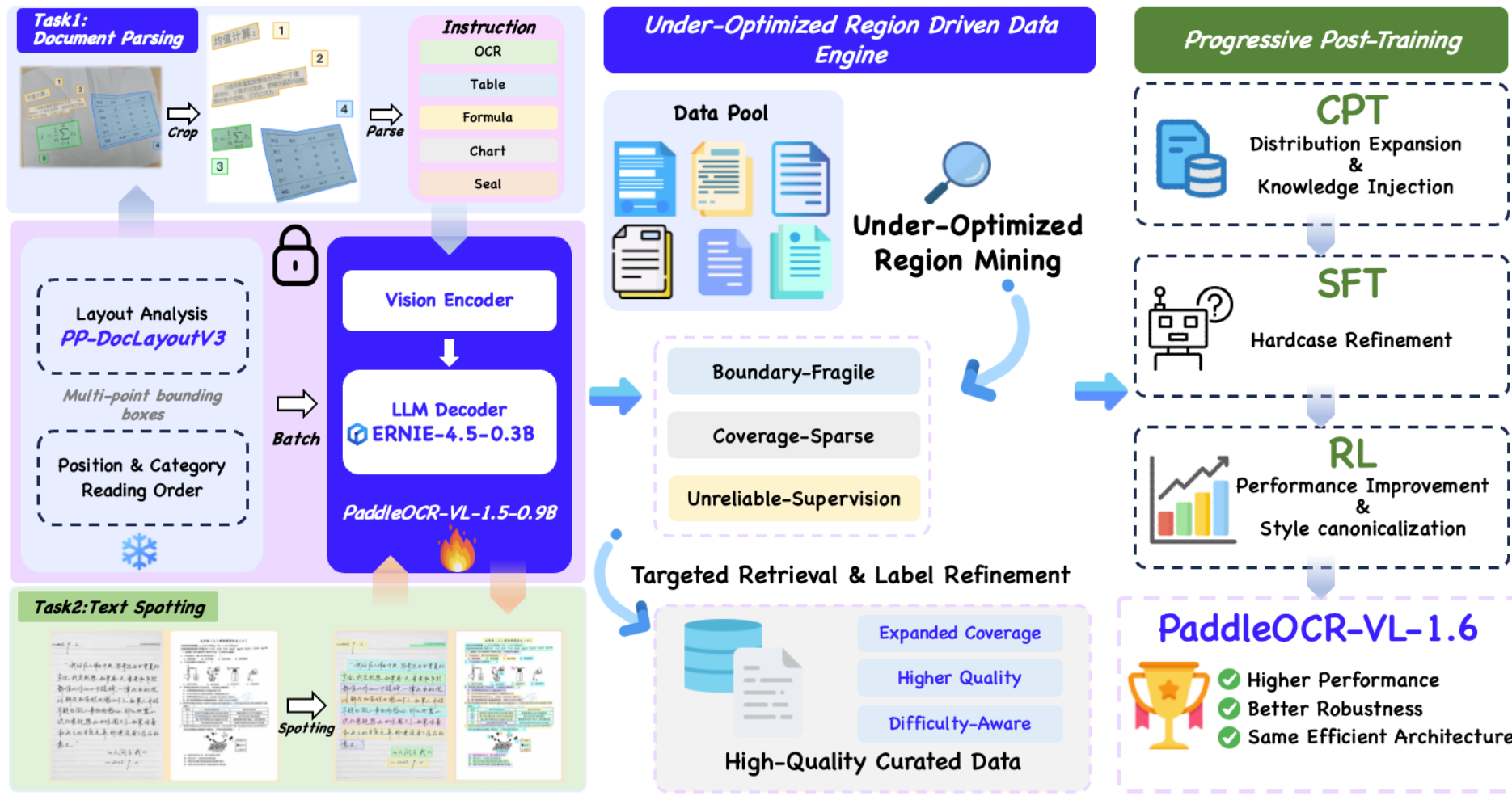
**Figure 13.** PaddleOCR-VL-1.6, Figure 2, arXiv v1, page 5; figure excerpt, CC BY 4.0.[^paddleocr][^figure-notice]
**Image description:** PaddleOCR-VL-1.6 system overview showing document parsing and spotting tasks, retained detector and recognizer architecture, under-optimized-region data mining, curated data, and CPT to SFT to RL post-training.
[Figure 13](#figure-13) makes the data engine visible alongside the retained architecture. The upgrade is not simply a larger backbone.
#### GLM-OCR: compact region recognition with multi-token heads
GLM-OCR combines a 0.4B CogViT encoder, lightweight connector, and 0.5B GLM
decoder for 0.9B total parameters. For page parsing, PP-DocLayout-V3 finds and
crops regions, which the core model recognizes in parallel before merge and
post-processing restore structured Markdown/JSON. For key information
extraction, the full page and schema prompt can go directly to the core model
without explicit region cropping.[^glmocr]
Its distinctive decoding mechanism is shared-parameter **multi-token
prediction (MTP)**. Auxiliary heads learn different future offsets; the model
is trained for ten tokens per step and averages 5.2 generated tokens per step
in the report's inference setup. Unlike Hunyuan's external draft-and-verify
model, MTP is built into the decoder. The authors report about 50% throughput
improvement, while also acknowledging detector error propagation and difficult
cross-page or multi-column reading order.[^glmocr]
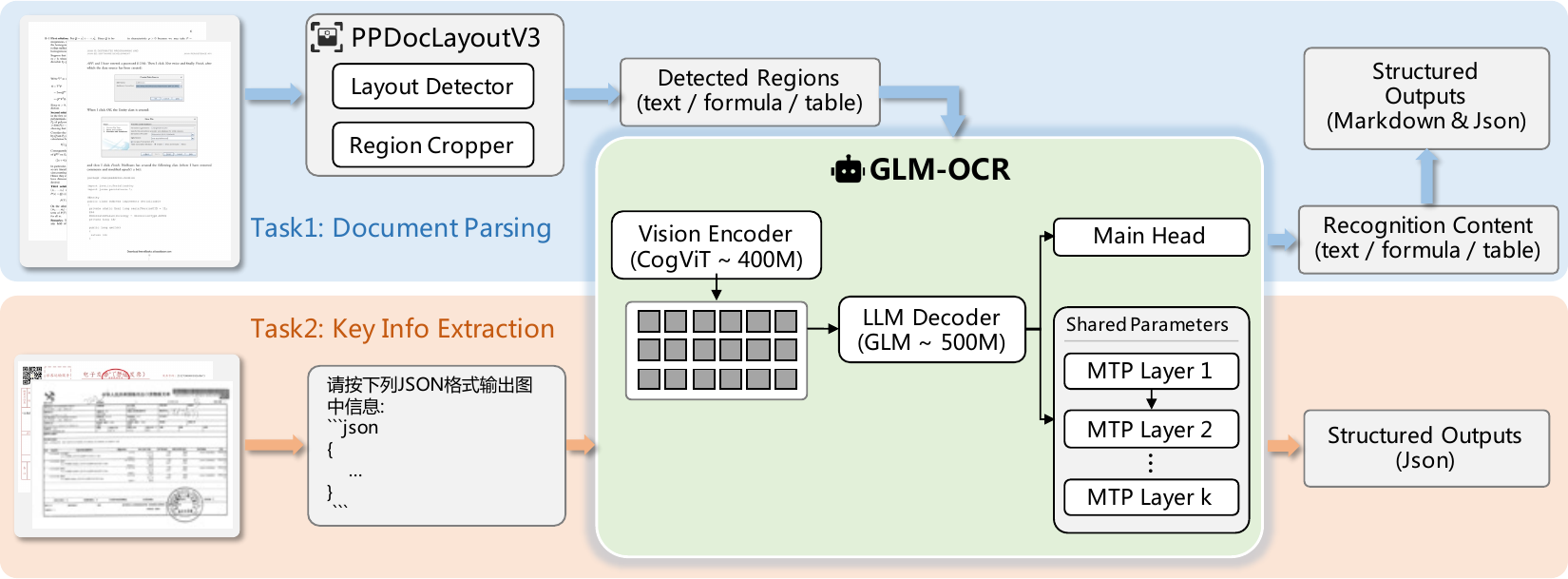
**Figure 14.** GLM-OCR, Figure 2, arXiv v2, page 4; figure excerpt, CC BY 4.0.[^glmocr][^figure-notice]
**Image description:** GLM-OCR workflow showing PP-DocLayout-V3 region detection for document parsing, direct visual prompting for key extraction, a CogViT encoder, GLM decoder, shared MTP heads, and structured outputs.
[Figure 14](#figure-14) separates layout-routed parsing from direct schema-conditioned extraction.
#### MiniCPM-OCR 1.0: distinguish the recognizer from the parser
MiniCPM-OCR 1.0 is a released 1.3B recognition model combining a SigLIP vision
encoder with a Qwen3.5 language backbone, specialized from the MiniCPM-V 4.6
family. Its document SDK supplies the rest of the parser: render PDF pages,
run PP-DocLayoutV3 for regions and reading order, recognize crops concurrently,
then assemble Markdown, HTML tables and LaTeX. Chinese and English are its
primary languages. Direct schema-conditioned KIE is a separate path: image
and requested fields go straight to the recognition service.[^minicpm]
This division matters when measuring size and speed. The 1.3B label excludes
the layout detector, and page concurrency is different from concurrency among
regions within a page. **DSpark is optional decoding acceleration with a
matching draft artifact**; ordinary recognition does not require it. The
authors report 1.217 pages/s over all 1,651 OmniDocBench v1.6 images on an RTX
5090, at image concurrency 1 with each system’s official accelerated SDK.
Their reproduction guide leaves complete commands and logs for the separate
55% DSpark improvement pending. Neither number is a universal hardware
requirement or an independently reproduced result.[^minicpm-benchmark]
The useful architectural addition is the pairing with a separate verifier,
[MiniCPM-OCR Jev](#minicpm-ocr-jev-score-the-candidate-against-the-crop).
Recognition produces a candidate; verification evaluates that candidate
against its source. Both checkpoints are released under Apache-2.0.[^minicpm][^jev]
#### OXR-1.0: make layout replaceable, retain recognition and order
OXR uses a separate, pluggable layout model. The OXR network then handles
content recognition and reading order as two branches, allowing a domain’s
region taxonomy to change without assigning recognition to a different
model. Its released implementation uses a SigLIP2/NaViT-style visual encoder
and a Qwen3 decoder. A learned visual vocabulary maps soft visual-token
distributions into embedding vectors for the language model; it is more
specific than an ordinary linear projection of image features.[^oxr]
The advertised size is 1.3B, while the inspected Hub metadata lists about
1.53B stored BF16 tensor values for the recognition checkpoint. Stored tensor
values are not an independently counted trainable-parameter total, and the
layout network is separate. Use the artifact and complete pipeline when
budgeting memory.[^oxr]
Its **recursive self-improvement (RSI)** is a post-training data loop. The
official diagram uses a general VLM to classify predictions, compares multiple
rollouts for disagreement, groups attributed errors, and generates new
image–label pairs matching reference styles. This describes targeted training
data construction, not automatic learning from every production document.
A formal report was still marked forthcoming at inspection, so the evidence
here is the release documentation and implementation, not a paper-level
ablation of RSI.[^oxr]
Weights are public, but the license is **Apache-2.0 with additional OXR
terms**, including commercial thresholds, service attribution and a competing
hosted-API restriction. Public weights do not imply unrestricted commercial
use.[^oxr-license]
#### Surya OCR 2: share recognition tasks without merging every stage
Surya OCR 2 uses a roughly 650M Qwen3.5-style VLM for recognition, layout and
table tasks. Prompts select layout JSON or full-page HTML behavior. Text-line
detection remains a separate small model, so “one shared VLM” does not mean
that every stage or dependency disappears. The surrounding package supplies
reading-order and table interfaces as well as recognition.[^surya2]
This is a useful modular option beside full-page converters. Test whether the
selected prompt and wrapper preserve the granularity your application needs,
especially table relations and region identity. Code and weights have separate
terms: the code is Apache-2.0, while the weights use a modified OpenRAIL-M
license with commercial conditions.[^surya2]
#### HPD-Parsing: parallelize the output tree
HPD-Parsing attacks the serial generation bottleneck differently. A main
layout branch establishes global structure and dynamically forks local content
branches that decode concurrently. Progressive multi-token prediction reduces
steps inside each branch. Unlike independent crop calls after an external
detector, the model’s decoding process coordinates the branching.[^hpd]
[Official usage and model link](https://www.paddleocr.ai/latest/en/version3.x/pipeline_usage/HPD-Parsing.html) ·
[Report](https://arxiv.org/abs/2607.18839)
The documented runtime is a customized vLLM build supporting request forking
and P-MTP. Parallel decoding is therefore a model-plus-runtime property, not
something a generic Transformers loader automatically provides. Peak token
throughput is not document latency at your batch size.[^hpd]
#### MinerU-Diffusion: change the target decoder, not just its draft
The March 2026 report uses parallel block diffusion for document generation,
with uncertainty-aware curriculum learning and inverse-rendered data. Its
reported decoding acceleration is conditional on the tested setting; it is not
a guarantee for end-to-end ingestion.[^mineru-diffusion]
This differs from Hunyuan’s DFlash: DFlash proposes tokens that an
autoregressive target verifies. MinerU-Diffusion changes the target generation
method itself. The report is inspected; checkpoint availability was not
verified in this review.[^mineru-diffusion][^hunyuanocr15]
### C. Change the supervision or the output language
The next frontier is not only a better visual backbone. Some models change
what counts as a correct parse or expand what a parser is expected to emit.
#### olmOCR 2: executable document tests as rewards
olmOCR 2 starts from Qwen2.5-VL-7B-Instruct, fine-tunes on 267,962 pages, and
then applies GRPO on 2,186 synthetic pages with 30,381 HTML-derived binary
tests. Each page produces 28 completions; tests check content presence and
absence, reading order, table relations, formulas, and repetition.[^olmocr2]
For output $y$ and $M$ tests, the main reward is
$$
R_{\text{doc}}(y)
=
\frac{1}{M}\sum_{j=1}^{M}\mathbf{1}[T_j(y)\text{ passes}].
\tag{6}
$$
This is more semantically tolerant than raw edit distance: equivalent table
serializations can pass while text in the wrong order fails. But tests only
reward properties they encode, and the paper's benchmark is English-only.
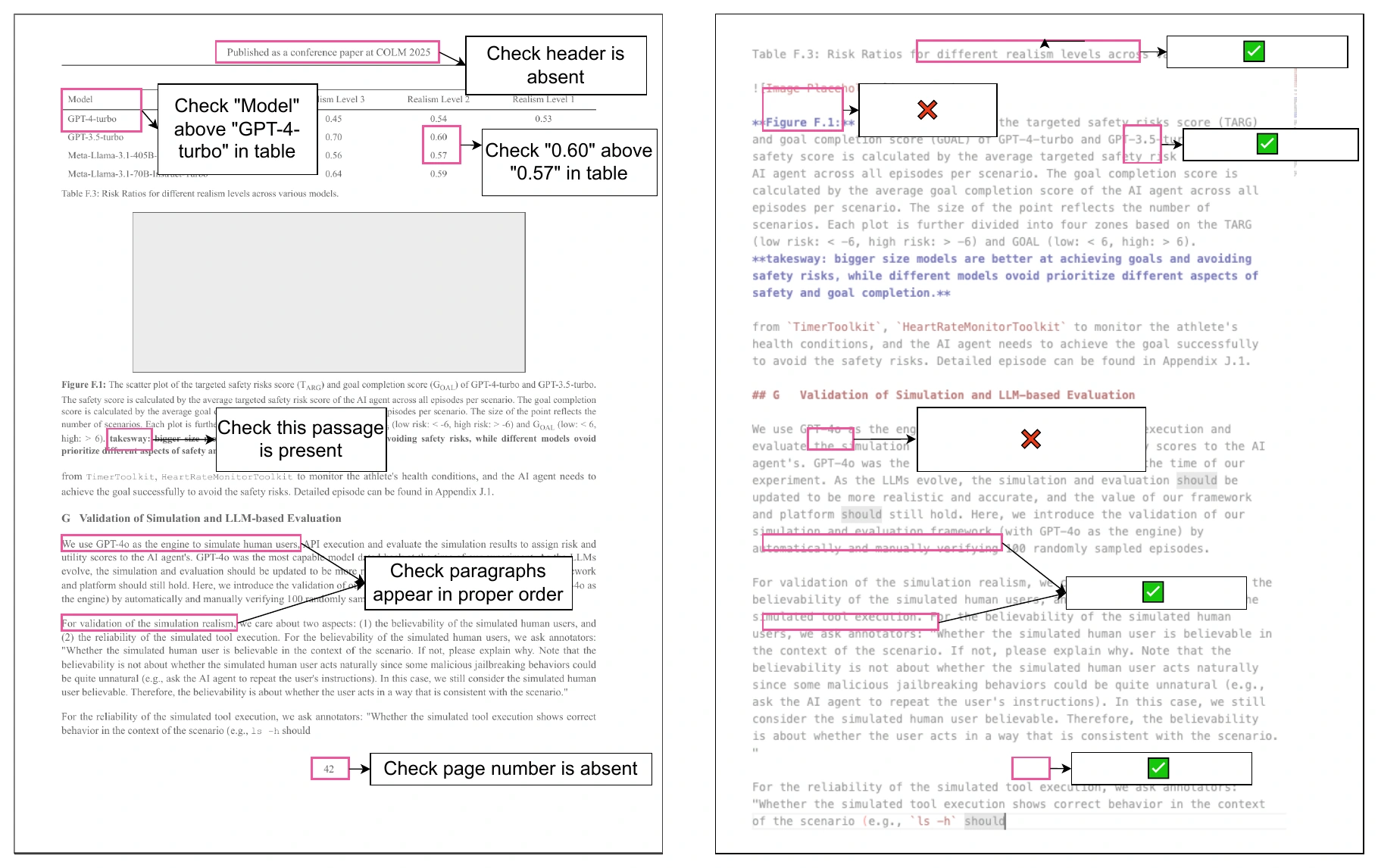
**Figure 15.** Executable tests score generated text. Poznanski et al., olmOCR 2, Figure 4, arXiv v1, page 6; figure excerpt, CC BY 4.0.[^olmocr2][^figure-notice]
**Image description:** An HTML-rendered training page defines content and order checks; a generated Markdown page passes four of six binary tests
[Figure 15](#figure-15) checks selected document properties, not exact serialization equality. Unspecified properties can still be wrong.
The rendered HTML is the canonical source for each synthetic training image.
If a teacher changes the original document while rebuilding it as HTML, the
synthetic image and tests can still be internally consistent. That does not
prove faithful copying of the original. The reward above is the main test
component, not the complete GRPO objective or every auxiliary reward.[^olmocr2]
The release also changes the base model, prompts, image settings, retries and
checkpoint merging. Its overall benchmark gain should not be attributed to RL
alone without a controlled ablation.[^olmocr2]
#### dots.mocr: treat graphics as programs, not leftover pixels
dots.mocr extends the output boundary beyond text-centric parsing. Its
scratch-trained 1.2B high-resolution encoder accepts up to roughly 11 million
pixels; a connector feeds a Qwen2.5-1.5B base decoder. The generated sequence
contains ordered typed regions $(\mathcal{B}_k,c_k,p_k)$, where payload $p_k$
can be text, table markup, LaTeX, or renderable SVG for charts, icons, diagrams,
and UI elements.[^dotsmocr]
The current release is not literally “parse everything in one pass.” Full-page
text parsing and region-level image-to-SVG decoding are task-conditioned
separate passes. SVG also introduces a different evaluation problem: many
programs can render the same picture, so render fidelity and structural checks
matter more than exact code match.
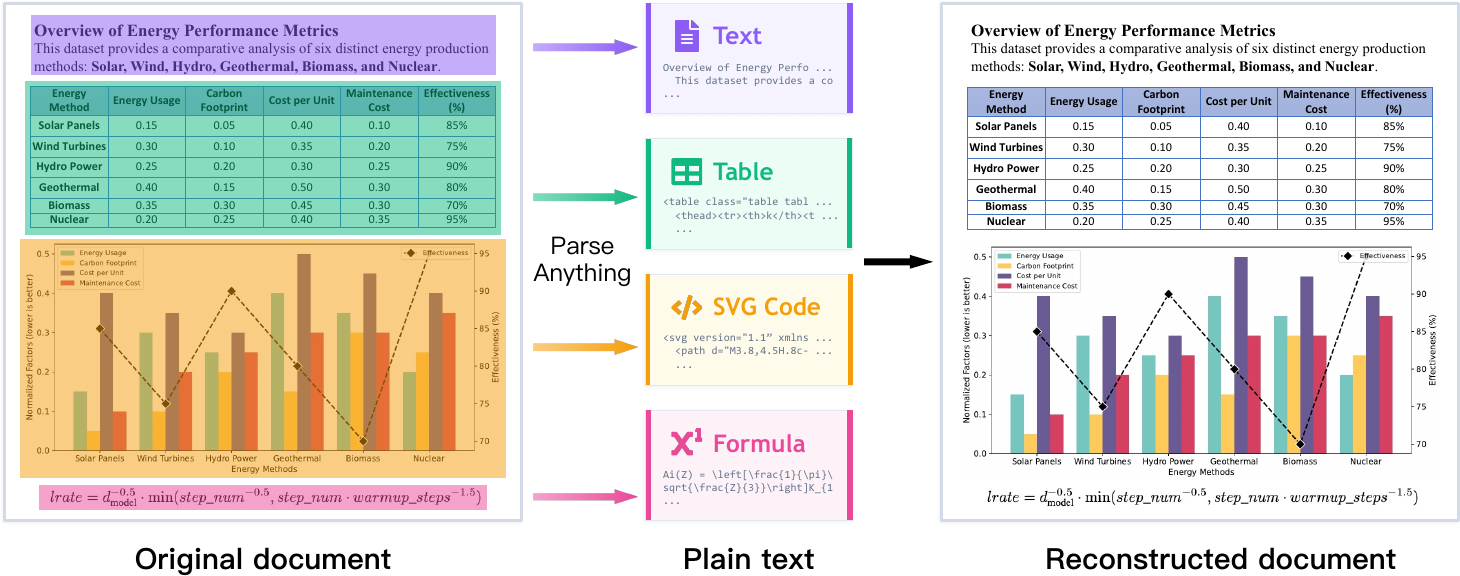
**Figure 16.** dots.mocr, Figure 1, arXiv v2, page 2; unchanged figure excerpt, CC BY-NC-ND 4.0.[^dotsmocr][^figure-notice]
**Image description:** MOCR overview in which a document containing text, a table, chart, and formula is converted into typed text, table markup, SVG code, and formula representations and then reconstructed.
[Figure 16](#figure-16) expands the output contract to graphics code. Photos and graphics with no compact program remain raster content.
#### TeleOCR: geometry remains a frontier
**TeleOCR** adds deformation-aware learning, adaptive sampling for complex
layouts and content/structure decoupling for formulas and tables. The current
September revision uses the TeleOCR name; earlier indexing used NaviDC. Its
reported 78.41 PureDocBench score is a later author result, illustrating why
the original study’s roughly 74 score is not a current ceiling. Cross-report
scores still require matching evaluator and dataset versions.[^teleocr]
#### Xiaomi-OCR-0: connect reading to understanding
Xiaomi-OCR-0 starts from Qwen3.5-0.8B and trains one compact model for parsing,
key-information extraction and OCR-centric visual QA. Its report appeared
September 28; the official repository records the weight release on September
30. **Official checkpoints are available**, correcting this guide’s earlier
unverified availability status. The model and code carry Apache-2.0 terms;
community quantized conversions are separate artifacts whose benchmark parity
is not established here.[^xiaomi][^xiaomi-artifacts]
The main contribution is the relationship between **label quality, spatial
anchoring and understanding supervision**. Its approximately 170M-sample
corpus mixes regions, pages and understanding tasks. That is not 170M distinct
pages, and it is not a text-token count.[^xiaomi]
**Build labels, then decide what to learn from them.** A layout detector
supplies regions to heterogeneous expert recognizers. The pipeline ranks
experts by their mean pairwise agreement, keeps the top three, and selects the
most central candidate among that trio. Uncertain cases undergo
render-guided refinement and return to the expert pool for another consensus
check; selected unresolved cases receive human review. This is not an
exhaustive search over every possible expert triplet. Agreement is also not a
calibrated probability of truth: correlated experts can share an error.[^xiaomi]
Mining keeps two signals distinct: expert agreement estimates label
reliability, while the student’s consistency and errors indicate learning
need. Coverage-driven synthesis fills missing patterns; failure-driven
synthesis targets verified weaknesses. A frozen, source-group-separated
validation set guides recipe revisions but stays out of training and linked
synthetic derivatives. Because that set guides development, a separate sealed
test remains necessary for an unbiased final estimate.[^xiaomi]

**Figure 17.** Xiaomi-OCR-0 training recipe. Chen et al., Figure 3, arXiv v1, page 9; figure excerpt, CC BY 4.0.[^xiaomi][^figure-notice]
**Image description:** Three ordered stages in Xiaomi-OCR-0: text-anchoring pretraining, continued pretraining on document parsing and OCR-centric understanding, then mixed-task reinforcement learning on hard examples.
[Figure 17](#figure-17) separates three training stages:
1. **Q-Mask text anchoring.** A query-conditioned mask decoder adds spatial
supervision alongside answer-token prediction. The mask decoder is
removed before continued pretraining; it is not a required segmentation
head in the deployed OCR path.
2. **Continued pretraining.** Parsing, KIE and VQA share an autoregressive
instruction format. The base model’s single multi-token prediction head
is jointly trained, which does not establish default inference speedup.
3. **Mix-RL.** Task-specific rewards score text similarity, table structure,
formula rendering, field extraction and QA. The parsing reward also
matches page elements; invalid format and length receive explicit
treatment. A fluent answer alone is not the objective.[^xiaomi]
**What do the experiments establish?** The authors report 96.83 on
OmniDocBench v1.6, 95.24 on Real5 and 87.94 on Wild. These headline parsing
results use **PP-DocLayoutV3 → crop recognition → page assembly**; the 0.8B
label does not include that detector. Direct whole-page parsing, KIE and VQA
are different operating paths.[^xiaomi][^xiaomi-artifacts]
The understanding-transfer ablation is more instructive than the ranking.
Adding understanding tasks slightly hurts an early region-only model
on OmniDocBench v1.6 (93.594 → 93.264), then helps after page-level parsing
training is established
(94.941 → 95.580). This supports a curriculum-dependent benefit, not “more
tasks always help.” Its separate Q-Mask and Mix-RL gains use different
training baselines and cannot simply be added. On the report’s 1,655-image
in-house KIE set, average accuracy is 59.09%, including 45.93% on addresses:
high parsing scores still leave substantial extraction failures.[^xiaomi]
#### WeVisDoc: use residual errors to allocate training
WeVisDoc-2B and 4B keep a Qwen3-VL-based end-to-end parser and change its data
curriculum. **The two stages are training stages, not a layout→recognition
inference pipeline.** Stage I expands semantic, structural and appearance
coverage, including degradations that preserve readable target content.
Stage II measures residual errors on a disjoint diagnostic probe within
fixed visual–structural clusters. Verified gaps guide new examples and
training-token exposure, with broad replay to reduce forgetting.[^wevisdoc]
The paper carefully distinguishes an under-covered cluster from a measured
failure: a group with no local probe evidence has a pooled prior, not an
observed error rate. Its 4B model reports 75.54 averaged across PureDocBench’s
three tracks and a 4.03-point Stage II gain on the Real Degraded track.
Stage II changes data, allocation and total training; that gain does not
isolate rebalancing under equal cumulative compute. Official 2B and 4B
checkpoints are released.[^wevisdoc]
#### OCRia-1: reward associations, not just recovered strings
LlamaIndex’s October OCRia-1 report starts from Qwen3.5-4B and concentrates on
merged headers, long tables, chart values and meaningful formatting. The
official announcement establishes use inside **LlamaParse**; a downloadable
public checkpoint was not verified. A reported model is not automatically a
self-hostable release.[^ocria][^ocria-release]
Its supervised dataset contains 100,979 pages, combining audited real pages
with synthetic documents whose source structure supplies exact targets.
Reinforcement learning uses 11,234 pages and 34 reward components, including
12 penalties. Rewards check such properties as whether a value is under its
correct header and whether chart values retain their series labels. Reward
tests found concrete shortcuts: an empty sequence can appear perfectly
ordered, and counting elements without checking their placement can reward
wrong output. Correctness needs content, placement and anti-omission checks
together.[^ocria]
The report’s serving result is a **system result**: a roughly 0.69B DFlash 2
draft, speculative block verification, mixed-precision weights and custom
vLLM/kernel work supplement the 4B target. Concurrency and draft acceptance
change the speed; a bare 4B checkpoint would not establish that latency.[^ocria]
Read its benchmark denominators carefully. The reported 87.4/100 ParseBench
average covers four dimensions and **excludes visual grounding**, because
OCRia-1 does not emit bounding boxes. The report’s main-table 90.5 olmOCR
score averages three table/formula categories, not the official eight-category
overall. Appendix D separately reports 83.5 overall at a 1,288-pixel long-side
rendering, in a comparison mixing author reruns and identified published
baselines. These are author evaluations, not a cross-model ranking reproduced
here. Old scans, some multilingual tables and output-budget-limited long
tables remain failure cases.[^ocria]
#### Youtu-Parsing-Omni: one grounded interface across modalities
Tencent’s October 29 report extends parsing beyond pages. The released 5B
model uses modality-specific input stems around a **shared perception
Transformer**, initialized from a text language model, then emits text through
a language decoder. Space–time positions and selected audio–video fusion
layers connect what is seen with what is heard. OmniSchema represents content
and its spatial or temporal evidence in one structured interface.[^youtu]
Its OmniSchema-Aware On-Policy Distillation (OSAD) trains on student-generated
prefixes. A frozen teacher sees the reference parse, while the student does
not; content and structure receive different token-level objectives. The
teacher refreshes between rounds. “Self-evolving” therefore still depends on
reference supervision. The report also says this larger autoregressive model
does not yet implement its predecessor’s inference acceleration. Treat it as
a broader perception option, with custom Youtu model terms, rather than an
automatic throughput upgrade for ordinary PDF OCR.[^youtu]
### The architectural lesson
**Choose by the limiting constraint**
| If the workload is constrained by… | Start by testing… | Inspect this failure boundary |
| --- | --- | --- |
| edge memory or conversion throughput | SmolDocling or another compact converter | compression loss and vocabulary/task coverage |
| dense pages and limited visual-token budget | DeepSeek-OCR family | small text loss, reading order, and compression regime |
| multi-page transcription and growing reference/output memory | Unlimited-OCR 2 or another bounded working-set design | active attention versus resident KV, page-window continuity, global structure and small-text loss |
| auditable region boundaries and parallel serving | MinerU2.5, PaddleOCR-VL, GLM-OCR, MiniCPM-OCR or OXR | detector recall, crop context, merge order and full-pipeline licensing |
| long structured generation latency | GLM-OCR MTP or HunyuanOCR DFlash | hardware, concurrency, acceptance length, output stability |
| semantic correctness beyond edit distance | olmOCR 2-style executable tests | untested properties and synthetic-data coverage |
| diagrams and charts that must remain editable | dots.mocr-style SVG generation | render equivalence, geometry, and code validity |
| compact reading plus direct KIE/VQA | Xiaomi-OCR-0 | detector-inclusive parsing scores versus direct extraction reliability |
| merged table headers, chart values and formatting | OCRia-1/LlamaParse or a structure-preserving parser | hosted access, output contract, grounding and long-output limits |
| review cost or selection among parser candidates | MiniCPM-OCR Jev plus workload calibration | missing regions, invalid scoring status and false accepts at the chosen threshold |
Across the families, the shared pattern is **capacity allocation rather than
parameter scaling alone**: decide which pixels become tokens, which tokens
reach the decoder, how many decoding steps are necessary, what structure the
output language makes explicit, and which errors the training signal can see.
### Extraction is becoming schema-conditioned generation
A common modern extraction path is:
1. parse the document into text plus structure;
2. supply a JSON schema, field descriptions, examples, or instructions;
3. generate typed values;
4. enforce structural validity;
5. attach each consequential value to a page or region;
6. normalize and check it against business rules or external data; and
7. abstain or route high-risk uncertainty to review.
Valid JSON is not evidence of a correct value. Stable, high-volume schemas can
still favor discriminative models with better latency and calibration.
Generative extraction is strongest when layouts and schemas vary or when a
field requires language understanding. A practical compromise uses a
generative extractor plus a smaller verifier, deterministic rules, or sampled
human review.
### QA still needs retrieval and evidence
DocVQA established single-page visual question answering with 50,000 questions
over more than 12,000 document images.[^docvqa] Real workloads are often
multi-page. MP-DocVQA therefore used hierarchical page representations—select
or compress pages before answer generation and identify the supporting
page.[^mpdocvqa]
The same idea underlies reliable multimodal RAG: parse evidence-bearing blocks,
retrieve documents then pages or regions, answer from the selected visual and
textual evidence, return citations, and support “not found.” Long context does
not remove retrieval; retrieval also allocates visual compute and creates an
audit interface.
Benchmark versions matter. MMLongBench-Doc-V2 corrected 106 annotations and
changed the evaluator to semantic equivalence; its authors explicitly state
that V2 results are not comparable with published V1 scores.[^mmlongbench]
### Retrieve the page image, not only its transcript
ColPali is an important complementary design. It embeds page images as multiple
vectors and uses late interaction between query-token and page vectors. This
lets retrieval retain layout and visual evidence that a plain OCR transcript
can discard.[^colpali]
For query vectors $q_i$ and page vectors
$v_j$, its MaxSim matching has the form:
$$
s(q,p)=\sum_i\max_j q_i^{\top}v_j
\tag{7}
$$
Each query token finds its strongest page match; those matches are summed.
This is retrieval, not transcription or answer generation. A practical hybrid
can retrieve page images, then supply both the relevant image and typed parsed
blocks to an answer model. Multiple vectors also mean more index storage and
matching work than one vector per chunk; benchmark retrieval latency, recall
and downstream answer quality separately.[^colpali]
ColPali’s multi-vector approach is one option, not the only visual retrieval
interface. The October Nemotron 3.5 Embed release also accepts page images,
text or their combination. Its 1B-named variant returns one normalized
2,048-dimensional vector per input; a separate reranker can reorder the
retrieved candidates. Its model card gives 1.55B total parameters, another
reason not to read a size suffix as a full-pipeline memory budget.[^nemotron-retrieval]
The design decision is where to spend information and compute: compact dense
indexing, token-level late interaction, candidate reranking, then answer
verification. Compare recall, index size, retrieval/rerank latency and cited
answer quality on the same corpus. A retrieval score does not measure parse
fidelity or prove that a generated answer uses the evidence correctly.
See [multimodal integration](/architectures/evolution/multimodal-integration/)
for the underlying vision-language interfaces.
### Summarization is a downstream grounding problem
This review does not establish a standard visual-document summarization
leaderboard comparable to the parsing benchmarks discussed here. The critical work
is preserving section and table structure, retrieving complete evidence,
distinguishing observed facts from synthesis, citing pages, and detecting
omitted requirements. A good parse does not prove summary coverage, and a
fluent summary does not prove factuality.
## Evaluation is now a limiting layer
Choose the benchmark by the failure you need to expose. “Document AI score”
can mean transcription, spatial grounding, long-document continuity or finding
evidence for a question. Those are different experiments.
**Which failure is under test?**
| Task to test | Useful benchmark examples | Boundary to keep visible |
| --- | --- | --- |
| Text and page structure | OmniDocBench; olmOCR-bench[^omnidoc-current][^olmocr2] | pin task metrics, rendering, matching and evaluator version |
| Structure and grounding | ParseBench[^ocria][^nemotron35] | report every dimension; a four-dimension average omits grounding |
| Specific content properties | OmniParseBench[^omniparse] | tagged pass/fail tests are selected properties, not whole-document correctness |
| Degraded capture | PureDocBench; Real5-OmniDocBench[^puredoc-current][^real5] | keep clean, digital and physical conditions distinct |
| Rare expert structures | Dr. DocBench[^dr-docbench] | failure-selected challenge pages do not estimate production prevalence |
| Long-document continuity | MarathonDocBench[^unlimited2] | hundred-page transcription is different from whole-document QA |
| Retrieved evidence and answers | MMLongBench-Doc-V2; ViDoRe v3[^mmlongbench][^nemotron-retrieval] | QA and retrieval have different outputs; neither substitutes for parse evaluation |
Public leaderboards can mislead through corpus mismatch, page-level metrics
that hide catastrophic field errors, benchmark corrections, contamination,
vendor-specific tuning, and a gap between digital pages and real capture.
PureDocBench reports 2,580 confirmed errors in 21,353 evaluator-scored
OmniDocBench blocks, or 12.08%; this denominator is not every annotated block
in the dataset. Real5-OmniDocBench separately reconstructs pages through scanning,
warping, screen photography, illumination changes, and skew to expose a
persistent physical-capture gap.[^pure-doc-bench][^real5]
Dr. DocBench adds expert-domain structures such as chemical formulas, music
notation, difficult tables and cross-page relationships. Its failure-based
selection is useful as a stress test, but does not estimate your production
error prevalence. Combine challenge sets with representative workload samples
instead of averaging them into one undifferentiated score.[^dr-docbench]
Long-document evaluation adds another axis. Unlimited OCR Works 2 introduces
MarathonDocBench: 100 documents spanning 103–300 pages, with cross-page text
and table continuations. This is an author-created stress test, not a
representative sample of all enterprise PDFs. Test page coverage, joins,
hierarchy and recovery after chunk boundaries separately from ordinary
single-page accuracy.[^unlimited2]
**OmniParseBench adds a useful October view.** Datalab publishes 16,288
pass/fail tests over 2,937 pages from 2,343 documents, with language, structure
and capture tags and a recorded derivation for each test. The headline
averages text, table and layout family scores; it is not the pass rate of all
tests pooled together. Missing layout output also changes which comparisons
are defined.[^omniparse][^datalab-open-bench]
Its open scorer makes failures inspectable, but this is a vendor-authored
benchmark that also compares the vendor’s own products. Test construction has
heterogeneous sources, including model-assisted verification. Deterministic
scoring does not make the reference labels infallible, and a test suite cannot
reward properties it never checks. Use its slices and released verdicts to
form workload hypotheses, then test those on independent documents.[^omniparse-data][^omniparse]
### Agree on the output before scoring it
Two transcripts can contain every printed word but encode different meaning:
a two-row table header flattened into one row can detach a value from its
year. LlamaIndex’s **Document Parsing Protocol (DPP), working draft 0.1**,
published October 28, makes such representation choices explicit. Its proposed
rules preserve spanning headers in HTML, distinguish blank form fields from
missing content, and retain chart data and readable diagram relationships.
It grew from ParseBench annotation guidance; it is a vendor-authored proposal,
not an adopted interoperability standard.[^dpp]
The general lesson is to version your own output contract before comparing
parsers. Decide which structures, locations and omissions matter, which
serializations are equivalent, and whether a benchmark actually scores them.
OCRia’s four-dimension ParseBench average, for example, cannot establish its
unmeasured visual grounding.[^ocria]
A production bake-off should use a rights-cleared, stratified sample of the
actual workload, including easy pages, rare but expensive layouts, bad scans,
handwriting, long packets, and “not present” cases. Keep a sealed test split and
measure the losses that matter:
- exact transcription for critical fields;
- reading order, table structure, and header–value association;
- field precision/recall, normalized match, and evidence coverage;
- document-level perfect-pass rate where every required field must be right;
- answer accuracy, abstention, and citation correctness for QA;
- factual consistency and required-fact coverage for summaries;
- straight-through processing rate and review minutes at a fixed quality bar;
- p50/p95 latency, throughput, retries, and fully loaded cost; and
- every metric sliced by document type, language, capture condition, and
parser/model version.
Vendor confidence is not automatically a calibrated probability. Estimate
empirical error by field and slice, and price false values, missing values,
unnecessary reviews, and delays separately.
### MiniCPM-OCR Jev: score the candidate against the crop
Jev is a released **2B verifier**, trained from Qwen3.5-2B with a binary
classification head replacing the language-model output head. It takes three
matched inputs: the original region image, candidate OCR text, and an image
rendered from that candidate. It returns a 0–1 score for text, table or formula
regions. It evaluates existing candidates; it does not transcribe a page or
repair a region that every parser missed.[^jev]
**Generate, verify, then route the same region**
**Candidate production**
1. **Preserve source identity**: Page, crop, category and reading-order ID
2. **One or more parsers**: Candidates must describe the same crop
3. **Render candidate**: Keep text, rendering and source paired
**Verification and review**
1. **Jev scores the triple**: Source image + text + rendered candidate
2. **Check verdict first**: Only scored means inference completed
3. **Apply calibrated policy**: Accept, choose among candidates, retry or review
Keep failed scoring separate from low quality; retain unresolved regions and audit accepted samples.
**Figure 18.** Proposed integration of the released Jev interface. The routing policy requires workload-specific validation.[^jev]
[Figure 18](#figure-18) preserves identity across generation and assessment.
The service contract makes an important distinction: only `verdict: scored`
means model scoring completed. Fixed scores returned for precheck, rendering
or forward-pass failures must follow a failure/retry path, rather than being
interpreted as low-quality OCR. Pin the renderer as well as the model;
fonts, browser and formula/table rendering change the verifier’s input.[^jev]
The authors report **93.6 AUROC ×100** on JevOCRBench. That measures how well
scores rank correct versus incorrect candidates; it is not 93.6% accuracy or
proof that a 0.9 score means 90% correctness. A cross-parser check on the same
200 sampled regions reports AUROC between 91.9 and 93.4, including Xiaomi,
GLM and PaddleOCR outputs. It does not establish one threshold for every
document distribution.[^jev]
For deployment, label representative workload regions, choose a threshold
using both accepted-result accuracy and acceptance volume, then test it on
independent data. Audit randomly sampled accepted regions too: reviewing only
low scores cannot reveal the verifier’s false accepts. Parser and verifier
errors can correlate, and a region scorer does not measure page-level detector
recall. These are separate production checks, not capabilities established by
the benchmark.
### Validating a model-based judge
An LLM judge is not ground truth. Published evaluations identify position,
verbosity, and self-enhancement biases; agreement on one benchmark does not
establish reliability for document extraction or figure summaries.[^judge-validation]
**A proposed document-specific checklist:** define correctness, coverage, and conciseness
separately; build a human-reviewed sample across relevant document slices;
inspect false accepts and false rejects, not just average agreement. For paired
comparisons, swap answer order to check sensitivity. Include fluent but wrong
outputs and terse but correct ones. Fix the judge version and rubric when
comparing systems, and recheck reliability after either changes.
Separate the measurements: summary rubrics assess the summary; direct QA tests
answerability from the supplied representation; RAG adds retrieval and context
selection. A downstream gain does not identify which stage improved without
additional comparisons. For synthetic training data, judge scores are an
intermediate check, not a substitute for held-out model evaluation.
**Three evaluations, three different questions**
**Representation quality**
1. **Source figure or page**: Human-reviewed facts and task scope
2. **Summary plus structured data**: Rubric: correctness, coverage and conciseness
**Direct QA**
1. **Fixed questions and context**: Supply only the summary and chart CSV
2. **Answer correctness**: Test whether the representation preserves needed facts
**End-to-end RAG**
1. **Index and retrieve**: Include realistic distractors and access rules
2. **Answer with citations**: Measure retrieval, answers and evidence together
Compare with raw-source and oracle-context baselines to localize regressions.
**Figure 19.** A proposed evaluation design. Rubric, direct QA and RAG scores are complementary, not interchangeable.
[Figure 19](#figure-19) isolates representation, answerability and retrieval. Run each test before interpreting an end-to-end gain.
## A dependable production architecture
1. **Ingest and route.** Preserve the source, verify file and page metadata,
detect native text, classify and split packets, and route by language,
quality, complexity, and governance boundary.
2. **Parse with evidence.** Keep blocks, coordinates, reading order, hierarchy,
tables, formulas, figures, source text, and parser version. Flat Markdown is
convenient but may discard information needed for review or reprocessing.
3. **Execute a typed task.** Use a schema for extraction, an evidence plan for
QA, or a coverage rubric for summarization. Separate observed values from
normalization, inference, and arithmetic.
4. **Validate and abstain.** Combine schema checks, ranges, totals, cross-field
consistency, master data, grounding coverage, capture risk, and calibrated
thresholds. A region verifier can score a matched candidate, but failed
scoring and missing detections need separate handling.
5. **Review by risk.** Send people the fields where expected error cost exceeds
review cost, with the source crop and reason for escalation—not every page.
6. **Monitor outcomes.** Track input drift, versions, validation failures,
corrections, downstream rejection, cost, and latency. Canary changes and
keep rollback paths. Track parse completion, dropped regions, truncated
output and cross-page joins as well as field errors.
Agreement between two models is not proof: they can have correlated failures.
Grounding is not proof either, but it makes a mistake inspectable. Reliability
comes from the complete control loop.
For a new parser, record **four contracts** in the deployment manifest: the
model/checkpoint; the SDK, renderer and decoding mode; the output schema and
normalization rules; and the evaluation plus acceptance policy. This is a
proposed operating practice. It keeps optional draft models, extra passes,
changed confidence semantics and revised label sets from silently changing
what an “accepted document” means.
### Treat document content as data, not authority
A document can contain instructions aimed at the model, including text hidden
in a PDF or embedded in retrieved content. Indirect prompt-injection research
shows why retrieved data must not acquire the privileges of system
instructions.[^injection]
The following are system-design recommendations:
- Enforce access rules before retrieval and when assembling evidence. Apply
the same rules to crops, summaries, extracted fields and indexes.
- Keep source content separate from tool permissions. A page may suggest an
action, but it cannot authorize a write, payment or external message.
- Validate files and sanitize generated HTML or SVG. Do not execute embedded
scripts or fetch arbitrary URLs while rendering a parse.
- Define retention, deletion, redaction and outbound-service rules for
originals and every derived representation.
Grounded output can still disclose restricted information. Accuracy and
authorization are separate tests. See [Security & Control](/agents/security-control/).
## Product landscape: compare boundaries, not demos
The market contains overlapping layers. **Cloud services** supply processors
and analyzers inside a cloud estate. **Workflow suites** add operator review,
process state and business-system integration. **Parser APIs** expose conversion
or extraction to developers. **Pipeline toolkits** leave more serving and
operations with the application team. A model checkpoint is a component in
these layers, not a substitute for their complete contract.
The role labels are an orientation, not exclusive categories. Search a product,
role or capability, then compare the adoption question in the same row.
**Products and their boundaries**
| Product and role | Documented boundary | Adoption question |
| --- | --- | --- |
| Google Cloud Document AI[^google]
Cloud service | OCR, layout, extraction, classification and splitting processors | which processors, region and validation workflow fit the task? |
| Azure Document Intelligence + Content Understanding[^azure][^azure-current]
Cloud service | document models plus generative multimodal analyzers; GA and preview APIs coexist | which API, analyzer, region and model deployment are in the service contract? |
| AWS Textract + Bedrock Data Automation[^aws]
Cloud service | forms/tables/query primitives plus multimodal standard or custom outputs | what orchestration and review remain outside each service? |
| ABBYY Vantage[^abbyy]
Workflow suite | skills, manual review, connectors, cloud and self-hosted deployment | what process design, integration and deployment contract are required? |
| UiPath Document Understanding / IXP[^uipath][^uipath-current]
Workflow suite | annotation, classification, extraction and validation inside the automation platform | which Helix/generative features and deployment-region settings apply? |
| Rossum[^rossum]
Workflow suite | field/document automation using confidence and built-in, historical or custom checks | which business checks and exceptions permit automatic export? |
| Instabase AI Hub[^instabase]
Workflow suite | no-code apps, configurable flows and human review | is the flow editor’s Enterprise single-tenant boundary acceptable? |
| Mistral Document AI / OCR 4.1[^mistral]
Parser API | OCR, paragraph boxes, structural labels, confidence and annotations | how will validation, review and model lifecycle be managed? |
| LandingAI ADE[^landingai][^landingai-overview]
Parser API | separate Parse, Extract, Classify, Section and Split interfaces | which model generation, tier and output contract does each operation use? |
| LlamaParse / OCRia-1[^ocria-release]
Parser API | hosted parsing emphasizing table relationships, chart data and formatting | does the chosen mode provide required grounding and review evidence? |
| Datalab / Chandra 2.5 Convert[^datalab-convert]
Parser API | managed conversion modes, structured output and optional word boxes | how do the service mode and add-ons differ from the public OCR 2 weights? |
| Reducto[^reducto]
Parser API | structured parsing and schema extraction with optional field citations | how will parse omissions, review and multi-operation cost be tested? |
| Unstructured[^unstructured]
Pipeline toolkit / service | connectors, partitioning, schema extraction, enrichment, chunking and embedding | who operates the pipeline and verifies extraction/retrieval quality? |
| Docling ecosystem[^docling]
Pipeline toolkit | local conversion, typed document representation, exports and model integrations | who owns deployment, chosen model terms and the downstream workflow? |
Product boundaries were rechecked October 31 against first-party documentation.
This map establishes documented capability, not independent quality or ease of
adoption. Marketing service results, a downloadable checkpoint and an SDK’s
output are separate evidence. Datalab’s managed Chandra 2.5 and open Chandra OCR 2
are one concrete example.[^datalab-convert][^chandra2]
### Version stability is a product requirement
The current LandingAI notice is stronger than an upcoming migration: all plan
tiers moved on **October 8, 2026**. Old DPT-2 and Extract Gen1 snapshot names now
execute the newer September snapshots. Keeping the old request string does not
keep the old model. Mistral separately marks OCR 4.0 deprecated and recommends
4.1. These are documented lifecycle behaviors, not service tests performed
here.[^landingai][^mistral]
Maturity also belongs to a specific interface. Azure Content Understanding’s
`2025-11-01` API is GA, while `2026-06-01-preview` features retain preview terms.
Its October async PDF/TIFF limit is 2,000 pages; synchronous analysis remains
limited to five. Service capacity is not proof of cross-page understanding.
UiPath similarly documents GA Helix 2.0 with region-dependent defaults, while
some complex-layout generative extractors remain preview features.[^azure-current][^uipath-current][^uipath]
Record provider transitions and inspect observed outputs. Canary sets should
cover omitted fields, geometry, formatting and confidence semantics. Keep
request configuration, resolved model/version metadata where available,
response schema, raw output and the acceptance decision. Re-test after either
the provider’s implementation or your normalization changes.
### Why the price-per-page table is usually misleading
Vendors meter different objects: pages, documents, characters, tokens, fields,
workflow operations, service tiers, add-ons, or human tasks. A parser API and a
full IDP suite also deliver different boundaries. Compare instead:
$$
\text{accepted cost}
=
\frac{\text{parsing + model calls + retries + validation + review + incidents}}
{\text{documents accepted at the required quality}}.
\tag{8}
$$
Report this by document slice. A small set of difficult pages can dominate both
cost and risk.
## A practical selection framework
**A starting point for each workload**
| Workload | Sensible starting class | Why |
| --- | --- | --- |
| Clean digital files for search or RAG | native-text baseline with Docling or Unstructured; compare image retrieval on visual pages | preserve cheap text while testing what layout and images add |
| Visually complex PDFs feeding an AI app | API-first specialist or self-hosted document VLM | strong page structure and developer integration |
| Stable high-volume forms with strict fields | hyperscaler custom/prebuilt model or enterprise IDP | repeatability, calibration, validation, and review dominate novelty |
| Invoices, orders, and shipping workflows | enterprise IDP; include relevant cloud processors in the bake-off | operator process and ERP validation are central |
| Mixed packets in an existing cloud estate | corresponding hyperscaler, benchmarked against specialists on hard slices | identity, storage, region, and procurement integration reduce complexity |
| Strict private or on-premises boundary | open specialist stack or explicitly private enterprise offering | deployment and outbound dependency evidence becomes a hard constraint |
| Ad hoc multi-document QA or summarization | visual/text retrieval, optional reranking, then a grounded answer model | retrieval, representation and answer fidelity need separate checks |
| Hundred-page books or packets | bounded-memory parser with explicit continuation tests | page completion and cross-chunk structure matter as much as single-page scores |
| Expensive review or several candidate parses | calibrated region verification plus sampled accepted-result audits | a quality score does not expose missed regions or prove field correctness |
Run at least one cheap baseline, one document specialist, one general-VLM path,
and—when operator workflow matters—one full IDP suite. Hold corpus, schemas,
prompts, page ranges, output normalization, versioning, and review policy
constant. Test “field absent,” damaged pages, retries, rollbacks, data retention,
review correction, concurrency, and p95 latency—not only the happy-path demo.
## What comes next
### Directions already visible in released systems
- **Compact models and adaptive serving.** Small cores can be paired with
crop refinement, draft decoding or bounded attention; the complete serving
path determines the resource tradeoff.[^minicpm][^nemotron35][^unlimited2]
- **Data and rewards that target remaining errors.** Xiaomi, WeVisDoc and
OCRia illustrate different ways to choose useful supervision and preserve
structure. Their results do not isolate every ingredient.[^xiaomi][^wevisdoc][^ocria]
- **Separate generation, verification and acceptance.** Jev makes the first
separation explicit; workload tests and review policy still own the final
decision.[^jev]
- **Representations and retrieval that retain visual evidence.** Typed
documents, page-image embeddings and grounded records widen the options
beyond one Markdown transcript.[^granite][^nemotron-retrieval][^youtu]
- **More inspectable evaluation.** Revised reference labels, tagged unit tests
and published output contracts make the scorer itself part of the versioned
system.[^puredoc-current][^omniparse][^dpp]
### Plausible, but dependent on disciplined execution
- Agentic workflows can choose parsers, refine schemas, query systems, and
reconcile discrepancies—but only bounded tools, typed state, evidence, and
acceptance tests make those loops safer.
- Multimodal retrieval will increasingly retain page images, structure,
tables, and multiple representations rather than only text chunks.
- Evaluation will become continuous and slice-aware, with regression tests
generated from corrections.
- Selective specialist/general-model ensembles may help, but their correlated
failures and added cost must be measured.
More uncertain are one universal document foundation model replacing most
pipelines, self-improving agents without governed test gates, and a confidence
score that transfers reliably across corpora and tasks.
## Working conclusion
The durable unit of comparison is the **complete document workflow**:
what evidence it reads, what structure it preserves, how much work its serving
path performs, and which errors its acceptance policy allows through.
Recent releases improve different parts of that workflow. Their headline
scores do not collapse those parts into one interchangeable capability.
Choose the output contract and error cost first. Establish a cheap baseline,
compare specialists and general models on the same workload slices, and test
retrieval, candidate verification and human review where they change the
result. Keep the source evidence and version every contract that affects an
accepted document. Optimize for information a downstream user can verify and
use.
[^judge-validation]: Lianmin Zheng et al., [Judging LLM-as-a-Judge with MT-Bench and Chatbot Arena](https://arxiv.org/abs/2306.05685), 2023. The document-specific checklist above is a proposed application, not an experiment reported by this paper.
[^doclaynet]: Birgit Pfitzmann et al., [“DocLayNet: A Large Human-Annotated Dataset for Document-Layout Analysis”](https://arxiv.org/abs/2206.01062), KDD 2022.
[^layoutlm]: Yiheng Xu et al., [“LayoutLM: Pre-training of Text and Layout for Document Image Understanding”](https://arxiv.org/abs/1912.13318), KDD 2020.
[^layoutlmv3]: Yupan Huang et al., [“LayoutLMv3: Pre-training for Document AI with Unified Text and Image Masking”](https://arxiv.org/abs/2204.08387), ACM Multimedia 2022.
[^donut]: Geewook Kim et al., [“OCR-free Document Understanding Transformer”](https://arxiv.org/abs/2111.15664), ECCV 2022.
[^pix2struct]: Kenton Lee et al., [“Pix2Struct: Screenshot Parsing as Pretraining for Visual Language Understanding”](https://arxiv.org/abs/2210.03347), ICML 2023.
[^udop]: Zineng Tang et al., [“Unifying Vision, Text, and Layout for Universal Document Processing”](https://arxiv.org/abs/2212.02623), CVPR 2023.
[^smoldocling]: Ahmed Nassar et al., [SmolDocling](https://arxiv.org/abs/2503.11576v1), 2025, Sections 2–4 and Figure 1.
[^mineru]: Junbo Niu et al., [MinerU2.5](https://arxiv.org/abs/2509.22186v2), 2025, Section 3 and Figure 2.
[^olmocr2]: Jake Poznanski, Luca Soldaini, and Kyle Lo, [“olmOCR 2: Unit Test Rewards for Document OCR”](https://arxiv.org/abs/2510.19817), arXiv, 2025.
[^paddleocr]: Zelun Zhang et al., [“PaddleOCR-VL-1.6: Expanding the Frontier of Document Parsing with Under-Optimized Region Refinement and Progressive Post-Training”](https://arxiv.org/abs/2606.03264), arXiv, 2026.
[^paddleocrrepo]: PaddlePaddle, [PaddleOCR](https://github.com/PaddlePaddle/PaddleOCR), flagship VL 1.6, PP-OCRv6 and HPD-Parsing release documentation.
[^deepseekocr]: Haoran Wei, Yaofeng Sun, and Yukun Li, [“DeepSeek-OCR: Contexts Optical Compression”](https://arxiv.org/abs/2510.18234), arXiv, 2025.
[^deepseekocr2]: Haoran Wei, Yaofeng Sun, and Yukun Li, [“DeepSeek-OCR 2: Visual Causal Flow”](https://arxiv.org/abs/2601.20552), arXiv, 2026.
[^unlimitedocr]: Youyang Yin et al., [“Unlimited OCR Works”](https://arxiv.org/abs/2606.23050), Baidu technical report, arXiv v1, June 2026.
[^unlimitedocrrepo]: Baidu, [Unlimited-OCR repository](https://github.com/baidu/Unlimited-OCR) and [model card](https://huggingface.co/baidu/Unlimited-OCR).
[^glmocr]: Shuaiqi Duan et al., [“GLM-OCR Technical Report”](https://arxiv.org/abs/2603.10910), 2026; Zhipu AI, [GLM-OCR repository](https://github.com/zai-org/GLM-OCR).
[^hunyuanocr]: Hunyuan Vision Team et al., [“HunyuanOCR Technical Report”](https://arxiv.org/abs/2511.19575), arXiv v2, December 2025.
[^hunyuanocr15]: Gengluo Li et al., [“HunyuanOCR-1.5: Making Lightweight OCR VLMs Faster and Better”](https://arxiv.org/abs/2607.04884), arXiv v2, August 2026.
[^navit]: Mostafa Dehghani et al., [“Patch n’ Pack: NaViT, a Vision Transformer for Any Aspect Ratio and Resolution”](https://arxiv.org/abs/2307.06304), NeurIPS 2023.
[^hunyuanocr-config]: Tencent Hunyuan, [image-processor configuration](https://huggingface.co/tencent/HunyuanOCR/blob/main/preprocessor_config.json) and [model configuration](https://huggingface.co/tencent/HunyuanOCR/blob/main/config.json). Processor limits and vision config fields are not interchangeable.
[^dotsmocr]: Handong Zheng et al., [“Multimodal OCR: Parse Anything from Documents”](https://arxiv.org/abs/2603.13032), arXiv v2, 2026.
[^pure-doc-bench]: Zhiheng Li et al., [“How Far Is Document Parsing from Solved? PureDocBench”](https://arxiv.org/abs/2605.07492), arXiv, 2026.
[^real5]: Cheng Cui et al., [Real5-OmniDocBench](https://arxiv.org/abs/2603.04205v2), June 2026 revision.
[^docvqa]: Minesh Mathew, Dimosthenis Karatzas, and C. V. Jawahar, [“DocVQA: A Dataset for VQA on Document Images”](https://arxiv.org/abs/2007.00398), WACV 2021.
[^mpdocvqa]: Ruben Tito, Dimosthenis Karatzas, and Ernest Valveny, [“Hierarchical Multimodal Transformers for Multi-Page DocVQA”](https://arxiv.org/abs/2212.05935), *Pattern Recognition*, 2023.
[^mmlongbench]: Mingtian Zhang, [“MMLongBench-Doc-V2: A Corrected-Annotation, Semantics-Aware Revision of MMLongBench-Doc”](https://arxiv.org/abs/2608.03397), arXiv, 2026.
[^google]: Google Cloud, [Document AI overview](https://docs.cloud.google.com/document-ai/docs/overview).
[^azure]: Microsoft, [Document Intelligence overview](https://learn.microsoft.com/en-us/azure/ai-services/document-intelligence/overview?view=doc-intel-4.0.0).
[^aws]: Amazon Web Services, [“Analyzing Documents”](https://docs.aws.amazon.com/textract/latest/dg/how-it-works-analyzing.html) and [“Bedrock Data Automation”](https://docs.aws.amazon.com/bedrock/latest/userguide/bda.html).
[^abbyy]: ABBYY, [“Vantage introduction”](https://docs.abbyy.com/vantage/introduction).
[^uipath]: UiPath, [“Document Understanding: Generative Features”](https://docs.uipath.com/document-understanding/automation-cloud/latest/user-guide/generative-features).
[^rossum]: Rossum, [“Data Capture Automation with Rossum”](https://knowledge-base.rossum.ai/help/docs/data-capture-automation-with-rossum).
[^instabase]: Instabase, [AI Hub overview](https://docs.instabase.com/overview/getting-started).
[^mistral]: Mistral AI, [OCR 4.1](https://docs.mistral.ai/models/ocr-4-1) and [OCR 4.0 lifecycle status](https://docs.mistral.ai/models/ocr-4-0).
[^landingai]: LandingAI, [“Agentic Document Extraction changelog”](https://docs.landing.ai/ade/ade-changelog).
[^reducto]: Reducto, [Extract overview](https://docs.reducto.ai/extract/overview).
[^unstructured]: Unstructured, [“Welcome to Unstructured”](https://docs.unstructured.io/welcome).
[^docling]: Docling contributors, [Docling](https://github.com/docling-project/docling), features, document representation and model-license boundary.
[^granite]: IBM Granite, [Granite Docling 258M model card](https://huggingface.co/ibm-granite/granite-docling-258M), architecture, curriculum and intended use.
[^nemotron]: NVIDIA, [Nemotron Parse 2.0 model card and configuration](https://huggingface.co/nvidia/NVIDIA-Nemotron-Parse-2.0/tree/4e021c03edc92e715d5d788921a927d0cbb4b4d1), inspected October 31, 2026. Cross-attention decoder configuration, separate training-only auxiliary head and output contract; the card links 3.5 as the newer version.
[^lighton]: LightOn, [LightOnOCR](https://arxiv.org/abs/2601.14251v2), June 2026 revision; [LightOnOCR-2-1B](https://huggingface.co/lightonai/LightOnOCR-2-1B).
[^mineru-pro]: Bin Wang et al., [MinerU2.5-Pro](https://arxiv.org/abs/2604.04771v2), April 2026 revision, data engine and progressive training; [checkpoint](https://huggingface.co/opendatalab/MinerU2.5-Pro-2604-1.2B).
[^mineru-repo]: OpenDataLab, [MinerU repository](https://github.com/opendatalab/MinerU), current software workflow and license information.
[^hpd]: PaddlePaddle, [HPD-Parsing usage tutorial](https://www.paddleocr.ai/latest/en/version3.x/pipeline_usage/HPD-Parsing.html), hierarchical branching, P-MTP and custom-runtime requirements; [report](https://arxiv.org/abs/2607.18839).
[^mineru-diffusion]: [MinerU-Diffusion](https://arxiv.org/abs/2603.22458v1), March 2026, block diffusion, curriculum and inverse rendering.
[^teleocr]: [TeleOCR](https://arxiv.org/abs/2608.12898v3), September 2026 revision, deformation and structured-content methods. Earlier indexing used NaviDC.
[^xiaomi]: Xin Chen et al., [Xiaomi-OCR-0 Technical Report](https://arxiv.org/abs/2609.36136v1), September 28, 2026. Sections 2–3, Figure 3 and Section 4 evaluation/ablations; headline parsing results use the two-stage pipeline.
[^colpali]: Manuel Faysse et al., [ColPali](https://arxiv.org/abs/2407.01449v6), ICLR 2025, page-image multi-vector retrieval and late interaction.
[^injection]: Kai Greshake et al., [Not what you’ve signed up for](https://arxiv.org/abs/2302.12173v2), 2023, indirect prompt injection through retrieved content.
[^dr-docbench]: Minglai Yang et al., [Dr. DocBench](https://arxiv.org/abs/2606.01393v1), 2026, expert-domain and parser-failure-based evaluation.
[^figure-notice]: [Figure sources, licenses and reuse notices](/licenses/document-ai-figures.txt). Third-party figures are excluded from the repository’s MIT license.
[^lighton3]: LightOn, [LightOnOCR-3-4B model card](https://huggingface.co/lightonai/LightOnOCR-3-4B), family architectures, grounding output and supported prompt modes.
[^xiaomi-artifacts]: Xiaomi Research, [official repository](https://github.com/xiaomi-research/Xiaomi-OCR-0/tree/b1a9bb4c07060c453785e9151715ccda6b96f0b1), release news and evaluation pipeline; [official checkpoint](https://huggingface.co/xiaomi-research/Xiaomi-OCR-0/tree/bbd8cf8d21f256b3644b44cb860f3a7cecb93c30), inspected October 31, 2026. Release date, Apache-2.0 terms and direct/two-stage task interfaces.
[^minicpm]: OpenBMB, [MiniCPM-OCR 1.0 guide](https://github.com/OpenBMB/MiniCPM-OCR/blob/c0881ac7fe9d78623bc222f8ee93e2c722f5413b/docs/minicpm_ocr_1dot0_en.md), architecture, SDK pipeline, KIE and license; [checkpoint](https://huggingface.co/openbmb/MiniCPM-OCR1.0). Inspected October 31, 2026.
[^minicpm-benchmark]: OpenBMB, [benchmark reproduction guide](https://github.com/OpenBMB/MiniCPM-OCR/blob/c0881ac7fe9d78623bc222f8ee93e2c722f5413b/docs/benchmark_reproduction_en.md), official accelerated SDK comparison and incomplete DSpark reproduction logs; [DSpark deployment](https://github.com/OpenBMB/MiniCPM-OCR/blob/c0881ac7fe9d78623bc222f8ee93e2c722f5413b/docs/vllm_deploy_en.md). Author results, inspected October 31, 2026.
[^jev]: OpenBMB, [MiniCPM-OCR Jev guide](https://github.com/OpenBMB/MiniCPM-OCR/blob/c0881ac7fe9d78623bc222f8ee93e2c722f5413b/docs/minicpm_ocr_jev_en.md), architecture, input triple, status handling and evaluation; [fine-tuning and renderer guidance](https://github.com/OpenBMB/MiniCPM-OCR/blob/c0881ac7fe9d78623bc222f8ee93e2c722f5413b/docs/finetune_jev_en.md); [checkpoint](https://huggingface.co/openbmb/MiniCPM-OCR-Jev). Inspected October 31, 2026.
[^unlimited2]: Shu Wei et al., [Unlimited OCR Works 2](https://arxiv.org/abs/2610.39308v1), October 29, 2026; mechanism inspection used the [repository report](https://github.com/baidu/Unlimited-OCR/blob/6c5d1906ba638a7cd87bc00f14452a47fdabf16b/Unlimited-OCR-2.pdf), Sections 3–6, Algorithm 1 and Table 4. The October 27 checkpoint release and October 29 paper submission are different milestones.
[^unlimited2-deploy]: Baidu, [Unlimited-OCR release and deployment documentation](https://github.com/baidu/Unlimited-OCR/tree/6c5d1906ba638a7cd87bc00f14452a47fdabf16b) and [version 2 model card](https://huggingface.co/baidu/Unlimited-OCR-2/tree/c14071b549f4fcab10909f3c4acc6a2edb366947). Custom SGLang, prefill memory, page-window tradeoffs and released sparse-attention configuration, inspected October 31, 2026.
[^oxr]: SoMark, [OXR repository](https://github.com/SoMarkAI/OXR/tree/c1a1dcb312ee9f691404f127785510453c0d9350), Technical Architecture and RSI diagrams; [OXR-1.0 artifact](https://huggingface.co/SoMarkAI/OXR-1.0/tree/c708407f9d2b4df658f2543d9132b62bb7221df4), model card, visual-tokenizer implementation and tensor metadata. Inspected October 31, 2026; formal report listed as forthcoming.
[^oxr-license]: SoMark, [OXR license with additional terms](https://github.com/SoMarkAI/OXR/blob/c1a1dcb312ee9f691404f127785510453c0d9350/LICENSE), commercial thresholds, online-service attribution and competing hosted-API restriction, inspected October 31, 2026.
[^ocria]: LlamaIndex, [OCRia-1 technical report](https://www.llamaindex.ai/ocria/ocria-1-technical-report.pdf), October 2026, Sections 2–5 and Appendices B, D and E; 37-page edition inspected October 31, 2026. Reward shortcuts, benchmark denominators/rendering, failure cases and serving stack.
[^ocria-release]: LlamaIndex, [Introducing OCRia-1](https://www.llamaindex.ai/blog/parse-ocria-1), October 2026 announcement, inspected October 31. Establishes availability inside LlamaParse, not a verified public checkpoint release.
[^wevisdoc]: Hao Yu et al., [WeVisDoc](https://arxiv.org/abs/2609.20423v1), September 17, 2026, Sections 3–4; [official repository and checkpoint links](https://github.com/Tencent/WeVisDoc/tree/bcbc0eacb976ecb8d69675fe6bcee123f5640777). Two training stages, diagnostic split, fixed clusters and scoped stage comparisons.
[^youtu]: Yunhang Shen et al., [Youtu-Parsing-Omni](https://arxiv.org/abs/2610.39301v1), October 29, 2026, Sections 2–4 and 7; [official checkpoint and custom license](https://huggingface.co/tencent/Youtu-Parsing-Omni/tree/77d243bfd75c3e79b9e322f0668654ca22b8b187). Shared encoder, OmniSchema, reference-conditioned OSAD and inference limitations.
[^dpp]: Gauthami Polasani and Pierre-Loic Doulcet, [Introducing the Document Parsing Protocol](https://www.llamaindex.ai/blog/introducing-the-document-parsing-protocol), October 28, 2026. Working draft 0.1 and ParseBench annotation provenance; a proposed representation contract.
[^atlas-milestones]: Milestones were checked October 31, 2026. Each atlas entry links its report revision, official release card or announcement. Granite uses its card’s September 17, 2025 release date; IBM’s [September 24 article](https://www.ibm.com/new/announcements/granite-docling-end-to-end-document-conversion) establishes design succession from SmolDocling. TeleOCR uses its September 10 report v3, not the first August submission under its earlier name. OCRia’s October 22 announcement is dated in LlamaIndex’s [official article listing](https://www.llamaindex.ai/blog/introducing-the-document-parsing-protocol). [LightOnOCR-3](https://huggingface.co/blog/lightonai/lightonocr-3) and [MiniCPM-OCR/Jev](https://www.prnewswire.com/news-releases/modelbest-and-openbmb-open-source-minicpm-ocr-series-delivering-high-performance-document-parsing-and-ai-powered-quality-control-302925594.html) use announcement dates. Chandra and Surya use the dated [October 23 open-model comparison](https://api.datalab.to/blog/open-ocr-models-omniparsebench) as benchmark snapshots, not first release dates. Family updates do not assert shared weights or benchmark superiority.
[^nemotron35]: NVIDIA, [Nemotron 3.5 Parse model card and released configuration](https://huggingface.co/nvidia/Nemotron-3.5-Parse/tree/4035ffb1d8f8bafcdb867dfaf6f7514f101464f9), inspected October 31, 2026. October 17 release field; causal visual-prefix decoder, bundled MTP head, output contract and ParseBench multi-pass/alternative-merge conditions. See also the [October 21 author explanation](https://huggingface.co/blog/nvidia/nemotron-retriever-world-class-agentic-retrieval).
[^chandra2]: Datalab, [Chandra OCR 2 card, configuration and license](https://huggingface.co/datalab-to/chandra-ocr-2/tree/af93b47dba1b47b6640c86ccf487ed2260ab9a09), inspected October 31, 2026. Output formats, Qwen3.5-style configuration and separate code/weight terms; no claim of equivalence with the hosted Chandra 2.5 service.
[^surya2]: Datalab, [Surya OCR 2 card, configuration and license](https://huggingface.co/datalab-to/surya-ocr-2/tree/3b3d4cdf88d6928b0acdc75181b13206ea67c4a3), inspected October 31, 2026. Shared VLM, prompt-specific outputs, separate line detector and commercial conditions.
[^datalab-open-bench]: Vik Paruchuri, [Open-source OCR models on OmniParseBench](https://api.datalab.to/blog/open-ocr-models-omniparsebench), October 23, 2026. Publisher inference-parameter counting convention, per-family comparisons and absence of a headline when layout is unsupported. Vendor-authored evaluation.
[^datalab-convert]: Datalab, [Convert processor](https://www.datalab.to/platform/processors/convert), inspected October 31, 2026. Hosted Chandra 2.5, serving modes, structured outputs and optional word boxes; provider claims were not independently exercised.
[^nemotron-retrieval]: NVIDIA, [Nemotron 3.5 Embed 1B BF16](https://huggingface.co/nvidia/Nemotron-3.5-Embed-1B-BF16/tree/e24ca1e346bcc53572bd7bdc02b3e8ebf66c197c), input, pooling, dimensionality and total parameters; [Embed, Rerank and Parse release](https://huggingface.co/blog/nvidia/nemotron-retriever-world-class-agentic-retrieval), October 21, 2026. Retrieval is separate from parsing and answer generation.
[^puredoc-current]: PureDocBench authors, [maintained benchmark repository](https://github.com/zhihengli-casia/PureDocBench), inspected October 31, 2026. September 26 model expansion, October 27 supplied-prediction pipeline rescore, exact ground-truth/evaluator revisions and community-result archive; distinct from the original May report table.
[^omnidoc-current]: OpenDataLab, [OmniDocBench](https://github.com/opendatalab/OmniDocBench), current version history and evaluation documentation, inspected October 31, 2026. Quoted model scores elsewhere retain their stated benchmark version.
[^omniparse]: Datalab, [OmniParseBench design](https://api.datalab.to/blog/omni-parse-bench) and [open scorer documentation](https://github.com/datalab-to/omni_parse_bench), inspected October 31, 2026. Tests, family averaging, tags, failure coverage and published verdicts. A vendor-authored benchmark, not an independent audit of competing services.
[^omniparse-data]: Datalab, [OmniParseBench dataset card](https://huggingface.co/datasets/datalab-to/omni_parse_bench) and [test construction](https://github.com/datalab-to/omni_parse_bench/blob/main/docs/building-tests.md), inspected October 31, 2026. Test derivation, annotation construction, output types and source-level rights; deterministic scoring does not establish perfect reference labels.
[^azure-current]: Microsoft, [Content Understanding updates](https://learn.microsoft.com/en-us/azure/ai-services/content-understanding/whats-new), inspected October 31, 2026. GA versus preview API scope and October async/synchronous page limits; no service test was performed.
[^uipath-current]: UiPath, [Helix Extractor 2.0](https://docs.uipath.com/document-understanding/automation-cloud/latest/user-guide/using-the-new-uipath-helix-extractor-20) and [Document Understanding in IXP](https://docs.uipath.com/document-understanding/automation-cloud/latest/user-guide/document-understanding-migration-to-uipath-ixp), inspected October 31, 2026. GA, regional defaults, existing-version behavior and platform boundary; complex-layout generative feature status is documented separately.
[^landingai-overview]: LandingAI, [ADE overview](https://docs.landing.ai/ade/ade-overview), inspected October 31, 2026. Parse, Extract, Classify, Section and Split interfaces; see the changelog for model-generation and snapshot behavior.
Source: https://latentlit.com/document-ai/index.mdx