DeepSeek-V4 changes how a language model remembers a long conversation. Instead of keeping a full attention record for every token at every layer, it combines recent, detailed evidence with compressed views of older history. It also replaces a single residual stream with several interacting streams and changes the optimizer used to train the model.1
Representative checkpoint: DeepSeek-V4-Flash, the original text-only preview generation. The report, pinned configuration, license and targeted reference inference functions were checked October 10, 2026. No checkpoint was downloaded or executed. Later 0731/0813 updates and V4.1-Flash are not interchangeable with this study.234
Highlights
- Three levels of attention detail. Keep a small local window, select moderately compressed history, and read a much coarser global view in other layers.1
- Residual width becomes another design axis. Manifold-Constrained Hyper-Connections, or mHC, mix four residual streams while constraining their residual mapping for stability.13
- Efficiency needs a complete system. Compression changes cache layout, prefix reuse and incomplete-block handling. The reference code illustrates the mechanism, not every optimization behind the reported serving budget.14
Model in numbers
| Dimension | Value and scope |
|---|---|
| Model size | Flash: reported 284B total, 13B activated per token. Pro is a different 1.6T total, 49B active model. These are report labels, not a local tensor count.1 |
| Pretraining exposure | Flash: 32T tokens; Pro: 33T. This is training exposure, not a count of unique documents.1 |
| Training sequence | Flash starts at 4K, then extends to 16K, 64K and 1M; sparse attention begins at the 64K stage.1 |
| Released context | 1,048,576 positions in the pinned Flash configuration; capability still depends on task and evidence placement.3 |
| Post training | Domain specialists trained with SFT and RL, then full-vocabulary on-policy distillation from more than ten teachers; total examples and rollouts undisclosed.1 |
| Training compute | Full-run FLOPs, accelerator-hours and total financial cost undisclosed in the inspected report. Inference FLOP estimates are not training compute.1 |
Architecture
Token IDs become embeddings of width 4,096. Flash has 43 Transformer blocks, each with attention and an expert FFN. The first two use only sliding-window attention; later blocks alternate compressed sparse and heavily compressed attention. Each expert layer has one shared expert and selects six of 256 routed experts. The first three use hash routing rather than the later learned router.13
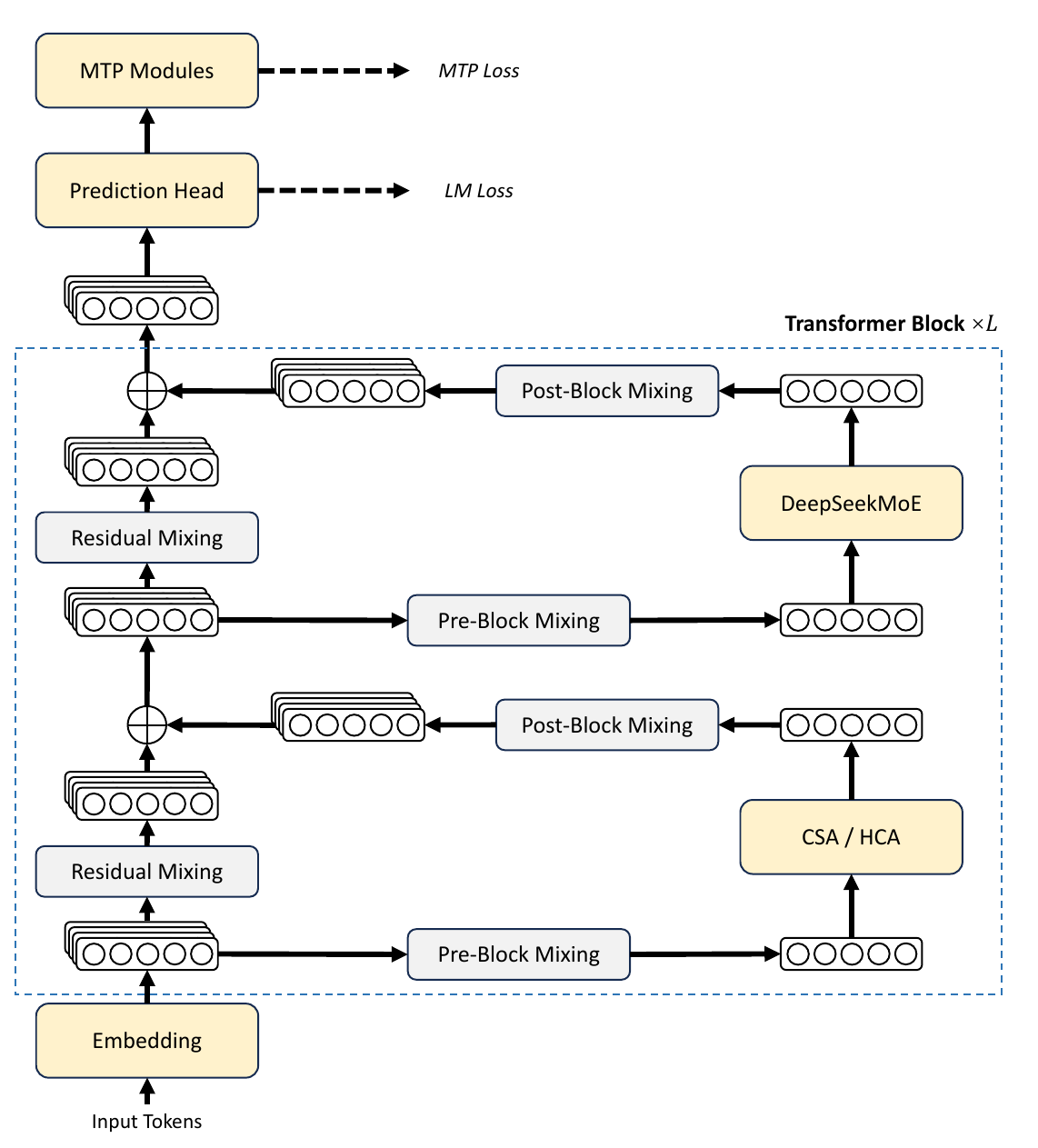
Figure 1. Hybrid attention and expert FFNs inside a multistream residual block. Reproduced from report Figure 2.1 MIT documentation notice.
Read Figure 1 from the bottom: embeddings enter the residual streams, attention and MoE each update them through mixing, and the top head predicts tokens. The diagram separates the main language loss from the auxiliary MTP loss.
The head emits next-token logits. A separate multi-token prediction branch has depth one. It supplies an additional training objective; it does not make the main language model bidirectional.13
What changed from V3
DeepSeek-V3 compresses each token’s attention content into a latent representation. V4 also compresses along the sequence: multiple past tokens contribute to one history entry. It changes the attention operator and the information retained, rather than merely implementing the same dense attention more efficiently.1
This is a deliberate tradeoff. Long agent traces need affordable memory, but exact details can be lost in pooling or missed by sparse selection. The local window preserves recent fine detail; alternating global mechanisms offers different views of older evidence. None is a guarantee of perfect recall.1
CSA and HCA
Compressed Sparse Attention, or CSA, forms a learned, channel-wise weighted summary of blocks of history. With ratio four, its two projection streams overlap neighboring blocks: each pooled entry uses eight source entries, while the number of stored entries falls by about four, not eight. A small indexer then selects relevant compressed positions for the current query.14
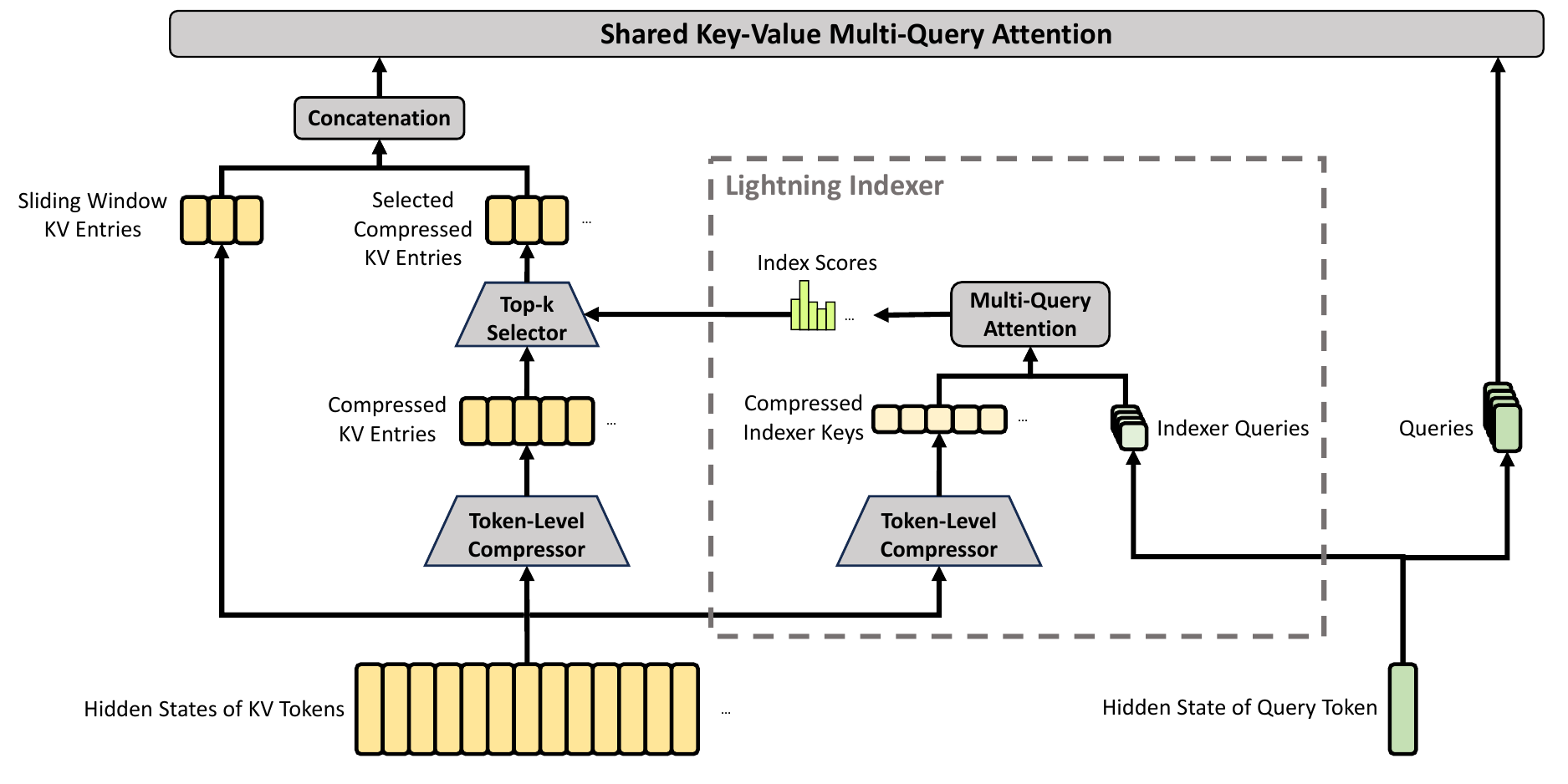
Figure 2. CSA selects compressed history and keeps a local detail path. Reproduced from report Figure 3.1 MIT documentation notice.
In Figure 2, follow the yellow history entries through the two compressor paths. The indexer chooses what the main attention reads; the local KV path bypasses compression. These are distinct compression and selection operations.
Heavily Compressed Attention, or HCA, pools nonoverlapping groups of 128 and reads all causally eligible compressed entries. Its attention is dense over this much shorter representation. It does not select the top 128 tokens, and its compression ratio is not an attention window.14
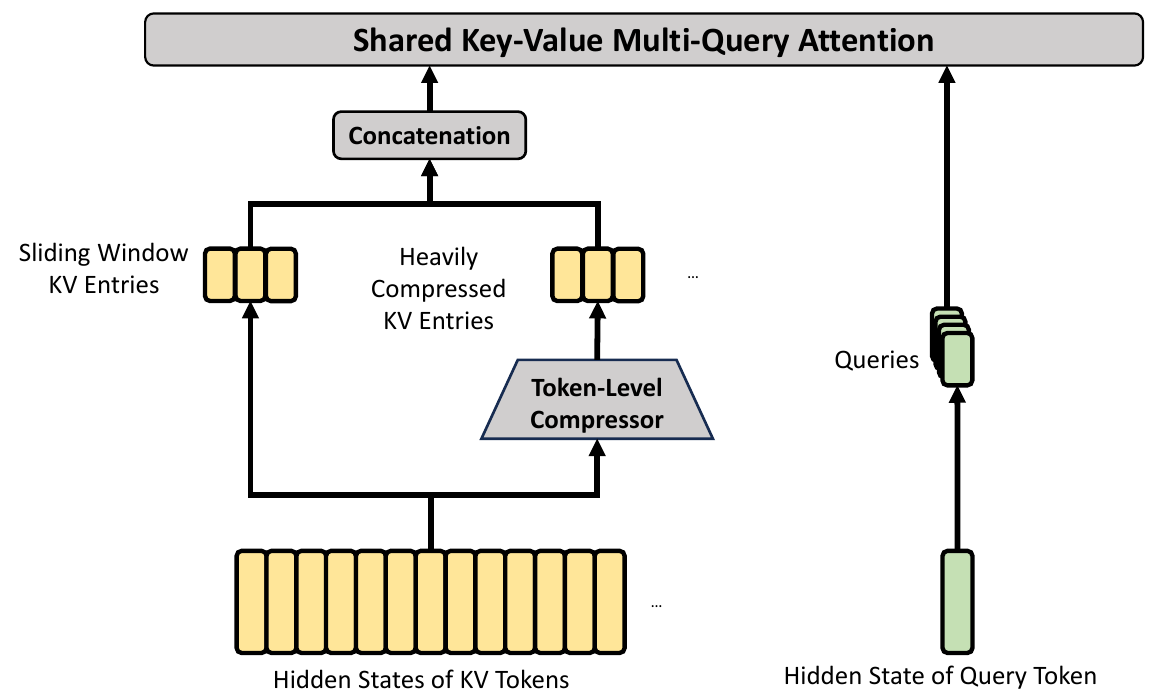
Figure 3. HCA reads a coarser history without an indexer. Reproduced from report Figure 4.1 MIT documentation notice.
Figure 3 removes the indexer rather than hiding it inside the compressor. HCA reads every eligible coarse entry; the local branch still preserves recent detail.
For an illustrative history length T, the Flash budgets are approximately:
Equation (1) counts global entries, not bytes or all state. CSA core attention reads at most 512 selected global entries plus the local window; HCA reads its eligible compressed history plus that window. CSA’s indexer still searches the compressed past. Compression therefore does not make every part of computation or memory constant in context length.1
Only completed preceding blocks are visible to a query. Its own incomplete block cannot be read as a future-inclusive summary. The local branch supplies nearby tokens, including evidence within that block. The released compressor keeps unfinished values and pooling scores until a block can be emitted.14
Both mechanisms use one shared KV representation across query heads. The same entry acts as key and value, with partial rotary position information and an inverse rotation on attention output. This is not simply V3’s latent cache under a new name.1
Inside core attention: normalization, sinks and output projection
The main queries and compressed KV receive head-wise RMSNorm before attention. Partial RoPE rotates their last 64 channels; because a shared vector serves as both key and value, the output receives an inverse rotation to restore a relative-position interpretation. Low-rank query construction is shared by main attention and the indexer, but they still use different projections.1
A learned sink logit adds mass to the attention denominator without a value contribution. Real evidence weights can therefore sum to less than one, allowing a head to attenuate an unhelpful read. This is not an extra remembered token. Grouped output projection first compresses groups of head outputs, then projects their concatenation back to the residual width, reducing a large dense output matrix’s cost.5
mHC: richer residuals without uncontrolled mixing
A normal residual adds a layer’s output to one hidden vector. mHC keeps a matrix of residual streams X, mixes them to form the layer input, then distributes the layer output back across the streams:1
In Equation (2), Flash’s X has shape 4 × 4096 per token. The internal attention or FFN still processes width 4,096; it is not automatically four times larger. A mixes the input streams, C distributes the new result, and B mixes the residual path.14
Unrestricted products of mixing matrices can amplify or suppress signals through a deep network. The report constrains B to a nonnegative, doubly stochastic matrix, with row and column sums one, using 20 Sinkhorn iterations as a practical approximation. This stabilizes the residual mapping itself; it does not prove that the whole nonlinear network is nonexpansive or immune to training instability.13
Training and post training
The corpus combines code, mathematics, web text, multilingual material and long documents. The report describes filtering templated content, longer-document curation, fill-in-middle data and sample-level attention masking. It does not release a complete reproducible corpus or every mixture proportion.1
Flash warms up dense attention for its first 1T tokens, introduces sparse attention at 64K with indexer warmup, and later trains at 1M. The batch grows to 75.5M tokens. Muon updates most matrix parameters; AdamW remains for embeddings, the prediction head, normalization and selected non-matrix parameters. The report also describes anticipatory routing and SwiGLU clamping to address observed loss spikes.1
Post training first develops separate domain specialist models using SFT and GRPO. These specialists are teachers, not the routed FFN experts inside one MoE block. A unified student then learns from their output distributions on its own generated trajectories using full-vocabulary reverse-KL on-policy distillation. More than ten teachers contribute; no complete stage-wise data count is disclosed.1
MoE routing is not unchanged from V3
V4 changes routed-expert affinity from sigmoid to the square root of softplus. It retains routing-bias load balancing and a small sequence-level auxiliary loss, but removes V3’s limit on routing target nodes. The earliest hash-routed layers select experts from token IDs rather than a learned contextual score; later layers use learned routing. These choices change dispatch and training behavior, not just the number of experts.6
Inference and implementation boundaries
The cache has two lifetimes. Global compressed entries accumulate with history and can support prefix reuse. Recent sliding-window values and unfinished compression blocks are small, position-dependent state. A hit ending inside a compression block requires reconstruction of its uncompressed tail.14
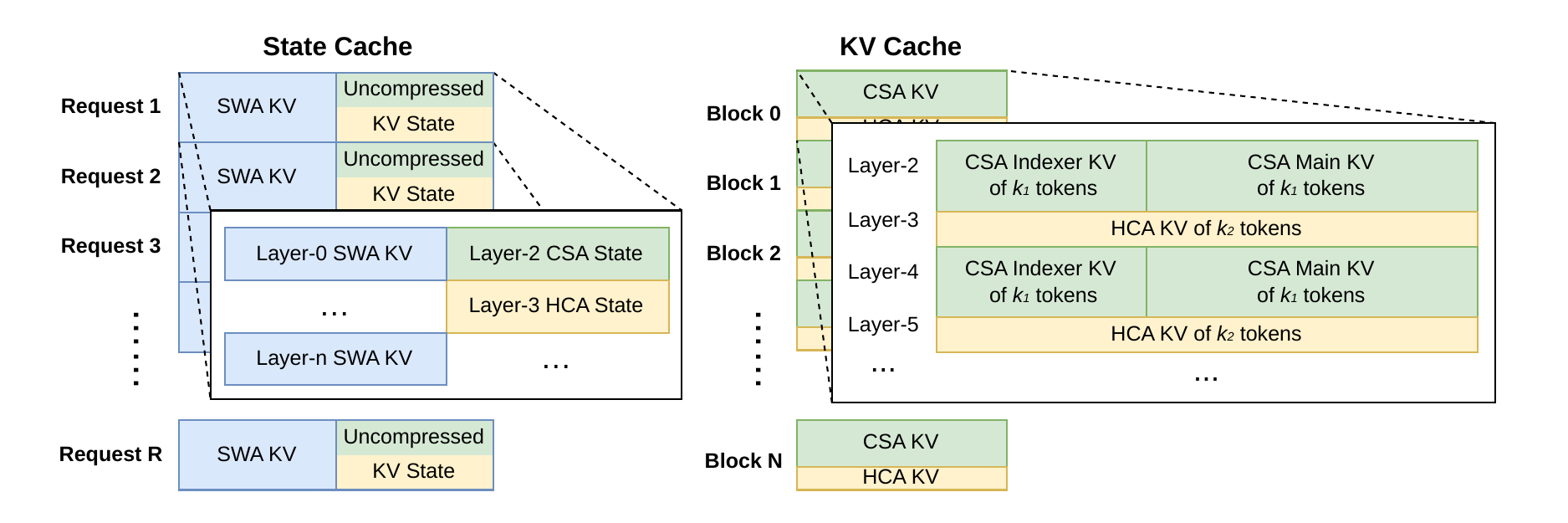
Figure 4. Two cache lifetimes, two layouts. Reproduced from report Figure 6, p. 22.1 MIT documentation notice.
Figure 4 separates a request’s bounded state from its accumulating global history. For Flash’s ratios 4 and 128, one common layout unit spans 128 original positions: 32 CSA entries and one HCA entry per applicable layer. Those are entry counts, not equal-sized byte allocations. The cache manager and sparse kernels must agree on alignment and prefix-hit boundaries.7
The report explores full local-state caching, periodic checkpoints and no persisted local-state caching. Exact reconstruction in the last case can require replay proportional to layer count times window size. V4.1-Flash later changes that tradeoff through approximate bounded replay.1
Do not apply the serving memory headline to the reference Python tensors. The pinned Attention.forward simulates quantization but retains BF16 KV tensors. The report’s mixed FP8/BF16 cache representation belongs to the optimized serving design. No runtime memory or throughput was measured here.41
Artifact identity and openness
The report PDF, Flash card, configuration, license and inference/model.py are pinned to Hugging Face. Targeted inspection covers Compressor.forward, Attention.forward, Block.hc_pre, Block.hc_post and the main block update. The configuration’s final zero compression-ratio entry accompanies the extra prediction layer; the main model has 43 layers, not 44.34
The release states MIT for its repository and weights. Training data and a fully reproduced training run are separate disclosures. The four report-figure crops retain the exact release documentation notice; no substantial code excerpt is copied.28
Evaluation under its actual conditions
The report estimates Flash at about 10% of V3.2’s single-token equivalent-FP8 inference FLOPs and 7% of its KV cache at 1M context. Pro has different ratios. These are architecture/system estimates under a stated precision accounting, not a measured tenfold end-to-end speedup across hardware, batches or short prompts.1
Its original Flash reasoning comparison makes test-time budget visible:1
| Mode | GPQA Diamond pass@1 | HLE pass@1 |
|---|---|---|
| Non-think | 71.2 | 8.1 |
| High | 87.4 | 29.4 |
| Max | 88.1 | 34.8 |
These are Table 7’s author-reported preview results. The reasoning evaluation uses temperature 1.0 and context budgets of 8K, 128K and 384K for the three modes. Mode changes therefore include different inference budgets; this table does not isolate CSA, mHC or Muon. Later cards can report newer numbers and should not silently replace this experiment.1
The evidence supports a useful combination of long-context efficiency and reasoning capability. It does not isolate every architectural contribution, establish universal superiority or show that a million-position context preserves every detail. The authors explicitly acknowledge architectural complexity and incomplete understanding of their training-stability interventions.1
Lessons to carry forward
The reusable lesson is to budget memory by detail, history length and lifetime, not just parameter count. Also distinguish the storage design from its reference implementation. V4’s attention savings become a systems problem involving pooling, incomplete state, prefix reuse and precision.
Compare V2’s content latents, V3’s expert training and V4.1’s cross-layer reuse. For the shared background, use Attention and memory and FFNs and experts.
Open questions
How robust is sparse retrieval when crucial facts fall near compression boundaries? Which mixture and training interventions contribute most under controlled budgets? What is the total hardware cost of the complete training program? The inspected sources do not resolve all of these questions.
References
-
DeepSeek-AI. DeepSeek-V4: Towards Highly Efficient Million-Token Context Intelligence. Original preview report, pinned PDF; sections 2–5, Table 7 and limitations inspected October 10, 2026. ↩ ↩2 ↩3 ↩4 ↩5 ↩6 ↩7 ↩8 ↩9 ↩10 ↩11 ↩12 ↩13 ↩14 ↩15 ↩16 ↩17 ↩18 ↩19 ↩20 ↩21 ↩22 ↩23 ↩24 ↩25 ↩26 ↩27 ↩28 ↩29 ↩30 ↩31 ↩32 ↩33 ↩34 ↩35 ↩36
-
DeepSeek-AI. DeepSeek-V4-Flash model card. Pinned preview card and separate license statement. ↩ ↩2
-
DeepSeek-AI. DeepSeek-V4-Flash configuration. Immutable artifact revision. ↩ ↩2 ↩3 ↩4 ↩5 ↩6 ↩7
-
DeepSeek-AI. DeepSeek-V4 reference inference model. Targeted compressor, attention and residual functions inspected; no code executed. ↩ ↩2 ↩3 ↩4 ↩5 ↩6 ↩7 ↩8 ↩9
-
DeepSeek-AI, pinned V4 report, sections 2.3.1–2.3.3, pp. 10–13. Grouped output projection, query/KV normalization, partial RoPE and sink Equation (27). ↩
-
DeepSeek-AI, same report, section 2.1, p. 6: affinity activation, bias and sequence-loss balancing, removed node limit and token-ID hash routing. ↩
-
DeepSeek-AI, same report, section 3.5.1 and Figure 6, pp. 21–23. Layout unit counts above are a local derivation using Flash’s reported ratios. ↩
-
DeepSeek-AI. MIT license. License file inspected October 10, 2026. ↩