A local model does not have to replace a powerful cloud model to be useful. It can handle routine requests, supply specialized evidence, carry out focused subtasks or ask for help only when needed. This page explains how those forms of cooperation work, where they help, and what a convincing evaluation requires.
The opportunity is a better complete system, not automatically a better answer. Apple discloses a product architecture spanning device and server models; research explores much tighter cooperation. Neither establishes that a hybrid system always beats a strong cloud baseline.12
Figure 1 gives the central mental model: divide the work, but keep the data boundary and the authority to act explicit.
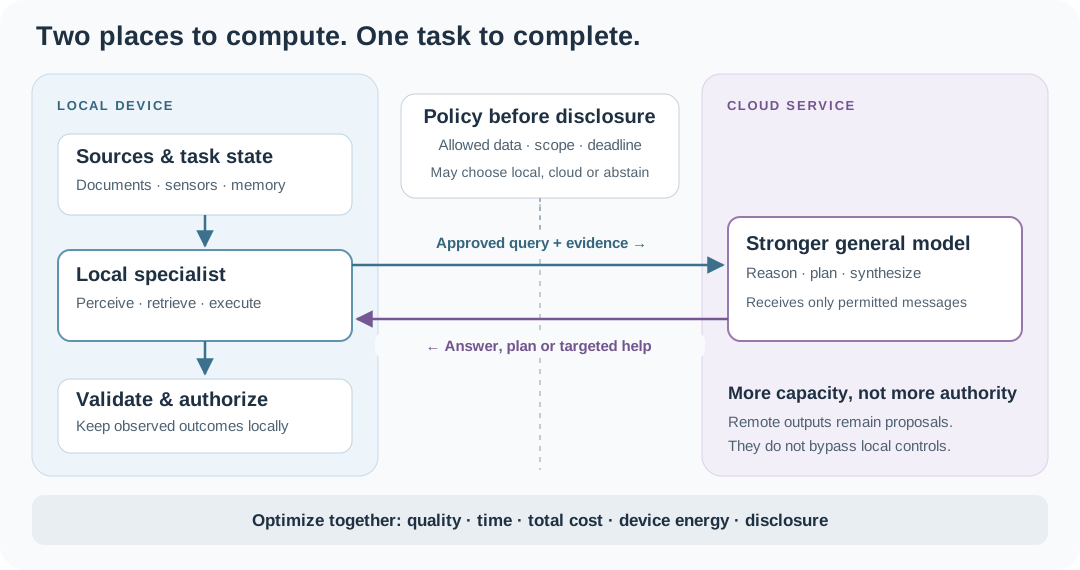
Figure 1. Share computation without silently sharing all data or authority. Independent synthesis informed by routing, collaboration and cloud privacy architectures.324
Three distinctions make the rest easier to read:
- Placement is not capability. A local model may be a domain specialist; a cloud model need not be better on every input.
- Cooperation is not one algorithm. Choosing a model, exchanging advice, drafting tokens and splitting layers change different parts of the system.
- Less cloud use is not less total work. Count device computation, communication, checking and failures as well as the API bill.
These are the organizing distinctions used here, not a universal taxonomy. This is the overview of Local & Cloud AI. For the focused architecture where the cloud agent stays in charge and local models provide perception, grounding or generation, read Cloud Agents & Local Specialists. For applications to glasses, phones and cameras, see Smart Devices & Cloud Agents.
For the surrounding agent and permission boundaries, see Agents and hybrid systems.
What actually cooperates?
The following comparison synthesizes the cited mechanisms. The unit of work is often more informative than the label “hybrid AI.”
Seven ways to divide the work
7 patterns| Mechanism | Unit and exchange | Best reason to investigate it | Main constraint |
|---|---|---|---|
| Request routing | Choose one model before generating | Avoid expensive inference on supported routine requests | Predict relative benefit on the actual workload.3 |
| Answer cascade | Generate locally, check, then escalate if necessary | Inspect a real candidate before paying for more capability | Escalated requests pay for the earlier attempt too.5 |
| Task decomposition | Exchange instructions and subtask results | Process substantial local context through focused jobs | Coordination, evidence loss and sequential rounds.2 |
| Advisory cooperation | Exchange tailored advice or a targeted question | Add domain adaptation or resolve a specific reasoning bottleneck | Train the communication policy; account for its overhead.67 |
| Collaborative decoding | Choose which model generates a token or span | Combine complementary model expertise during generation | Tight inference integration and error propagation.8 |
| Speculative decoding | Draft locally; verify with the cloud target | Accelerate target generation without changing its intended distribution | Acceptance rate, verification access and network scheduling.910 |
| Split inference | Send activations between parts of one network | Fit or schedule a model across hardware boundaries | Activation traffic, repeated synchronization and privacy exposure.1112 |
No matching patterns. Try another term or reset the search.
Scroll to compare. Focus view gives the table more room.
These can be combined. A router might keep simple requests local and select a cooperative workflow for harder ones. That composition needs its own evaluation; results for the individual parts do not establish the whole.
Better than which baseline?
Against local only, a stronger remote model can supply reasoning or knowledge the local model lacks. Against cloud only, the goal is often similar task quality with less cloud expenditure, better availability or less data movement. Higher accuracy than either model alone is a different claim: complementary expertise and learned coordination can help, as studied in Co-LLM, but arbitrary model mixing can also hurt.8
A fair quality claim must state what the cloud baseline received. Giving the hybrid system better retrieval, more evidence, additional samples or domain training can be useful engineering, but it does not isolate a gain from placing computation on the device. Compare both the product and the mechanism. The evaluation plan below separates them.
Choose before answering, or check an answer first
RouteLLM learns a query conditioned prediction of whether a stronger model will win, using preference data. Its threshold trades strong model usage for quality. This is a relative model selection problem, not a universal detector of difficult questions.3
A cascade such as FrugalGPT instead examines generated answers and decides whether another model is needed. The extra observation can improve the decision, but requires paying for the first generation.5
For a device deployment, our proposed policy first removes infeasible routes: no network, prohibited disclosure, unsupported modality or a deadline the route cannot meet. It then chooses among local inference, remote inference, a bounded collaboration or abstention. A useful design objective is:
Here is the request, includes device and network state, and is a route or workflow. is utility; every estimated quantity on its right is conditioned on that route, request and state. Those quantities are task quality, total cost, elapsed time and device energy. The nonnegative weights convert those quantities to a common utility scale. Disclosure permission belongs in the allowed set, not merely in a soft penalty. Equation (1) is our design formulation, informed by budgeted inference, not RouteLLM’s published objective.35
Useful routing signals include retrieval coverage, input type, schema validation and measured historical success for the model pair. A sentence such as “I am confident” is not a calibrated probability. Keep threshold selection separate from final testing, and recheck it after a model or workload change. RouteLLM’s own overhead experiments used cloud VMs, not phones, and its authors identify application distribution shift as a limit.3
Turn a large task into local work
MinionS has the cloud model prepare focused jobs over short context chunks, the local model execute them in parallel, and the cloud aggregate selected results or request another round. Unlike unconstrained model chat, this deliberately simplifies local work.2
Figure 2 shows the original protocol comparison. Its generated job preparation code is a research mechanism, not permission to execute untrusted cloud code in an application.
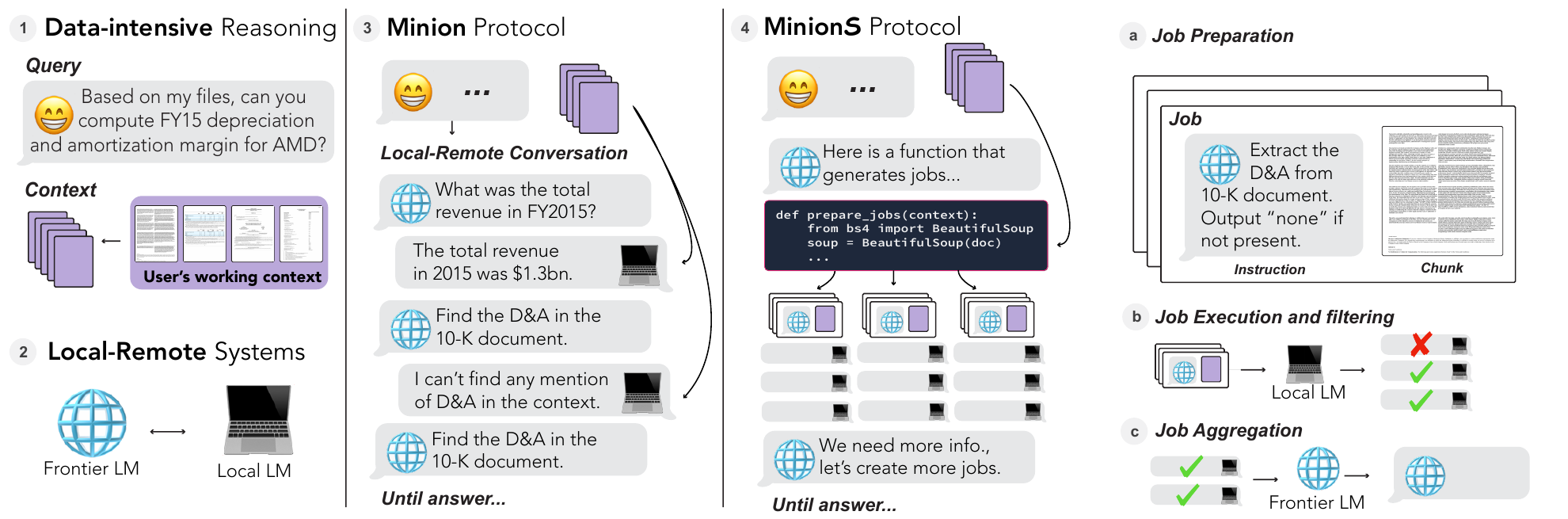
Figure 2. Conversation versus parallel jobs. Reproduced from Narayan et al., arXiv v1, Figure 1; caption cropped. CC BY 4.0.13
The results have an important boundary: cloud token savings exclude local hardware and energy, while the published latency experiment can be slower than cloud only. See the evidence snapshot.
For implementation, prefer an allowlisted task interface with fixed resource limits over arbitrary generated programs. Track which source chunks each result covers. A filtered result can contain an omission or a mistaken extraction; aggregation does not independently restore missing evidence. This is our proposed safeguard, not a demonstrated property of the protocol.
Advice can flow in either direction
A small model can help a strong one. Advisor Models trains an open model with reinforcement learning, using GRPO, to produce input specific advice for a frozen black box model. The downstream outcome supplies the reward. Figure 3 separates that training loop from the inference path.6
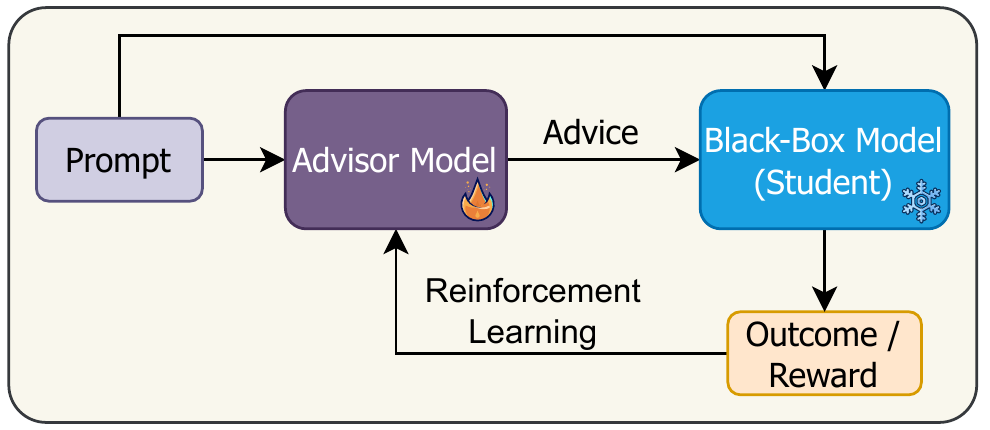
Figure 3. Train the advice, not the cloud model. Reproduced from Asawa et al., v2, Figure 1; caption cropped. CC BY 4.0.6
The paper reports gains on specialized tasks, but no significant improvement in its MATH-500 limit study. It establishes an adaptation mechanism, not measured phone efficiency. Frozen weights also do not guarantee that every new advice prompt preserves output quality.6
A local model can instead ask a stronger one for help. The October 2026 preprint Learning to Ask trains whether to consult, how to construct a focused query, and how to use the answer. Its reasoning model and separate Qmaker are both based on Qwen2.5-7B. Crucially, the evaluated design allows at most one advisor interaction per trajectory; its budget experiments are not a demonstrated general multi-round device agent.7
Conductor explores another direction: a trained 7B model chooses worker instructions and communication structure. It is evidence about learned orchestration, not proof that the conductor was benchmarked on a handset. Its reported benchmark leadership is a dated paper result, not a current universal ranking.14
Token cooperation is two different ideas
Co-LLM learns when a base model should defer token generation to an assistant. The goal is to combine expertise and change generation quality. Its learned deferral threshold needs task tuning; an assistant mistake can disrupt later generation. Using a fine cooperation unit can also introduce a demanding network synchronization problem when models are separated physically.8
Exact speculative decoding has a different goal: a cheap model proposes tokens and the target verifies them with the appropriate acceptance and correction procedure. Under the algorithm’s assumptions, the output has the target distribution. That is not a guarantee that the target is correct, and a cloud critique of a local answer is not this verification procedure.9
SpecEdge places drafting on edge GPUs and verification on the server. It overlaps drafting with verification and schedules multiple requests to keep the server busy. This needs control of the serving path, not just a generic chat endpoint. Its evaluated edge resources are consumer GPUs from edge providers, which must not be confused with battery powered phones.10
For the local inference mechanics, see Efficient inference.
Splitting a network is not splitting a task
Neurosurgeon predates current LLMs: its 2017 system chooses a layer boundary between mobile and cloud computation across studied neural networks. It sends an intermediate representation, not a subtask instruction to an independent model.11
In an autoregressive split, repeated activation exchange can become the bottleneck. As an illustrative storage calculation, one tensor with 2,048 positions, width 4,096 and two bytes per value occupies 16 MiB. Sending that tensor over a 20 Mbit/s uplink takes about 6.71 seconds for payload alone. This is a hypothetical dense tensor, not a measured or necessary handoff size; it excludes protocol overhead, compression and computation.
Fewer raw pixels or tokens leaving the device does not establish privacy. ActInv studies reconstruction from split LLM activations under a passive server threat model with full model knowledge. Its findings challenge the assumption that hidden states inherently conceal the prompt; they do not establish the same attack success against every split or protected service.12
What the measurements establish
This is an evidence comparison, not a leaderboard. Models, objectives, hardware and accounting differ between rows. Numbers below are reported findings, not experiments reproduced here.
Promising results, different contracts
4 studies| Study | Reported result | Boundary that changes interpretation |
|---|---|---|
| RouteLLM, v4, 2025 | Table 6 reports a 3.66× cost saving ratio at 95% of GPT-4 quality on MT Bench | Historical model/pricing assumptions; not a device benchmark or 95% correctness.3 |
| Minions, ICML 2025 | 97.9% of remote-only performance at 5.7× lower cloud cost; RTX 4090 MinionS latency 2.15–2.89× cloud only | Three-task headline; latency uses ten LongHealth samples; local hardware and energy excluded from monetary cost.2 |
| Advisor Models, v2, 2026 | GPT-5 RuleArena Taxes accuracy rises from 31.2% to 53.6% | Specialized easiest-level subset with 25 held-out examples; not a broad or device result.6 |
| SpecEdge, v2, 2025 | 2.22× server throughput, 1.91× cost efficiency, 11.24% lower inter-token latency on average | A100 plus RTX 4090s, 14.07 ms RTT, primarily against server-only tree speculative decoding. Not whole-request latency or a phone result.10 |
No matching studies. Try another term or reset the search.
Scroll to compare. Focus view gives the table more room.
The two Minions percentages answer different questions: relative task performance is not absolute accuracy, and cloud expenditure is not system cost. Likewise, server throughput, generation step count, answer correctness and user waiting time are not interchangeable metrics.
Is this a real deployment direction?
Yes, with different maturity levels. Apple’s June 2026 foundation model disclosure, updated September 9, describes two device models and three server models, with Cloud Pro assigned demanding reasoning and tool use. This supports a concrete hybrid product architecture, not an independently measured share of traffic using each route.1
The original 2025 Gemini Robotics report specifies a cloud VLA backbone and a local action decoder. Google’s separate June 2025 On-Device announcement describes a model operating without a data network. These are distinct, dated designs, not interchangeable claims that all robotics uses cloud planning or that every newer release has the same boundary.1516
Hazy Research’s May 2026 retrospective describes collaboration and routing patterns in OpenJarvis. It is a useful first-party ecosystem signal, not independent evidence of market-wide adoption or general performance.17
The practical conclusion is narrower than “everything will be hybrid”: the design space is established; the best partition remains workload specific.
Make the handoff an evidence contract
A local component can contribute something more useful than a shorter paragraph: a source passage, a table with units, a chart crop, an observed event or a domain constraint. Our proposed handoff retains:
- Source identity, version, page or timestamp, and exact region when relevant.
- Observations separately from model interpretations and unresolved alternatives.
- Units, relationships and missing values, rather than only a fluent summary.
- Permitted use, disclosure scope and a way to request additional evidence.
For a VLM system, compare text summaries, structured extraction, selected image crops and original multimodal input. A caption may lose tiny labels, spatial relations or negative evidence. Treat the representation as an experimental choice, not a free compression step. The information bottleneck also appears explicitly in Learning to Ask’s limitations.7
Private source processing does not make derived messages private: names, preferences and document facts may survive in a summary. Apple’s PCC is an explicit security architecture; “we only send embeddings” is not an equivalent guarantee.412
A worked document assistant design
Consider a hypothetical assistant answering questions across a user’s documents, tables and figures. The following is a proposed design, not a measured deployment.
Local parsing and retrieval preserve original evidence. A local specialist can answer supported routine questions; a permitted cloud path reasons over selected evidence or asks for a specific missing crop. Neither route may silently send the whole collection. Figure 4 separates evidence preparation from bounded assistance and validation.
- Read approved sourcesKeep originals and access scope
- Parse and retrieveText, tables, figures and exact locations
- Try a supported taskLocal specialist with measurable checks
- Choose the next routeReturn, clarify, abstain or permit cloud help
A retrieval miss can require a better source, not a larger model. Check missing units, conflicting pages and uncertain visual details.
- Package bounded evidenceLocations, observations, alternatives and budget
- Request cloud reasoningTargeted question; no implicit full-library access
- Validate against originalsClaims, calculations, schema and requested crops
- Return or seek reviewCited answer, correction or explicit uncertainty
If the cloud asks for more evidence, return to local retrieval and the disclosure gate. Limit rounds, bytes and time. Only authorized code can execute effects.
Figure 4. A proposed specialist and generalist workflow. Independent synthesis of retrieval, bounded consultation and explicit control boundaries.274
For “How did the margin change?”, the local handoff might retain both period labels, numerator and denominator, units, table locations and a conflicting footnote. The cloud contributes interpretation; deterministic code checks the arithmetic. If a graph label is unreadable, request that crop rather than turn a local guess into a cloud fact. This example claims no measured gain.
Related application hypotheses include a camera that escalates selected ambiguous events, a wearable that asks for help interpreting a user selected scene, or a robot with an independently specified local control and safety path. Each requires its own data, deadline and failure analysis. A model’s proposed explanation is not a safety controller.
Account for the complete critical path
A cascade can improve mean latency while making escalated requests slower. Under a simple serial model with constant local time , checking time , escalation fraction , and complete cloud time :
Equation (2) is our elementary accounting model, not a measured speedup. With 0.35 seconds locally, 0.05 seconds checking, a 1.2 second cloud path and 20% escalation, the mean is 0.64 seconds. But an escalated request takes 1.60 seconds, longer than cloud only. These hypothetical values omit variance, loading, contention, caching and parallel work.
For a serial cooperative route, a more explicit approximation is:
Here includes remote queueing and computation, not network transfer; RTT accounts for exchange latency excluding the payload serialization terms. is bytes transferred and are effective bytes per second. Separate payload and RTT this way to avoid counting the same transfer twice. Real pipelines can overlap these terms, as SpecEdge demonstrates, so measure their critical path instead of blindly adding them.10
Track cloud billing separately from device energy, network energy and hardware cost. A smaller model processing many chunks or staying resident continuously can consume more resources than an occasional cloud request. That is a possibility to measure, not a universal energy claim. See Evaluation and profiling and On device computing.
How to evaluate the complete system
Our proposed evaluation begins with a fixed task distribution, data access policy, device class and service target. Define “better” before choosing a router. Use held-out data by user, source or time as appropriate, not just random neighboring chunks from the same documents.
What each baseline rules out
6 baselines| Baseline | What it tests | What must remain comparable |
|---|---|---|
| Local only | Does assistance add useful capability? | Local model, tools, data and task scope |
| Cloud with original permitted evidence | Does cooperation beat the strongest practical single model path? | Information access, samples, reasoning budget and disclosure policy |
| Cloud with the same local retrieval or extraction | Is the gain just better evidence preparation? | Identical evidence artifacts and retrieval budget |
| Simple rules and random routing | Is learning worth the training and serving overhead? | Cloud usage or total cost budget |
| Learned routing or proposed cooperation | Does the actual deployed policy deliver the claimed benefit? | Thresholds selected before testing; full runtime accounting |
| Offline routing oracle | How much room remains in choosing one model per request? | Same candidate outputs; no deployable access to test labels |
No matching baselines. Try another term or reset the search.
Scroll to compare. Focus view gives the table more room.
An oracle over whole-request choices is only an upper bound for that choice set, not all forms of cooperation. A workflow that exchanges new information can exceed it without a paradox; the action space is different.7
Report task correctness or completion, evidence completeness, unsupported claims, abstention and error severity. Then measure p50/p95 complete task latency, first useful response, bytes, actual cloud expenditure, device joules and peak/resident memory. For continuous workloads, add energy over time and missed events. Do not compare a server’s token rate to an application’s completed task time.
Stratify the results by input length, layout, language, ambiguity, device temperature, cold start and network state. Include disconnects, deadline expiry, model updates and contradictory evidence. Test disclosure violations and the path that requests additional data. If using a model judge, audit its decisions on a human checked subset. Keep held-out prompts and evaluation labels out of router and collaborator training.
Finally, plot the quality versus total cost frontier at a fixed latency target, and the quality versus latency frontier at a fixed budget. Include uncertainty and training/maintenance costs where they affect the decision. One attractive average can hide the domain or network slice that fails.
When not to add another model
Prefer a simpler route when direct cloud inference already satisfies the privacy, cost and response requirements; when the local intermediate loses essential evidence; or when repeated communication exceeds the deadline. Prefer local only when connectivity or disclosure constraints rule out the remote path. Better retrieval or a deterministic tool may fix the actual problem without a second generative model.
Training is another alternative. Knowledge Distillation can move some capability into the local model before deployment. That is different from consulting the teacher during each request. A useful research question is whether recurring cloud assistance can become reviewed training data for a future local release, with held-out regression and privacy checks. It is not permission for uncontrolled online self-training.
The strongest opportunities appear to be learning what help is worth asking for, preserving evidence across the boundary, and adapting the cooperation granularity to the hardware and network. This is our synthesis, not a claim that one protocol is universally best. Start with a measurable domain, one clear handoff and strong single model baselines before adding more rounds.
Primary mechanisms and selected current disclosures inspected October 17, 2026. Recent preprints remain provisional. No model training, device benchmark, independent reproduction or market-adoption measurement was run.
References
-
Apple. Introducing the Third Generation of Apple’s Foundation Models, June 8, 2026; updated September 9, 2026. Model family and execution targets inspected October 17, 2026. ↩ ↩2
-
Avanika Narayan et al. Cost-efficient Collaboration between On-device and Cloud Language Models, ICML 2025, PMLR 267:45682–45719. Published PDF sections 3–6, Table 1 and Table 2. Latency experiment uses ten LongHealth samples; monetary cost excludes local hardware and energy. ↩ ↩2 ↩3 ↩4 ↩5 ↩6
-
Isaac Ong et al. RouteLLM: Learning to Route LLMs with Preference Data, ICLR 2025, arXiv v4, February 23, 2025. Sections 3–5, Table 6, routing overhead and distribution-shift limitations. ↩ ↩2 ↩3 ↩4 ↩5 ↩6
-
Apple Security Engineering and Architecture et al. Private Cloud Compute: A new frontier for AI privacy in the cloud, June 10, 2024. Security design, disclosure and trust boundaries; inspected October 17, 2026. Historical architecture, not a claim that every current deployment uses the original hardware. ↩ ↩2 ↩3
-
Lingjiao Chen, Matei Zaharia and James Zou. FrugalGPT: How to Use Large Language Models While Reducing Cost and Improving Performance, 2023, section 3, LLM cascade, and section 5, limitations. ↩ ↩2 ↩3
-
Parth Asawa, Alan Zhu, Abby O’Neill, Matei Zaharia, Alexandros G. Dimakis and Joseph E. Gonzalez. How to Train Your Advisor: Steering Black-Box LLMs with Advisor Models, v2, February 2, 2026. Sections 3, 4.1–4.2 and 4.4.4; Figure 1. Preprint; PDF cover dates the preprint February 3. ↩ ↩2 ↩3 ↩4 ↩5
-
Yongjun Kim, Xiaoxiao Li and Jaeho Lee. Learning to Ask: Information Acquisition for SLM-LLM Collaboration, under a budget, October 1, 2026 preprint. Sections 5–6 and Appendix A: one consultation per trajectory, separate query model, weighted API cost and incomplete system accounting. ↩ ↩2 ↩3 ↩4 ↩5
-
Shannon Zejiang Shen et al. Learning to Decode Collaboratively with Multiple Language Models, March 6, 2024 preprint; subsequently ACL 2024. Sections 3–5, especially deferral learning, threshold selection and error propagation. Mechanism discussion uses this inspected arXiv edition. ↩ ↩2 ↩3
-
Yaniv Leviathan, Matan Kalman and Yossi Matias. Fast Inference from Transformers via Speculative Decoding, 2023, sections 2–3 and Algorithm 1. Distribution preservation requires the specified verification, acceptance and correction procedure. ↩ ↩2
-
Jinwoo Park, Seunggeun Cho and Dongsu Han. SpecEdge: Scalable Edge-Assisted Serving Framework for Interactive LLMs, NeurIPS 2025, arXiv v2, November 18, 2025. Sections 4–5 and Appendix A; main baseline is server-only tree speculative decoding, with A100 and edge RTX 4090 resources. ↩ ↩2 ↩3 ↩4
-
Yiping Kang et al. Neurosurgeon: Collaborative Intelligence Between the Cloud and Mobile Edge, ASPLOS 2017, pages 615–629. Abstract, introduction and layer partitioning design; historical neural-network mechanism, not an LLM benchmark. ↩ ↩2
-
Mingyuan Fan, Yu Liu, Fuyi Wang and Cen Chen. What Does the Server See? Understanding Privacy Leakage from Large Language Models in Split Inference, May 22, 2026 preprint, sections 3–4. Passive server with full model knowledge; this review does not adopt unfinished publication-template metadata as venue evidence. ↩ ↩2 ↩3
-
Avanika Narayan et al. Minions: Cost-efficient Collaboration Between On-device and Cloud Language Models, February 21, 2025, Figure 1, PDF page 2. CC BY 4.0; scientific diagram unchanged, surrounding caption/prose cropped. See asset provenance. ↩
-
Stefan Nielsen et al. Learning to Orchestrate Agents in Natural Language with the Conductor, December 4, 2025 preprint, abstract and introduction. Learned coordination over worker pools; no handset efficiency claim is inferred here. ↩
-
Gemini Robotics Team. Gemini Robotics: Bringing AI into the Physical World, 2025, section 3.1 and Figure 14. Original cloud backbone and onboard action decoder design. ↩
-
Carolina Parada, Google DeepMind. Gemini Robotics On-Device brings AI to local robotic devices, June 24, 2025. Historical on-device model announcement, not the complete current robotics product catalog. ↩
-
Jon Saad-Falcon and Avanika Narayan, Hazy Research. From Minions to OpenJarvis: A Retrospective on Two Years in Local AI, May 15, 2026, Hybrid capabilities. First-party project account, not independent adoption evidence. ↩